THE MISTRESS POSTED A CLOSET TOUR CALLING MY GOWNS “LEFTOVERS”—SO I ITEMIZED EVERY STOLEN PIECE AND TOOK BACK THE BUILDING SHE STOOD IN

PART 1
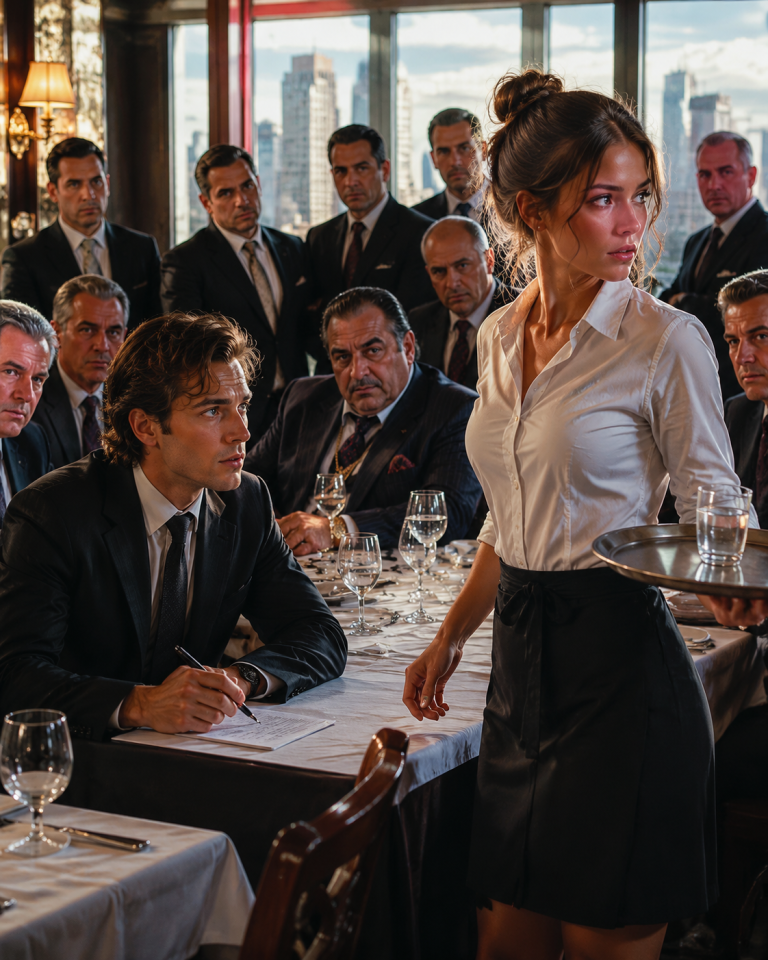
His mistress posted a closet tour and called my gowns “future ex-wife leftovers.” Not privately. Not to her friends in some locked group chat where cruelty goes to rehearse before it becomes public. She posted it on her main account at 8:17 p.m. on a Thursday, under the soft gold light of my penthouse dressing room, with a glass of my Cristal in her hand and my husband’s Cartier bracelet flashing on her wrist.
The video opened with her whispering, “Okay, babes, don’t be mad, but I’m in the closet.” Then she turned the camera. My closet. Thirty-two feet of walnut drawers. Brass rails. Museum-grade lighting. A faint scent of cedar, iris, and money earned the hard way. Gowns hung in ordered silence behind glass doors, each one wrapped, catalogued, and insured. Cream silk. Midnight velvet. Champagne beading. A black Carolina Herrera dress I had worn the night I saved Bennett’s company from collapsing in front of forty-seven investors and one man from Forbes who smelled blood.
She dragged her fingers across it. “This one is kind of old,” she said, laughing. “But, you know, future ex-wife leftovers are still couture.” Then she put the sleeve against her cheek.
The comment section exploded before I even reached the elevator of the Mark Hotel. People tagged me. People tagged Bennett. People tagged gossip pages, fashion pages, divorce lawyers with funny usernames, and three women who made content about “high-value feminine energy” while filming in rental kitchens. My phone lit up like a crime scene. *Vivienne, is this real? Please tell me she did not just say that. Girl, your husband is dead. Are you okay?*
I watched the video once. Then I watched it again with the sound off. I did not cry. Crying would have been an offering, and I had stopped making offerings to men who mistook loyalty for blindness. I paused the video where her manicure pressed into the pearl embroidery of my wedding-week reception gown. I paused again where the reflection in the mirror showed Bennett leaning against the doorway, smiling as if humiliation were foreplay.
That was the frame that changed everything. Not the dress. Not the insult. Not the fact that he had brought his mistress into the penthouse I paid for, into the closet I designed, into the life I built while he called himself the architect of it. It was his smile. Lazy. Proud. Unafraid. A man smiles like that only when he believes the woman he betrayed is too heartbroken to be dangerous.
So I did what he expected least. I did nothing publicly. No comment. No tearful Story. No black square with a cryptic quote. No ringless selfie from a hotel balcony. I saved the video. I downloaded every version. I screen-recorded the comments before she could delete them. Then I sent the video to my lawyer, my insurer, and the appraiser who had valued each stolen item six months earlier for a private archive policy Bennett had mocked as “paranoid rich-girl paperwork.” Her caption became the headline of my property claim. By morning, America had a new viral sentence. The mistress mocked the closet. The wife itemized it.
My name is Vivienne Hartwell Kingsley, though by the time this story reached the parts of the internet where women fold laundry while watching justice happen to strangers, I had already gone back to Hartwell. I was thirty-eight years old, the founder of Hartwell House, a luxury brand strategy firm headquartered in Manhattan with clients in hospitality, fashion, private aviation, and one discreet bourbon family in Kentucky that treated succession planning like a blood sport. I did not inherit wealth in the way people accused me of inheriting it. My mother left me taste, discipline, and a townhouse in Charleston with a cracked blue ceiling and termites in the library. My father left me a name that opened doors only after I had already kicked them half-open with my own heel. Bennett Kingsley inherited a surname carved above buildings. He was tall in the way weak men use height as evidence. Beautiful in photographs, persuasive across lunch tables, and talented at making other people’s money look like his vision. When we met, he was the kind of man New York women described with soft warnings. Charming. Complicated. Not easy. Dangerous if you believe him. I believed him anyway.
He took me to Bemelmans Bar on our second date and asked questions like he had nowhere else to be. He wanted to know why I wore white in winter, why I never drank more than two martinis, why I watched exits when I entered rooms. “My mother taught me,” I told him. “To watch exits?” “To leave beautifully.” He laughed then, genuinely, and I mistook the sound for intimacy. For the first three years, Bennett worshiped me in public and studied me in private. He learned which flowers made me smile. He learned the names of my college enemies. He learned that I would work until two in the morning if a client trusted me, and that I could walk into a room of men who thought a woman in silk was decoration and leave with their signatures. I made Hartwell House profitable before our wedding. I made Bennett Kingsley look inevitable after it. When his family’s hospitality company, Kingsley Black, began bleeding money from a disastrous Miami expansion, I rebranded the entire portfolio in ninety days. I turned tired hotels into “heritage properties.” I convinced travel editors that decay was patina. I sold investors on restraint, privacy, and old-world American glamour at a time when everyone else was chasing neon rooftops and loud pools. Bennett stood beside me in magazine spreads and called me his muse. Never his strategist. Never his rescuer. Never the woman who found the missing twelve million in vendor fraud before the auditors did. His favorite phrase was, “Viv has an eye.” As if my success were a decorative organ.
The closet was the one place in our Park Avenue penthouse that felt entirely mine. I had built it during year six of our marriage, after I realized Bennett had opinions about every visible room and none about the spaces where my actual life happened. It was not a closet, really. It was an archive. Every gown had a story. Every handbag had a receipt. Every piece of jewelry had an appraisal, a photograph, a serial number, and in some cases, a tiny invisible forensic marking known only to the insurer and me. There was the silver Oscar de la Renta I wore to the New York Public Library gala the night I secured the St. Aurelia Resorts account. The ivory Tom Ford suit from the day I negotiated my first eight-figure contract without flinching. The emerald silk dress Bennett once spilled red wine on during a fight in Aspen, then blamed me because I had “moved too suddenly.” There was also the navy cashmere coat my mother wore the winter before she died. It hung behind glass because grief, too, deserves preservation. Bennett hated the archive. He hated that it had locks he did not understand. He hated that the gowns were not just pretty things he could buy or replace. He hated that they represented a timeline in which my power predated him, survived him, and would outlive him. So when he let Tessa Monroe into that room, it was not carelessness. It was communication.
Tessa was twenty-six, originally from Scottsdale, recently “bi-coastal,” and famous for filming luxury she did not own from angles that made it seem inevitable she soon would. Her content was a carousel of soft entitlement: room service trays, hotel mirrors, pilates machines, whispered updates about “choosing peace,” and suspiciously frequent gifts from “someone private.” She had 1.8 million followers and the emotional depth of a champagne flute. I learned about her four months before the closet tour because Bennett became gentle. That is the first thing no one tells you. Guilty men are not always cruel at first. Sometimes they are softer. They touch your shoulder in passing. They ask if you slept. They send flowers to the office with cards that say, *Proud of you, V.* It is not love. It is rehearsal for innocence. By the time the first anonymous message arrived, I had already noticed the new password on his phone, the extra shirts sent to the dry cleaner, the sudden interest in Los Angeles meetings that ended on Sundays. The message contained a photograph of Bennett at Sunset Tower with his hand on the back of a blonde woman’s neck. I stared at it while seated in the back of a black car on FDR Drive. The East River was dull and metallic beyond the window. My driver, Malcolm, kept his eyes forward. I felt nothing dramatic. No scream rose in me. No glass shattered in my mind. The body is strange when the heart has been warned for months. It simply recognizes the disaster and says, *There you are.*
I hired Julian Hayes the next morning. Julian was not a divorce attorney who advertised on podcasts or smiled from bus benches. He was quiet, expensive, and allergic to theatrics. His office overlooked Bryant Park, where tourists took photographs under trees while billion-dollar marriages died behind soundproof glass. He had represented heiresses, founders, politicians’ wives, and one Broadway producer who tried to hide assets inside a fake horse farm in Vermont. When I told him I suspected Bennett was having an affair, Julian asked only one question. “Do you want out, or do you want information?” I looked at the wedding ring on my left hand. The diamond was eight carats, antique cushion-cut, and chosen by Bennett because, he said, “It looks like something a woman would inherit from a grandmother who scared men.” “I want the truth,” I said. Julian leaned back. “That is rarely the cheapest option.” “I didn’t ask for cheap.” So we began. Quietly. A forensic accountant reviewed accounts Bennett thought were too boring for me to notice. A private investigator confirmed that Tessa was living in a leased apartment in Tribeca paid through a “marketing consultancy” tied to Kingsley Black. My own internal finance director discovered that Bennett had been moving personal expenses through hospitality vendor lines and classifying them as brand partnerships. Jewelry. Travel. Rent. Art. A vintage Mercedes Tessa drove badly down West Broadway. Then, two weeks before the closet video, Julian’s team found something worse. Bennett had attempted to use jointly held collateral to secure emergency financing for Kingsley Black without my informed consent. My signature appeared on two documents. I had signed neither. Julian did not raise his voice when he told me. That was how I knew it was serious. “Forgery?” I asked. “Possibly.” “Possibly is doing a lot of work.” “Fraud is a word we use when we are ready to prove it.” I remember looking out at Bryant Park, at a little girl in a red coat chasing pigeons while her father filmed her. “What happens if we prove it?” Julian’s reflection appeared in the window beside mine. “Then your divorce stops being a divorce,” he said. “It becomes a controlled demolition.”
I should have filed that week. Any sane woman might have. But my mother had taught me that timing was not patience. Timing was architecture. So I waited. I let Bennett think I was busy. I let him call me distracted. I let him kiss my cheek at charity dinners and place his hand on my lower back for photographers, his wedding ring cold against my spine. And then Tessa posted the closet tour. At 8:32 p.m., Julian called. “I assume you’ve seen it.” “I have.” “Are you safe?” “Yes.” “Are you alone?” I looked around the suite at the Mark Hotel, where I had checked in after a client dinner because I did not feel like going home to a man who had turned my closet into content. “Yes.” “Good. Do not engage. Do not text him. Do not call her. Do not respond to anyone.” “I already sent you the video.” “I know. I’m watching it with property counsel.” That almost made me smile. “Romantic evening?” “Very. Is every item visible in that video part of the Hartwell archive policy?” “Most of it.” “Most?” “She’s touching the Herrera.” There was a pause. “The black gown?” “Yes.” “The one with the six-figure valuation?” “Yes.” “Vivienne.” “I know.” “No,” he said carefully. “You may not know. If she removed anything from the premises, if Bennett authorized access to insured scheduled property, and if any item was damaged, concealed, gifted, or converted—” “Converted,” I repeated. “That sounds polite for stolen.” “Polite words invoice better.” For the first time that night, I laughed. It was quiet, but it was real. Outside my hotel window, Manhattan glittered with all its beautiful indifference. Somewhere below, women were walking home from work, carrying shoes in tote bags and rage in their throats. Somewhere above, Bennett was probably watching the internet laugh at me and mistaking it for victory. “Julian,” I said. “Yes?” “I want every gown accounted for by noon.” “Already moving.” “And I want Bennett served somewhere memorable.” His silence changed shape. “Define memorable.” I thought of Tessa’s caption. *Future ex-wife leftovers.* The casual prophecy of a woman who believed my ending had already been written because a man whispered it into her hair. “Somewhere with cameras,” I said.
PART 2
By sunrise, the video had crossed three million views. By breakfast, it had a nickname. Closetgate. The internet loves a betrayal with good lighting. It loves a villain who volunteers. It loves a wife who has not yet spoken because silence leaves room for projection. Half the comments called me tragic. Half called me iconic. Several called me old, which was funny because I had never felt younger than I did that morning, wrapped in a white robe, drinking espresso while my marriage became evidence. Tessa deleted the original video at 9:06 a.m. Too late. The internet had already turned it into stitches, duets, green-screen explainers, and reaction clips from women sitting in cars outside Target. A woman from Atlanta with perfect eyeliner said, “Ladies, never mock the wife’s closet. That is where the receipts live.” A divorce lawyer in Chicago broke down possible claims with the glee of a sportscaster. A fashion historian identified three gowns in the video and estimated their value with terrifying accuracy. My favorite was a grandmother from Baton Rouge who watched the clip, pursed her lips, and said, “Baby, that blonde just walked into a bear trap and complimented the teeth.”
I did not post. That drove people insane. Bennett called me sixteen times. I did not answer. At 10:14, he texted. *Viv, this is being blown out of proportion.* At 10:17: *Tessa was joking. She didn’t know those pieces were sentimental.* At 10:21: *Can we please not let strangers define our marriage?* At 10:28: *Call me.* At 10:41: *You’re embarrassing us.* There he was. The real Bennett always arrived after the charm ran out. At 11:03, Julian’s property team entered the penthouse with a locksmith, an inventory specialist, and a court-authorized independent observer. Bennett was not there. Tessa was. In my robe, from the calm distance of a hotel suite, I watched through the live security feed on my laptop as she opened the penthouse door barefoot, wearing my pale blue La Perla robe. Not one like mine. Mine. She had tied it loosely, as if modesty were a rumor she had heard about but never believed. Her hair was piled on her head, and her face had the puffy confusion of someone discovering consequences before coffee. “Who are you?” she asked. The inventory specialist handed her a document. She looked at it as if paper were rude. “Bennett said I could be here.” I took one sip of espresso. Julian, seated across from me at the hotel dining table, watched without expression. “He may regret phrasing it that way,” he said. On the screen, Tessa called Bennett. No answer. She called again. Then she tried to close the door. The locksmith did not move. The independent observer, a woman in a gray suit with the serene dead-eyed patience of someone who had seen rich people misbehave around property before, said, “Ma’am, we are here to inventory scheduled assets pursuant to the order in your hand. Interfering will be noted.” Tessa’s eyes flicked toward the hallway camera. For a second, she looked directly into the lens. For a second, she saw me. I lifted my coffee cup, though she could not see the gesture.
The inventory took six hours. Three gowns were missing. One Judith Leiber clutch was gone. Two diamond hairpins were gone. The Herrera gown had makeup transfer on the collar and a pulled seam near the waist. The Carolina Herrera atelier confirmed within forty minutes that repair would require specialized restoration. Tessa had worn my mother’s sapphire earrings in a photo posted two weeks earlier from the bathroom of Casa Cipriani. She had tagged the earrings as “vintage vibes.” My insurer did not find that charming. By late afternoon, Bennett finally appeared at the Mark. He did not come upstairs. He called from the lobby because Julian had instructed hotel security not to allow him to my floor. “I just want to speak to my wife,” Bennett told the front desk. His wife was upstairs in a black cashmere dress, signing a sworn inventory statement. The front desk called me. I said, “No.” It was a small word. It changed the air. For years, I had said yes in elegant variations. Yes, I’ll handle the investor dinner. Yes, I’ll soften your father. Yes, I’ll rewrite the statement. Yes, I’ll smile for the photograph. Yes, I’ll overlook the tone because you’re stressed. Yes, I’ll pretend not to notice the lipstick on the cuff, the hotel charge, the girl in the comments. No sounded almost musical.
At six, Julian left to file emergency motions. At seven, my best friend, Margot Bell, arrived carrying sushi, a bottle of Sancerre, and the emotional ferocity of a woman who had hated Bennett since my rehearsal dinner. Margot owned a gallery in Chelsea and dressed exclusively in black, not because she was mournful but because, as she once said, “Color is for people still negotiating with the world.” She walked in, took one look at me, and said, “I’m proud of you, but I did bring murder wine.” “It’s Sancerre.” “Emotionally, it’s murder wine.” She set everything on the table and opened her phone. “Your silence is making people feral.” “I’m aware.” “There are hashtags.” “I’m aware.” “There’s a poll asking whether you should take him back or take the closet.” “The closet has better bone structure.” Margot smiled, but her eyes softened. “Are you devastated?” I considered lying. Then I considered the luxury of not needing to. “I’m insulted,” I said. “Which is cleaner.” She nodded. “Devastation is messy. Insult has posture.” We ate sushi from little black trays while the city darkened around us. Margot read comments aloud until I made her stop because some were too kind, and kindness was more dangerous to my composure than cruelty.
At 8:17 p.m., exactly twenty-four hours after Tessa posted the closet tour, Bennett released a statement through Kingsley Black’s communications office. My husband, who once told me public statements were for people who had lost control of the room, posted a Notes app apology. It said: *A private family matter has been misrepresented online. I love my wife and regret any pain caused by an unfortunate, unauthorized video. I ask for privacy while we navigate this.* I read it twice. Then I forwarded it to Julian. He responded in less than a minute. *“Unauthorized” is useful.* That was all. Margot leaned over my shoulder. “Useful? That man texts like a scalpel.” “He is a scalpel.” “Is he single?” “Margot.” “What? I’m just asking for the nation.” I put the phone face down. The truth was that Julian Hayes had been an unexpected complication from the beginning. Not because he flirted. He did not. Not because he softened the room. He rarely did. But because he looked at me as if I were neither victim nor trophy nor client with a famous last name. He looked at me like a woman holding a match in a house soaked with gasoline, and he respected my right to decide when to strike. That kind of respect can feel indecent after a marriage built on performance. Still, revenge requires clean lines. Desire clouds evidence. So I kept Julian exactly where he belonged: across tables, inside conference rooms, at the safe distance of legal privilege.
That night, after Margot fell asleep on the sofa with a throw blanket over her boots, I opened my laptop and began making my own list. Not of losses. Of leverage. The penthouse was held in a trust my mother had encouraged me to create before the wedding. Hartwell House had no marital ownership. The Aspen house was mine. The Charleston townhouse was mine. The archive was owned by Hartwell House Archives LLC, created for tax, insurance, and exhibition purposes after the Met once requested a loan from my collection. Bennett had mocked every structure as unnecessary. Bennett did not understand that a woman who builds beautiful things in rooms full of predators learns to put locks on paper first. At 1:12 a.m., I found a file from three years earlier labeled PALISADE. I opened it and stared at the documents inside. Then I laughed so suddenly that Margot woke up and threw a pillow at me. “What?” “Nothing,” I said. But it was not nothing. It was the twist even Bennett did not know. Two years earlier, when Kingsley Black was desperate after the Miami disaster, a distressed-debt fund quietly purchased several notes tied to the company’s flagship properties. Bennett blamed faceless vultures. His father ranted about Wall Street parasites. The board hired consultants. Everyone cursed the anonymous fund that now held power over the company’s most valuable real estate. The fund was called Palisade Harbor. It was managed by a woman in Boston named Elise Rowe, who wore sensible shoes and never appeared in society pages. Palisade Harbor’s largest silent investor was the Hartwell Family Trust. My trust. My mother had always said, “Never marry a man without knowing what he owes.” I had gone one step further. I bought the debt. Not because I planned to use it. At the time, I had considered it protection. If Bennett’s company collapsed, I wanted a say in how the pieces fell. I told myself it was prudent. I told myself it was insurance. Now, sitting in a hotel suite while my husband’s mistress trended for fondling my gowns, I understood it for what it was. A crown kept in a drawer. And Bennett had just handed me the occasion to wear it.
PART 3
The next week was an education in how quickly powerful men become emotional when women stop protecting them from paperwork. On Monday, Julian filed for divorce in New York County Supreme Court, citing adultery, financial misconduct, and dissipation of marital assets. On Tuesday, the insurer filed a property claim and reserved rights against Bennett, Tessa, and any entity found to have facilitated unauthorized access or conversion. On Wednesday, Hartwell House Archives LLC issued a demand letter for the immediate return of all scheduled property, preservation of evidence, and damages related to unauthorized use of protected archival assets in monetized media content. On Thursday, Kingsley Black’s board received a confidential memorandum outlining potential misuse of corporate funds tied to Tessa Monroe’s apartment, travel, vehicle, jewelry, and “brand consulting” invoices. On Friday, Bennett’s father called me. Harrison Kingsley had the voice of an old country club locker room and the moral flexibility of a man who believed consequences were for employees. He had tolerated me because I made his son look competent. He had resented me because everyone knew it. “Vivienne,” he said, without hello. “This has gone far enough.” I was in my office, looking down at Madison Avenue. My assistant, Nora, placed tea on my desk and silently mouthed, *Want me to stay?* I shook my head. “Has it?” I asked. “We can settle this privately.” “You had years to encourage privacy. Your son chose content.” A pause. “That girl is irrelevant.” “That girl is wearing my earrings.” “Send us a number.” “There isn’t one.” “Everyone has a number.” “Yes,” I said. “Some numbers have commas. Some have prison exposure.” His breathing changed. “You need to be careful.” I smiled, because men like Harrison always think threats sound like advice when they lower their voices. “No,” I said. “I needed to be careful before I knew where the bodies were buried. Now I have a map.” I hung up. Two minutes later, Julian called. “Harrison just called you.” “News travels.” “He called Bennett’s criminal counsel first.” I leaned back. “Bennett has criminal counsel now?” “Bennett has panic now. Counsel is a symptom.” There was something almost tender in his voice, buried so deep someone less fluent in restraint might have missed it. “How are you?” he asked. It was not a legal question. That made it harder to answer. “I keep thinking about the robe.” “The robe?” “She answered the door wearing my robe. Of all the things, that’s what keeps making me angry.” “Because it was intimate.” “Yes.” “Because it was meant to erase you.” I looked at my reflection in the office window. Perfect posture. Smooth hair. Pale mouth. A woman polished enough to be mistaken for unharmed. “Yes,” I said. Julian was quiet for a moment. “Then don’t let it erase you. Let it testify.” That sentence stayed with me. *Let it testify.* So I did. The robe became item 47B in the amended inventory. The missing earrings became item 12A. The pulled seam, item 03F. The closet tour, item 00. The original sin.
Tessa hired a publicist who clearly hated her, because the next statement made everything worse. *Tessa Monroe did not knowingly access stolen property and believed all items featured were gifts or shared marital property. She regrets the misunderstanding and asks that women stop weaponizing the internet against other women.* The internet responded like a match thrown into perfume. *Shared marital property? Girl, the LLC is suing you. “Stop weaponizing the internet” says woman who weaponized wife’s closet. Future ex-wife leftovers just became Exhibit A.* Bennett stopped texting apologies and started texting rage. *You’re enjoying this. You’ll destroy both of us. You think Julian Hayes cares about you? He cares about billing hours. My father was right about you.* The last one almost landed. Not because I cared what Harrison thought, but because Bennett had once promised me that with him, I would finally belong to a family that did not vanish. My mother died when I was twenty-nine. My father had loved me from a distance padded by secretaries and second marriages. I had mistaken the Kingsleys’ noisy, cruel permanence for safety. That is another thing women must forgive themselves for. Sometimes we choose the wrong house because it has lights on. I did not respond to Bennett. I forwarded everything.
During discovery, the truth arrived not like thunder but like rain. A credit card statement. An invoice. A lease guarantee. A wire transfer. A note from Bennett to Tessa: *Don’t worry about Viv. She won’t make a scene.* That one I printed. I framed it in black and placed it on the credenza in my temporary apartment at The Greenwich Hotel, where I moved after leaving the Mark. Margot called it unhinged. I called it motivational art. Bennett’s lawyers tried the usual choreography. They claimed the affair began after the marriage had “emotionally ended.” They claimed the property issues were misunderstandings. They claimed Tessa had been invited into the penthouse by Bennett, who believed he had authority to grant access. They claimed the missing gowns had been taken for “professional cleaning.” That lie died when one of Tessa’s assistants, a nervous twenty-two-year-old named Paige, turned over text messages after receiving a subpoena. Tessa had sent Paige photos of my gowns and written: *B says I can borrow whatever. Viv is basically gone anyway.* Then: *Need the black one for Miami. It screams rich widow.* Then: *Don’t post until after she files or he’ll freak.* The black one. The Herrera. The six-figure gown she called old. Julian read the texts aloud in his office while I sat across from him, hands folded, face empty. When he finished, he removed his glasses and looked at me. “You don’t have to be composed with me.” That was dangerous. The kindness, not the man. “I do,” I said. “Why?” “Because if I start falling apart, I’m afraid I’ll discover there’s no bottom.” He did not contradict me. That was one reason I trusted him. Instead, he said, “Then we build one.” The bottom, as it turned out, was made of documentation. My team created a timeline so clean it looked like a runway show for consequences. Bennett meets Tessa at a brand event in Miami. Bennett approves payment to Tessa’s shell consultancy. Bennett leases apartment. Bennett grants Tessa access to penthouse. Tessa films inside archive. Tessa monetizes video. Items missing. Items appear on Tessa’s social media. Bennett issues statement calling video unauthorized. Insurance claim opens. Property demand served. Divorce filed. Board informed. Debt covenants triggered. That last line was Palisade Harbor. The sleeping dragon. Palisade’s lawyers notified Kingsley Black that alleged fraud, misuse of corporate funds, and reputational harm could trigger review provisions in the loan agreements attached to three flagship properties: the Miami hotel, the Aspen lodge, and Blackthorn Tower in Manhattan. Blackthorn Tower was the building where our penthouse sat. Bennett had always called it “our building” because Kingsley Black managed it, branded it, and used the penthouse as a stage for investor dinners. He did not know the land under it was tied to debt Palisade could call. He did not know my trust held the controlling position. He did not know that while he was letting Tessa drink champagne in my archive, she was standing inside a building I could legally take from him if he defaulted badly enough. Power is often boring before it is cinematic. It lives in footnotes. It waits in covenants. It wears reading glasses.
For three weeks, I said nothing publicly. Not when Tessa posted a tearful video saying she was “not a villain.” Not when Bennett was photographed leaving his attorney’s office looking unshaven and tragic. Not when a podcast host called me “the Grace Kelly of revenge.” Not even when Tessa’s followers found my old interviews and began turning my quotes into audios. My mother’s favorite went viral: *Leave beautifully, but take your keys.* I had said it in a 2019 profile about women founders. Now teenage girls were lip-syncing it in bathrooms. At first, I found that embarrassing. Then I found it oddly comforting. There is a strange warmth in discovering that your private survival language can become someone else’s armor. Meanwhile, Hartwell House did not collapse, as Bennett had once predicted it would if I ever became “distracted by personal drama.” We signed two new clients. Nora reorganized my schedule with military precision. My staff behaved as if nothing unusual was happening, except that someone left a tiny silver sword charm on my desk every morning for a week. On the fourth Friday after the video, Julian and I met at his office to prepare for mediation. It was raining hard, the kind of New York rain that turns glass buildings into watercolor. I arrived in a charcoal suit, no wedding ring, and the sapphire earrings Tessa had worn at Casa Cipriani after they were recovered from a drawer in her Tribeca apartment. They had been cleaned, inspected, and returned to me in a velvet case. I wore them because I wanted the room to understand that I did not abandon what was mine. Julian noticed immediately. “Good,” he said. “Legally good or personally good?” “Both.” The word hung between us. I looked away first. “We should go through their offer.” “Their offer is insulting.” “I assumed.” “They want mutual non-disparagement, no admission of wrongdoing, quiet return of disputed items, and a property settlement that gives Bennett continued use of the penthouse for eighteen months.” I laughed. It was not a pleasant sound. “He wants to live in my archive?” “He wants to save face.” “Then he should buy a new one.” Julian slid a folder across the table. “Our counteroffer is simple. Immediate vacatur. Full reimbursement for damaged and missing archive property. Clawback of marital funds spent on Monroe. Indemnification for any tax exposure. Cooperation with the board review. Public correction regarding the unauthorized video.” “And the divorce?” “You keep what is yours. He keeps what can be proven as his. Given the misconduct, we press for sanctions if they obstruct.” “And Palisade?” Julian’s gaze sharpened. “That depends on how hard you want to push.” I looked at the rain streaking down the window. There had been nights, early in our marriage, when Bennett and I sat on the floor of the empty penthouse before the furniture arrived, eating pizza from paper plates, making plans. He had kissed tomato sauce from my thumb. He had said, “Someday everyone will know what we built.” I had believed the *we*. That was the part I mourned. Not the man as he was, but the plural he had stolen. “I don’t want to push,” I said finally. “I want to open my hand and let gravity do its work.” Julian’s mouth curved slightly. “That may be the most expensive sentence anyone has ever said in this room.” “Bill me poetically.” This time, he did smile. It changed his whole face and revealed the man he kept hidden behind law, restraint, and perfect navy suits. For one reckless second, I wondered what it would feel like to be desired by someone who did not need my shine to illuminate him. Then my phone buzzed. A message from an unknown number. *You think you won. He still chose me.* Attached was a photograph. Tessa, wearing my black Herrera gown, standing barefoot on a balcony in Miami, her hand on Bennett’s chest. I stared at it. The pulled seam was visible near the waist. The missing gown had not been at a cleaner. It had crossed state lines. Julian stood and came around the table. He did not touch me. He did not need to. “Vivienne.” I forwarded him the message. Then I looked up. “Call the insurer.” His eyes were very calm. “And?” I picked up the framed text from Bennett that I had brought for mediation, the one that said, *Don’t worry about Viv. She won’t make a scene.* “And tell Palisade,” I said, “to review every default option.”
Rich people do not call it panic. They call it a liquidity event. By November, Kingsley Black was bleeding reputation faster than cash, though both wounds were impressive. Two board members resigned “to focus on philanthropic commitments,” which in Manhattan means the ship is sinking but the lifeboat has monogrammed towels. The Miami hotel lost a major conference booking. The Aspen lodge faced creditor scrutiny. Blackthorn Tower, once the company’s proudest address, became a landmark of gossip. People took selfies outside. Someone taped a printed screenshot of Tessa’s closet video to the revolving door with the words *FUTURE EX-WIFE LEFTOVERS?* written in red lipstick. Bennett tried to sell charm to the board and found the market closed. Harrison Kingsley tried to bully the lenders and discovered Palisade Harbor had no social life to threaten. Tessa tried to pivot into victimhood, but the recovered items made that difficult. Especially when Paige testified that Tessa had instructed her to remove tags from garment bags and send one clutch to a resale authentication service “just to see what it’s worth.” The Judith Leiber clutch was found in a storage unit in Jersey City. You cannot imagine the silence in a legal conference room when a woman who once called herself a “soft life muse” is confronted with a storage lease, a keycard log, and a photo of herself holding stolen property with a ring light reflected in her pupils. Actually, perhaps you can. The settlement conference lasted nine hours. Bennett arrived in a dark suit and the haunted expression of a man who had recently learned that his wife understood debt instruments. I wore winter white. Not bridal white. Not innocent white. White like marble. White like bone china on a table where the bill has come due. Tessa was not supposed to attend. She came anyway. She swept into the lobby of Julian’s building wearing sunglasses indoors and a camel coat I recognized from Net-a-Porter because I had almost bought it before deciding the shoulders were too eager. She did not look at me at first. She looked at Julian. A mistake. Women like Tessa are accustomed to men rearranging the room around their arrival. Julian did not rearrange anything. He glanced at her as one might glance at weather through a window and returned to his notes. That, more than my presence, unsettled her. During a break, she cornered me near the private hallway leading to the restroom. There were no cameras. No followers. No flattering light. Just the two of us reflected in a smoked mirror, one woman dressed like a verdict, the other like a girl who had mistaken access for ownership. “You ruined my life,” she said. I looked at her through the mirror. “No,” I said. “I organized your choices.” Her mouth tightened. “He told me you were cold.” “He needed a word for unfooled.” “He said you didn’t love him.” “I loved him enough to build him a throne. He loved me enough to invite you to sit in it for a video.” Her face flushed. “I didn’t know.” That was the first honest thing she had said, though not in the way she intended. “You didn’t know the gowns were mine? You didn’t know the robe was mine? You didn’t know the earrings weren’t vintage vibes from the sky?” Her eyes flickered. “I didn’t know he was using company money.” “Did you ask?” She looked away. Of course she hadn’t. Asking questions is how fantasies die. “I’m not the villain everyone says I am,” she whispered. For a moment, I saw her without the filter. Young. Frightened. Greedy, yes, but also trained by a culture that teaches women to confuse being chosen by a powerful man with becoming powerful themselves. It almost made me gentle. Almost. “Tessa,” I said, “you filmed yourself inside another woman’s life and called it leftovers. The internet did not make you a villain. It simply gave you lighting.”
When I returned to the conference room, Bennett was standing by the window. He looked older. Not dramatically. Just enough. His beauty had always depended on ease, and now that ease was gone. Without it, he looked like what he was: a man in an expensive suit trying to calculate the cost of contempt. “Can we have one minute?” he asked. Julian glanced at me. “My client decides that.” My client. Not my wife. Not Mrs. Kingsley. Not the woman everyone was watching. My client. I nodded. Julian remained in the room, of course. Bennett hated that. I enjoyed it. Bennett turned toward me. “Viv, please.” That one word, *please*, nearly broke the spell. I had heard him say it in bed, in laughter, in need, in those early years when we were not yet a battlefield. Memory is treacherous because it does not care whether someone deserves to be missed. “I made mistakes,” he said. “Yes.” “I was unhappy.” “That is not a legal defense.” His jaw tightened. “I’m trying to talk to you like a person.” “No,” I said. “You’re trying to talk to me like a wife because the lawyers are expensive.” He looked wounded, which angered me more than arrogance. “You built a case instead of coming to me.” “You built a mistress apartment instead of coming to me.” Silence. Then, softer, he said, “I did love you.” I believed him. That was the tragedy. Bennett had loved me in the way some men love rare objects. Proudly. Possessively. With no interest in whether the object is lonely under glass. “I know,” I said. His eyes moved over my face, searching for the door he used to know. “But you loved the version of me that made you larger. You punished the version that became too difficult to own.” He looked down. “What do you want?” There it was. Not forgiveness. Not truth. Terms. I opened the folder in front of me and slid a document across the table. “I want you out of the penthouse by Friday. I want a full accounting of every dollar spent on Tessa or concealed through Kingsley Black. I want the board to receive unaltered records. I want every recovered item returned through counsel. I want a public correction that the video was unauthorized and featured property neither you nor Tessa had the right to use, wear, remove, monetize, or describe as yours.” He stared at the page. “And if I don’t?” Julian answered. “Then my client proceeds in divorce court, civil court, and with lender enforcement actions already under review.” Bennett’s eyes snapped to mine. “Lender enforcement?” I said nothing. His face changed as understanding approached but did not yet arrive. “Palisade,” he said slowly. I folded my hands. “You don’t control Palisade.” “No,” I said. “Palisade controls the notes.” “Who is behind it?” I let the silence breathe. Bennett looked at Julian. Then back at me. For the first time in our marriage, I watched my husband become afraid of my mind. “You?” he whispered. I smiled. “Not directly. I’m not reckless.” His chair scraped back. “You bought my debt?” “I bought exposure to your risk.” “You planned this?” “I planned for storms. You chose to become one.” His face reddened. “You manipulative—” Julian stood. “Careful.” One word. Not loud. Not dramatic. Just a blade placed flat on a table. Bennett stopped. He knew then that the room was not his. Maybe it never had been. The settlement did not finalize that day, but the axis shifted. Bennett’s side requested time. Julian gave them forty-eight hours. Palisade scheduled a review. The board scheduled an emergency meeting. Tessa’s counsel requested a separate resolution, which was a polished way of saying she wanted to stop drowning beside a man who had promised her a yacht.
Then the gala happened. Kingsley Black’s annual winter benefit at the Metropolitan Club had been planned months before everything exploded. It benefited arts education, though most attendees were more committed to being photographed near philanthropy than funding it. Canceling would look weak. Proceeding would look insane. They proceeded. I was not expected to attend. That is why I did. Margot came as my guest, wearing black velvet and an expression that suggested she had personally invented revenge for the evening. Nora secured us a car. Julian advised against attendance in his professional capacity, then admitted in his human capacity that it would be “strategically unforgettable” if handled with restraint. “Restraint,” Margot said as we pulled up to the Metropolitan Club, “is such a sexy word when it means emotional violence.” The steps were lined with photographers. The cold air smelled like winter rain, exhaust, and expensive hair spray. Women in gowns lifted hems. Men in tuxedos pretended not to check stock prices. The building glowed above us like old money pretending not to be nervous. When I stepped out of the car, the noise changed. It did not get louder at first. It sharpened. A ripple moved through the crowd. *Vivienne. Vivienne Hartwell. She came. Oh my God, she came.* I wore the restored black Carolina Herrera gown. The one Tessa had borrowed, damaged, hidden, and photographed. The atelier had repaired it so perfectly that only I knew where the seam had been wounded. The dress fell from my shoulders like midnight poured over a blade. My mother’s sapphire earrings caught the flashbulbs with cold blue fire. Margot leaned close. “You look like a lawsuit with cheekbones.” “Good.” Inside, the ballroom paused. Not entirely. Rich rooms never admit shock. But forks slowed. Conversations thinned. Heads turned with the synchronized elegance of predators sensing a larger predator entering the room. Bennett stood near the stage with Harrison and three board members. Tessa stood beside him. She was wearing red. Of course she was. A silk dress with a plunging neckline, diamond drops at her ears, and the brittle smile of a woman who had told herself tonight would be a comeback. She saw me and went still. Bennett saw the gown. His face emptied. For one perfect second, everyone understood the dress before anyone said a word. That was the gift of viral culture. Symbols traveled faster than explanations. The black gown was not fabric anymore. It was evidence. It was resurrection. It was the wife walking into the room wearing the crime scene.
The chairman of the board, Richard Ellison, approached me first. He was silver-haired, careful, and had the good sense to look ashamed. “Vivienne,” he said. “Thank you for coming.” “Of course. Arts education matters.” Margot coughed into her champagne. Richard’s eyes flicked to the gown, then back to my face. “You look… remarkable.” “Restoration work can be very effective when done by experts.” He swallowed. Across the room, people pretended not to listen. Bennett came toward me after three minutes. Tessa followed two steps behind until Harrison caught her wrist and hissed something that made her stop. “Viv,” Bennett said. “Bennett.” “You shouldn’t have come.” “I was on the donor list.” “This isn’t the place.” “For what?” His eyes begged me not to make him say it. For your humiliation. For my consequences. For the moment everyone realizes I brought a match to my own house. I looked past him to Tessa. Her mouth was tight. Her chin was lifted. But her eyes were wet with fury. I almost admired the audacity. Almost. Dinner began. Speeches followed. A soprano performed something Italian and tragic, because subtlety had already fled the building. Guests whispered behind menus. Phones appeared under tables. I did nothing but sit beside Margot, cut my salmon, and smile when addressed. Then Bennett took the stage. He had insisted on speaking. Of course he had. Men like Bennett believe redemption is a microphone away. He thanked the donors. He thanked the board. He thanked the artists. Then he paused, looked out at the room, and did something I had not expected. He looked at me. “I also want to acknowledge my wife, Vivienne,” he said. The ballroom tightened. Margot’s hand found my wrist under the table. Bennett continued, voice warm with practiced humility. “Vivienne has been an extraordinary partner to me and to Kingsley Black. Recent events have caused pain and confusion, and for that I am deeply sorry. I hope, in time, we can move forward with grace, privacy, and mutual respect.” It was almost good. Almost. Had he stopped there, some people might have softened. America loves a man with wet eyes and a tailored apology. But Bennett could never resist reclaiming the narrative. “Because at the end of the day,” he said, “a marriage is not defined by gossip, property, or mistakes. It is defined by love.” I felt Julian’s warning in memory. *Do not engage unless necessary.* Then my phone vibrated. A message from Julian, who was not present but had people everywhere. *Board packet delivered. Palisade notice acknowledged. You may leave whenever you want.* I looked up at Bennett, standing beneath chandeliers, trying to use the word love as a tarp over fraud. No, I thought. Not leave. Arrive. When the applause began, polite and uncertain, I stood. The room noticed. I did not rush. I placed my napkin on the table. I lifted my champagne glass. I looked directly at Bennett. “To love,” I said, clear enough for the nearest tables to hear, “and to accurate inventories.” Someone gasped. Someone else laughed before choking it back. Bennett’s expression hardened. The moment would have ended there, perfectly sharp and contained, if Tessa had not decided she deserved a final scene. She rose from her table. Maybe she was humiliated. Maybe she was angry. Maybe she had consumed too much champagne and too many comments calling her a cautionary tale in blonde. Whatever the reason, she stepped into the aisle and said, loudly, “This is pathetic.” The room froze. I turned slowly. Tessa’s face was flushed. “You got what you wanted,” she said. “Everyone feels sorry for you. Congratulations.” Bennett stepped off the stage. “Tessa, don’t.” But she was past stopping. Public shame makes some people small. It makes others reckless. “She acts like everything in that closet was sacred,” Tessa said, voice shaking. “They were just dresses.” I looked at her for a long moment. Then I smiled. Not kindly. “No,” I said. “They were scheduled assets.” The phrase moved through the ballroom like a delicious little bullet. *Scheduled assets.* People would repeat it for weeks. Tessa blinked. “What?” “The black gown you wore in Miami was insured for one hundred and eighteen thousand dollars. The earrings you wore at Casa Cipriani were part of my mother’s estate. The clutch recovered from your storage unit is valued at forty-two thousand. The robe you answered the door in was monogrammed, photographed, and listed in the inventory because apparently even humiliation has laundry.” A sound went through the crowd. Not laughter exactly. Recognition. Women know that feeling: the intimacy of violation disguised as drama. Tessa’s face crumpled, then hardened again. “You’re insane.” “No,” I said. “I’m organized.” Phones were up now. Of course they were. Bennett reached Tessa and tried to take her arm. She pulled away. “You told me it was fine,” she snapped at him. There it was. The sentence every lawyer dreams of and every guilty man fears. Bennett went white. The room inhaled. “You told me she was basically gone,” Tessa continued, tears spilling now, mascara beginning its public surrender. “You told me the clothes were marital property. You told me the company paid for everything anyway.” Harrison stood so fast his chair hit the floor. “Tessa,” he barked. But she was not speaking to Harrison. She was speaking to Bennett, and through Bennett, to the cameras. “You said she wouldn’t do anything,” Tessa said. “You said she cared too much about looking perfect.” Bennett looked at me then, and I saw the exact moment he understood that perfection had never been my prison. It had been my camouflage. Security moved gently, far too late. Tessa was guided toward a side exit, still crying, still talking. Bennett followed because instinct told him to contain the leak. Harrison followed because panic had finally outrun pride. The gala did not recover. It transformed. By midnight, clips were everywhere. *The wife wore the stolen dress. Scheduled assets. I’m organized. You told me it was fine. Humiliation has laundry.* The internet feasted. But the public spectacle, satisfying as it was, mattered less than what happened in private at 12:43 a.m. Bennett signed the settlement framework. Not because he was sorry. Because the board had received enough documentation to open a formal investigation. Because Palisade Harbor had issued notice of covenant review. Because Tessa, in thirty seconds of rage, had confirmed intent, authorization, misuse, and knowledge in front of half the Manhattan donor class and more iPhones than anyone could count. Because men who build empires on image cannot survive when the image becomes a meme.
At 1:20 a.m., I returned to The Greenwich Hotel, removed the Herrera gown, and hung it carefully on a padded hanger. For the first time since the video, I cried. Not loudly. Not beautifully. I sat on the floor in a silk slip and let grief move through me like weather finally allowed indoors. I cried for the woman who ate pizza on the penthouse floor. I cried for the marriage I had worked harder to save than Bennett had worked to deserve. I cried for my mother’s earrings in another woman’s selfie. I cried because revenge can return your property, but it cannot give back the years you spent translating disrespect into stress, charm, exhaustion, or love. At 2:03 a.m., my phone buzzed. Julian. I almost ignored it. Then I answered. “Are you hurt?” he asked. “No.” “Are you alone?” “Yes.” Silence. Then he said, “You were magnificent.” My throat tightened. “Don’t.” “Don’t what?” “Be kind to me right now. I won’t survive it elegantly.” His voice softened. “Then don’t be elegant.” That was the moment I broke again, more quietly this time, because a woman can withstand cruelty with posture but tenderness requires somewhere to set down the armor. Julian stayed on the phone until I stopped crying. He did not offer clichés. He did not tell me I was strong. Strong is often what people call women when they want to avoid helping them carry anything. He simply stayed. And in the dark luxury of that hotel room, with my ruined marriage burning down across the internet, staying felt more intimate than any promise Bennett had ever made.
The divorce finalized in March. By then, winter had scraped Manhattan clean and left behind the pale beginning of spring. The tabloids had moved on to a senator’s yacht scandal, two celebrity breakups, and a billionaire’s daughter who married her Pilates instructor in Lake Como. But every few weeks, some new corner of the internet rediscovered Closetgate and clipped it into a fresh morality play. The mistress mocked the closet. The wife itemized it. It became a caption format. Women used it for everything. *The boss mocked my spreadsheet. I became her manager. My ex laughed at my small business. I bought his favorite bar. My family called my degree useless. I paid off their house and changed my number.* I did not hate the meme. I understood it. The world is full of women whose pain never becomes visible enough to be believed. Sometimes a stranger’s public victory feels like interest paid on your own private humiliation. Bennett moved out of the penthouse in January. He did not take much. His clothes. Some books he had never read. Golf clubs. A humidor. The framed photograph from our wedding that I had already turned face down months earlier. He left behind a pair of cufflinks in the bathroom drawer. I mailed them to his attorney. Tessa settled separately. She returned what she still had, paid what she could, assigned future earnings from three brand deals to cover part of the damages, and issued a public apology written by someone with both legal training and no affection for adjectives. Her platform shrank, then changed. She began making content about “lessons,” then “healing,” then “starting over.” I did not watch. Not because I forgave her fully, but because eventually even anger becomes a subscription you must choose to renew. Bennett resigned from Kingsley Black “to pursue personal restoration.” America does love restoration. Especially when accountability is too expensive to pronounce. The board removed Harrison as executive chairman after the internal review uncovered years of sloppy governance and several creative accounting choices that had nothing to do with Tessa but everything to do with a family accustomed to mistaking legacy for permission. Palisade Harbor did not call every note. That would have destroyed too many employees who had done nothing but polish lobby brass and make beds with hospital corners. Instead, Palisade forced a restructuring. Kingsley Black sold the Miami property. The Aspen lodge went into a joint operating agreement. Blackthorn Tower, the crown jewel, transferred through a negotiated deed-in-lieu arrangement to a holding company managed by Palisade’s real estate arm. A holding company whose controlling beneficiary was the Hartwell Family Trust. Which is how, six months after my husband’s mistress filmed herself in my closet, I became the woman who owned the building. Not the penthouse. The building.
The first time I walked back into Blackthorn Tower after the transfer, the doorman, Mr. Alvarez, looked as if he might cry. He had worked there nineteen years. He knew everyone’s secrets and judged none of them aloud. The night after Tessa’s video, he had left a small envelope at the Mark containing a handwritten note: *Mrs. Kingsley, I am sorry they disrespected your home. Your mother would be proud of your quiet. Respectfully, E. Alvarez.* I kept it in my jewelry box. Now he stood behind the brass desk in his navy uniform, posture immaculate. “Welcome home, Ms. Hartwell,” he said. Not Mrs. Kingsley. Ms. Hartwell. I smiled. “Thank you, Mr. Alvarez.” The lobby smelled the same: lilies, leather, rain on wool coats. But it felt different now. Less haunted. Or perhaps I was the different thing. I rode the elevator alone to the penthouse. The doors opened to rooms stripped of Bennett’s preferences. No more oversized abstract painting he had bought because the artist played tennis with a Saudi investor. No more bar cart arranged like a bachelor profile. No more photographs of us smiling at events where I had been exhausted and he had been adored. The closet was empty when I entered. Not empty of clothes. Empty of violation. Every item had been cleaned, restored, inspected, and rehung. The glass doors gleamed. The brass rails shone. The archive lights came on slowly, warming the gowns like dawn touching a city. I stood before the black Herrera. For a long time, I said nothing. Then I opened the door and touched the sleeve. “It’s over,” I whispered. But that was not quite true. Betrayal ends in documents long after it ends in the heart. There were still tax matters, board questions, insurance subrogation, press requests, and a documentary producer from Los Angeles who kept emailing Nora with subject lines like *FEMALE RAGE BUT MAKE IT COUTURE.* I declined. Some stories become viral because everyone wants to own a piece of them. I had learned the hard way that access is not the same as respect. So I chose what to share. One month after the building transfer, Hartwell House announced the creation of the Hartwell Women’s Enterprise Fund, offering legal and financial planning grants to women founders leaving marriages, partnerships, or family businesses where their labor had been hidden inside someone else’s success. The first grant was named for my mother. The second, privately, was named for the closet. Margot designed the launch event and refused to let anyone use blush roses. “Absolutely not,” she said. “This is not a bridal shower for trauma.” We held it in the renovated ballroom of Blackthorn Tower. Not the Metropolitan Club. Not some rented neutral space where everyone could pretend history had no address. Blackthorn. My building. The night of the launch, the lobby filled with women in sharp suits, soft dresses, leather jackets, diamonds, no diamonds, wedding rings, no rings, scars visible and invisible. Founders. Artists. Accountants. Mothers. Lawyers. A chef from Queens whose husband had tried to claim her restaurant recipes as marital assets. A tech executive from Austin whose cofounder ex had locked her out of servers she paid to build. A florist from Savannah who cried when Nora told her the fund would cover her forensic bookkeeping retainer. Power looks different when women stop trying to look painless. Julian attended as a guest. Not as my lawyer. The divorce was over. The property claims were settled. Hartwell House had separate counsel for the fund. There were no open matters requiring his distance, though both of us behaved with the careful awkwardness of people who had survived too much formality to know where to put their hands. He wore a black tuxedo and looked annoyingly calm. Margot saw him before I did. “Your scalpel is here.” “He is not my scalpel.” “Please. That man looks at you like you’re a locked room and he grew up studying keys.” “Margot.” “I’m an artist. I notice composition.” I found him near the terrace doors, holding a glass of sparkling water. “No champagne?” I asked. “I like remembering things.” “That sounds useful in your profession.” “It has personal benefits.” There it was again. That undercurrent. Quiet, deliberate, impossible to invoice. For months, he had been my witness in the most humiliating season of my life. He had seen the inventory lists, the angry texts, the photographs, the numbers, the crying I did not want him to hear. He had never once made me feel smaller for needing help. That kind of man is either very dangerous or very rare. Perhaps both. “Thank you for coming,” I said. “I wanted to see what you built.” I looked around the ballroom. At the women laughing near the bar. At Nora directing photographers with queenly precision. At Margot arguing with a caterer about the emotional limitations of goat cheese. At Mr. Alvarez greeting guests as if each woman entering had personally restored honor to the building. “I didn’t build it alone.” “No,” Julian said. “But you stopped letting other people put their names on it.” The sentence landed softly. I looked at him. “I don’t know how to do this part.” “What part?” “The after.” He considered that with the seriousness he gave everything. “Most people pretend the after is clean. It isn’t. It’s strange. You get what you fought for, then you have to learn how to live without the fight.” I breathed out. “Yes.” “You don’t have to rush.” “I’m not good at waiting.” “I’ve noticed.” A smile threatened me. He stepped closer, not enough to crowd me, just enough that the room felt quieter. “Vivienne,” he said, “I am going to ask you something. You can say no. You can say not yet. You can tell me to leave and I will still donate an unreasonable amount to your fund because it is excellent.” “Very polished.” “I practiced in the cab.” That startled a laugh out of me. He smiled then, the hidden version again. “Have dinner with me.” The room did not stop. No violins swelled. No chandelier trembled. Women kept talking, glasses kept chiming, Manhattan kept glowing beyond the terrace. But something inside me, some locked and injured room, opened a window. “I’m complicated,” I said. “I would be disappointed if you weren’t.” “I don’t want to be rescued.” “I’m not applying for that position.” “I may never be easy.” His eyes warmed. “Vivienne, easy is a word men use when they want a discount on a woman’s truth.” That was unfair. No woman should be asked to remain composed after a sentence like that. I looked away, blinking once. “Dinner,” I said. “One dinner.” “Good.” “Not Bemelmans.” “I wouldn’t dare.” “And no restaurants where men in finance yell over steak.” “Also not my preference.” “And no calling me strong.” Julian’s smile softened. “What should I call you?” I thought about it. Founder. Daughter. Ex-wife. Owner. Woman who left beautifully and took the keys. “Hungry,” I said. He laughed. It was the first sound I had heard from him that did not seem edited by restraint, and it moved through me like warm light over dark wood. Across the room, Margot lifted both thumbs with absolutely no dignity. I pretended not to see. Later that night, after speeches and donations and photographs, I stepped onto the terrace alone. Below, Park Avenue glittered under a cold spring moon. Yellow taxis slid between black cars. Somewhere in the city, someone was falling in love, someone was lying, someone was discovering the truth, someone was putting a dress back on a hanger and deciding not to disappear. I thought about Bennett then. Not with longing. Not even with anger. Just as a chapter. He had moved to Palm Beach temporarily, according to people who believed I wanted updates. He was consulting for a hospitality group whose investors probably thought scandal made him interesting. He had sent one letter after the divorce finalized. Handwritten. Apologetic. Too late. I did not answer. Some doors do not need to be slammed. They only need to remain closed. My phone buzzed. A notification from an old clip resurfacing again. The gala moment. Me in the black dress. Tessa saying, *They were just dresses.* Me answering, *They were scheduled assets.* Millions of views. Thousands of comments. Women tagging women. Men arguing in the replies and losing. I turned the phone face down on the terrace ledge and looked at the city instead. For so long, I had believed elegance meant endurance. Smile through it. Host through it. Work through it. Love through it. Make the wound beautiful enough that no one has to feel guilty for causing it. But elegance, real elegance, was not silence for the comfort of others. It was precision. It was knowing the value of what people tried to cheapen. It was refusing to confuse chaos with passion, cruelty with power, or public humiliation with defeat. It was standing in the room where they expected you to break and opening a folder.
A year later, the closet no longer felt like an archive of battles. It felt like a library. I kept the gowns, but I changed the labels. Not their appraised values; those remained, because wisdom is not the enemy of romance. But beneath the formal descriptions, I added small private notes. *Silver Oscar de la Renta. Worn the night I remembered I could negotiate without apology. Ivory Tom Ford suit. Worn the day I stopped shrinking in rooms built by men. Black Carolina Herrera gown. Damaged, restored, reclaimed. My mother’s navy coat. Still teaching me how to leave beautifully.* The Hartwell Women’s Enterprise Fund grew faster than we expected. We funded legal retainers, business valuations, emergency housing, tax counsel, and financial literacy workshops in cities where women arrived carrying folders, laptops, babies, bruised pride, and the terrifying hope that their lives might still belong to them. Sometimes they asked me for advice. I never told them to get revenge. Revenge is too small a house to live in forever. I told them to get records. Get counsel. Get sleep. Get the truth in writing. Get their names on what they build. Get quiet before they get loud. Get free in a way that lasts longer than applause. As for Julian, dinner became another dinner, then another. He never rushed my trust. He never treated my caution like a flaw. He learned that I hated roses but loved gardenias, that I read contracts when anxious, that I still watched exits but no longer sat facing them all the time. One evening, almost two years after Closetgate, he stood with me in the penthouse kitchen while rain slid down the windows and pasta water boiled over because both of us were too distracted arguing about whether Chicago or New York had better architecture. The smoke alarm began screaming. I laughed so hard I had to sit down. Julian waved a dish towel under the alarm with the solemn focus of a man cross-examining a ceiling. And there, in that ridiculous, warm, imperfect moment, I realized luxury had changed its meaning. It was not chandeliers or couture or buildings with polished brass doors. It was peace in rooms where you no longer had to perform. It was laughter that did not cost dignity. It was a man ruining dinner without making it your fault. It was your own name on the deed, your own money in the account, your own robe on your own skin, your own life returned to your hands. People still ask why I never made a video telling my side. The truth is, Tessa already filmed the only proof I needed. She gave the world the insult. I gave my lawyers the inventory. Bennett thought humiliation would make me smaller. Tessa thought access made her powerful. The internet thought it was watching a scandal. But I knew what it really was. An audit. A reckoning. A woman finally reading the fine print of her own life and discovering she had been the owner all along. She called them leftovers. I called them assets.