HIS MISTRESS ORDERED COFFEE UNDER MY NAME AT MY OWN COUNTRY CLUB — SHE HAD NO IDEA WHOSE SIGNATURE WAS ON THE LEASE

Part 1
His mistress ordered coffee under my name to see how it felt.
Not in a cheap café where no one knew me. Not in some anonymous hotel lobby where a fake smile could pass for manners. She did it at Kingswood Hollow Country Club, in front of women who had once cried champagne tears at my wedding and called me the luckiest girl in Connecticut.
“Mrs. Thackeray’s usual,” she told the barista, lifting her chin as if my name were a silk scarf she’d borrowed for the afternoon.
Then she turned to me and smiled. “Your name opens so many doors, Cordelia. I wanted to know what it felt like.”
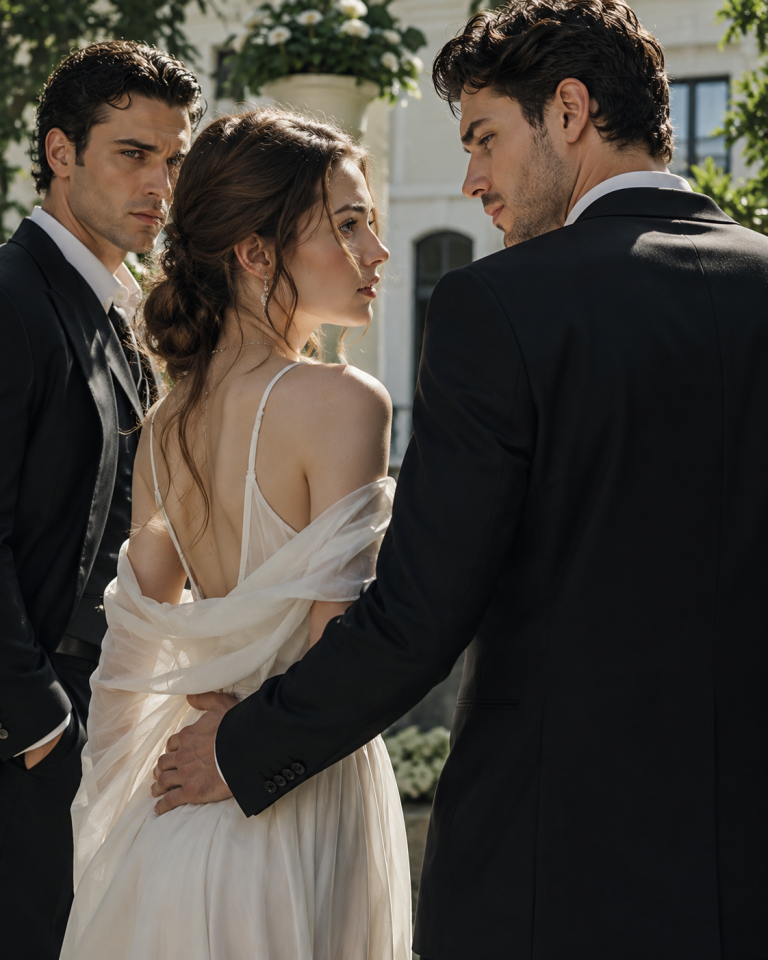
My husband, Preston, stood beside her with one hand resting lightly on the small of her back. He looked proud. Not ashamed. Not caught. Proud — as if watching his mistress imitate his wife was proof that he’d upgraded me into something younger, louder, and easier to applaud.
I looked at the club manager across the room. Then I gave one quiet nod.
—
The first thing people noticed about Kingswood Hollow was the view. Rolling green hills folded down toward the Hudson River like velvet. White umbrellas bloomed over the terrace. The clubhouse had marble floors, brass railings, and windows tall enough to make even old money feel theatrical. The women wore pearls in daylight. The men laughed like consequences were for other people.
My grandmother used to say places like Kingswood Hollow did not run on wealth. They ran on permission. Who was allowed to sit by the window. Who was allowed to use the private elevator. Who received a handwritten invitation instead of a printed one. Who got called “Mrs.” by a staff member who knew exactly which marriages were faithful and which were merely expensive.
For seven years, I had been Mrs. Preston Thackeray. But long before that, I had been Cordelia Sinclair. That was the part Preston always forgot. He liked the Thackeray name because it sounded old, polished, and inherited. He liked the way it looked on business cards and charity programs. He liked that people assumed it came with money, land, influence, and a history of men in navy suits making decisions behind mahogany doors.
What Preston did not like to remember was that the Thackeray name had been drowning when I married him. His father had left debts behind like cigarette burns. His mother had sold her jewelry quietly to keep up appearances. Preston had charm, ambition, and a talent for walking into rooms as if he owned them. I had the rooms.
I was twenty-six when he proposed on the terrace at Kingswood Hollow, under a sky full of June stars and camera flashes. He gave me a five-carat emerald-cut diamond and whispered, “Let me spend my life making you proud.” I believed him. That was my first mistake. My second was believing gratitude could survive success.
Preston became the sort of husband women praised at fundraisers — handsome in a clean, American way, tall, bright-eyed, always freshly shaved. He remembered names, kissed older ladies on the cheek, and knew how to hold a champagne flute while discussing hospital wings, venture capital, or education reform. He also learned very quickly that being married to me opened doors. At first, he thanked me for them. Then he walked through them. Eventually, he began acting as if he’d built them himself.
I met Bianca Ellery on a Thursday afternoon in May. I already knew about her before she knew I knew. She was twenty-nine, worked in “brand strategy,” and had a social media page filled with hotel mirrors, Pilates studios, and captions about becoming the woman she was meant to be. Honey blonde hair, pale pink nails, a smile that looked practiced in elevators. She’d been seen with Preston at the St. Regis bar in Manhattan, at a Knicks game in a private suite, at a hotel in Palm Beach during a weekend he’d told me he was in Chicago meeting investors.
I had photographs. I had timestamps. I had receipts. But I was raised by women who did not throw wine. My mother used to say, “Never interrupt a person while they are showing you who they are.” So I didn’t. I let Preston come home smelling faintly of someone else’s vanilla perfume. I let him kiss my forehead and say he was exhausted. I let him sit across from me at breakfast and scroll through his phone with the careful blankness of a guilty man who thinks he’s talented. I said nothing. Not because I was weak. Because I was listening.
By the time Bianca ordered coffee under my name, I knew more about their affair than either of them knew about themselves. I knew Preston had leased her an apartment in Tribeca through a shell company tied to his consulting firm. I knew he’d bought her a diamond bracelet three days after forgetting our anniversary dinner. I knew she’d used my member number twice at Kingswood Hollow for spa services, once for lunch, once to reserve the small rose room for what the staff politely described as “a private celebration.” I knew Preston had told her I was cold. I knew he’d told her our marriage was “an arrangement.” I knew he’d told her the money was his. That last part almost made me laugh.
That afternoon, I arrived at Kingswood Hollow for the Children’s Cardiac Foundation luncheon wearing a cream silk dress, a camel coat, and my wedding ring. Not because I still believed in my marriage. Because I believe in timing.
The terrace smelled of cut grass, lemon oil, and money. Women turned as I entered — not dramatically, just enough. A soft ripple of recognition moving through pearls and linen. “Cordelia,” someone called. “You look beautiful.” I smiled. That was when I saw her at the coffee bar.
Bianca Ellery stood with my husband beside her, wearing a pale blue dress that looked almost exactly like one I’d worn to a hospital benefit the previous spring. Same neckline. Same waist. Same delicate little bow at the shoulder. On someone else, imitation might have been flattering. On her, it looked like a rehearsal. She accepted the coffee cup from the barista and held it between both hands. Written across the white paper sleeve in black marker was my name.
*Cordelia.*
The barista looked pale. Preston looked amused. Bianca looked delighted. She took a small sip, then walked toward me with the confidence of a woman who’d mistaken access for power.
“Cordelia,” she said. “Finally.” As if I were late to my own life.
“Is that mine?” I asked, looking at the cup.
She laughed lightly. “I guess today it is.”
Preston touched her elbow. “Bianca, don’t.” But he was smiling when he said it. That was the thing about cruel people with polished manners. They liked to pretend they were trying to stop the knife while holding the handle.
Bianca leaned closer, perfume sweet, too young for the room. “I hope you don’t mind. I ordered your usual. Almond milk, no foam, one raw sugar. Your name opens so many doors. I wanted to see how it felt.”
A few women nearby stopped pretending not to listen. Agnes Kendrick turned her head. Cecily Hartley lowered her glass. A man from the board paused near the doorway. Preston’s hand slid to Bianca’s back. My husband looked at me as though waiting for me to break.
That was his mistake.
I did not raise my voice. I did not slap him. I did not ask how long, or why, or whether he loved her. I simply looked past them, to the club manager standing beside the host stand.
Warren Locke had worked at Kingswood Hollow for eighteen years. He’d known my grandfather. He’d seen my father carry me through the lobby when I was six years old and asleep after a Fourth of July fireworks show.
Warren met my eyes. I gave him one quiet nod. His expression did not change. But he reached into his jacket and pressed a button on his phone.
And just like that, the afternoon began to turn.
Part 2
There are two kinds of silence in wealthy rooms. The first is polite — it appears when someone drops a fork or mentions divorce too close to dessert. The second is predatory. It comes when everyone realizes the entertainment has arrived. By the time we entered the Grand Garden Room, Kingswood Hollow was full of the second kind.
The tables were dressed in white linen and low arrangements of ivory roses. My name sat on the program as honorary chair — *Cordelia Sinclair Thackeray.* Preston had once said he loved seeing my full name in print. “It looks like a building,” he told me. He meant it as a compliment then. Now he was trying to knock it down.
Bianca followed us into the room like she belonged in the space between my shoulder blades. Preston did not take my arm. He took hers.
At our table, I sat beside Agnes Kendrick, who’d known my mother for forty years and had the softest voice of any dangerous woman I’d ever met. “Cordelia,” she said, touching my wrist, “is everything all right?”
“Everything is becoming clear,” I said.
Halfway through the meal, Preston rose and tapped his knife against his glass. “Ladies and gentlemen, may I have a moment?” He smiled with the polished ease that had carried him through interviews, board meetings, and lies. “I know today is about the Children’s Cardiac Foundation, and I want to honor the extraordinary work being done. Many of you know how deeply the Thackeray family has been involved in this cause. You also know my wife, Cordelia, has served as honorary chair for several years.” He looked at me, eyes bright with the pleasure of performance. “Cordelia has always cared about appearances. She’s worked hard to preserve a certain image for our family. And while I respect that, I think we all know image is not the same as warmth.”
The room froze. Bianca hid a smile behind her napkin.
“Our marriage has been over in every way that matters for a long time,” Preston went on. “Today, I won’t pretend anymore.” He reached for Bianca’s hand. A woman gasped. “This is Bianca Ellery. She has brought joy back into my life. And because she’ll be helping me lead the Thackeray Foundation into its next chapter, I’ve asked her to co-chair this year’s winter gala.”
*My gala. My mother’s gala.* The event that funded two pediatric surgical fellowships every year at Sinclair Children’s Hospital. The event Preston had never cared about until donors began attaching checks to his handshake.
“Cordelia has carried this role for long enough,” he said. “It’s time for her to rest.”
*Rest.* That was the word he chose for erasure.
Bianca stood, lowering her lashes with the false humility of someone who’d chosen her lighting. “I know this must be difficult. But I promise I’ll take good care of what you built.”
I smiled. Small. Enough to make Preston’s expression flicker. “Will you?” I asked.
“I already have. The staff has been wonderful. Once they understood Preston and I were together, everyone was so accommodating.” She lifted her chin. “People adjust quickly when they know who the future Mrs. Thackeray will be.”
Not a slip. A declaration.
I picked up my water glass, took one quiet sip, and set it back down. “Are you finished?”
Bianca blinked. “Cordelia, let’s not make this ugly,” Preston said.
“I agree,” I said. “Ugly would be unnecessary.” I looked at Warren. He moved toward the stage.
Part 3
“Mr. Thackeray,” Warren said calmly into the microphone, “before this luncheon continues, there are several membership and governance matters requiring immediate correction.”
“Warren, this is not the time,” Preston said.
“On the contrary, sir. It is precisely the time.”
Bianca laughed once, sharp and nervous. “Is this some kind of joke?”
“No,” I said. Then, to her: “And for the record, the staff was not accommodating you. They were documenting you.”
Her face changed by a single shade. Not enough for the whole room to notice. Enough for me.
I rose from my chair, my cream silk dress falling perfectly into place. “Before anyone feels uncomfortable,” I said to the room, “please understand that I did not arrange this humiliation. My husband did. I simply allowed him to choose the audience.”
“Please continue,” I told Warren.
He opened his folder. “Effective twelve forty-three p.m. today, all unauthorized use of Mrs. Cordelia Sinclair Thackeray’s membership account has been suspended pending legal review.”
“Unauthorized?” Bianca scoffed.
“Yes, Ms. Ellery. Unauthorized.”
“I authorized it,” Preston said.
“No, sir, you did not have authority to do so,” Warren said. “You were on the advisory board as a courtesy appointment under the Sinclair Family Trust’s social governance charter. That appointment was contingent upon maintaining member conduct standards, including prohibitions against identity misuse, fraudulent charging privileges, and conduct likely to damage the reputation of the club or its charitable partners.”
“Identity misuse? I ordered coffee,” Bianca said.
“You ordered coffee,” I said. “You also reserved the rose room under my name. You billed spa services to my account. You signed for a private lunch as Mrs. Thackeray. And last month, you used my digital membership credentials to access the east pool during a closed family event.”
Preston looked at her. Interesting — he’d known about some of it. Not all.
I removed a slim envelope from my handbag. “I have copies of the receipts. So does club counsel. So does my attorney. So does the foundation’s compliance committee.”
“You’ve been spying on me?” Preston demanded.
“No. I have been reading what you signed.”
That landed harder than anger would have, because Preston hated paperwork. He loved ceremonies, speeches, the front page of donor newsletters. He never read contracts. He thought contracts were things people like me handled quietly so people like him could make entrances.
“This is not how we handle private matters,” he said, lowering his voice.
“You made it public when you introduced your mistress at my mother’s foundation luncheon.”
“Don’t call me that,” Bianca snapped.
“What would you prefer? Co-chair?”
Preston’s face flushed. “Enough.”
I let the word lie there. Then I opened the envelope. “Since you’ve announced our marriage is over, I assume you’ll appreciate efficiency. First — the Thackeray Foundation is not yours.”
“Of course it is. It has my name on it.”
“Yes. Because seven years ago, when your family’s charitable fund was insolvent, I merged it with my mother’s pediatric initiative to protect the scholarships your father had promised and never funded. The legal entity is Sinclair Children’s Trust, doing business as the Thackeray Foundation. I allowed the name to remain because your mother asked me to spare your family one more public embarrassment.”
Lenora Thackeray, seated near the front with a string of pearls at her throat, closed her eyes.
“Second — the winter gala chair cannot be appointed by you. It’s selected by the trust’s majority trustee.”
“And who is that?” Bianca asked.
“I am.”
The room exhaled.
“You wouldn’t dare do this here,” Preston said.
“You dared.”
I turned a page. “Third. Kingswood Hollow Country Club sits on land owned by Sinclair Ridge Holdings. The clubhouse, dining operations, and hospitality licenses are managed under a long-term lease controlled by the same trust. Your advisory seat was granted as my spouse.”
“What does that mean?” Bianca whispered.
“It means,” Warren said gently, “Mr. Thackeray’s club privileges have been suspended.”
“You can’t suspend me,” Preston snapped.
“I already have, sir.”
“You work for me.”
Warren looked at me.
“No,” I said. “He doesn’t.” Three words, clean as glass.
Preston stared at me, and I watched the memory move through him — every dinner where he’d waved at staff as if they were part of his scenery, every golf morning, every investor meeting he’d hosted in rooms my family paid to heat. His life had been built on borrowed keys. For the first time, he heard them turning in the locks.
“Danny— Preston, let’s go,” Bianca said, touching his sleeve, giving a small breathy laugh. “This is beneath us.”
“No,” I said. “Not yet.” I turned to the room. “There is one more matter.”
Preston went pale. That was when I knew he’d guessed. Not the coffee. Not the club. The company.
—
Preston Thackeray’s company was called Thackeray Civic Partners — on paper, a consulting and development firm specializing in hospital expansions, educational campuses, and public-private partnerships. In photographs, it was Preston in a hard hat, shaking hands with mayors, pointing at blueprints with serious men who loved calling themselves visionaries. In reality, it was eighty-seven percent debt, twelve percent charm, and one percent my patience.
The firm had survived because I’d introduced Preston to the right people, secured his first line of credit, and quietly covered two payroll gaps in the second year after he overexpanded reading a magazine profile about himself. I didn’t mind helping my husband. I minded when he began mistaking help for tribute.
Six months before the luncheon, I found the first irregularity — a vendor invoice routed through a shell account, then another, then a “brand consulting fee” paid to a company called BEL Strategy. Bianca Ellery Lane. She hadn’t even bothered to hide behind good initials. By the time Preston stood in front of my foundation luncheon and called me cold, my forensic accountant had traced over four hundred thousand dollars in company money to Bianca’s apartment, travel, wardrobe, and a “personal development retreat” in Sedona where she’d posted photos captioned *Becoming Her.*
I saved every screenshot. I didn’t confront him when I found the apartment, when the receipt arrived through a shared email archive he’d forgotten existed, when he moved half a million dollars from a restricted project account into a discretionary executive fund and told his CFO to “keep Cordelia out of the weeds.” I simply called my attorney. Then the bank. Then the only person Preston feared more than scandal — his board chair.
Now, standing in the Grand Garden Room with a hundred witnesses and ivory roses on every table, I watched Preston realize the affair was not the disaster. It was merely the doorway to the disaster.
I removed a second envelope. “Preston. Don’t,” he said — not an apology, a command dressed as a plea. I opened it anyway.
“Four years ago, Thackeray Civic Partners accepted an emergency capital infusion from Sinclair Private Holdings. That investment came with protective covenants — misuse of restricted funds, reputational harm, fraud, or failure to disclose conflicts of interest would trigger immediate conversion rights.”
Preston took a step back. “What did you do?” he asked — not *what happened*, but *what did you do.*
“I enforced the agreement you signed,” I said.
Warren gestured toward the back. The doors opened. A woman in a charcoal suit entered with two men behind her, moving with the calm authority of someone who billed by the six-minute increment. My attorney, Marissa Steele.
“Mr. Thackeray,” she said, “as of nine a.m. this morning, Sinclair Private Holdings exercised its conversion rights. Your voting control in Thackeray Civic Partners has been reduced pending board review. You have also been placed on administrative leave as CEO.”
The room erupted quietly — gasps, whispers, chairs shifting.
“You can’t remove me from my own company,” Preston said.
“It is not your own company anymore,” Marissa said pleasantly.
Bianca’s hand fell from his arm. Love is warm. Ambition checks the exit.
“You planned this,” Preston said, hatred so naked it almost looked like honesty.
“No,” I said. “You did. I documented it.”
“This is insane,” Bianca said. “Preston, tell them she’s jealous.”
Marissa tapped her tablet. “Ms. Ellery, since you participated in unauthorized charges, accepted funds traced to restricted corporate accounts, and represented yourself as Mrs. Thackeray to club staff on multiple occasions, you will be receiving separate notice from counsel.”
“I didn’t represent myself as—” Bianca’s face drained.
On the screen behind the stage, the slideshow changed. Bianca at the spa desk, signing a receipt: *Mrs. Thackeray.* Bianca in the rose room, raising a glass toward Preston. Then a message thread, enlarged:
*Bianca: I want them to say it when I walk in.
Preston: Say what?
Bianca: Mrs. Thackeray.
Preston: Soon.*
The sound moving through the room now was judgment, not shock.
“Turn it off,” Preston said.
Marissa swiped once more. Another message appeared:
*Preston: She won’t fight it. Cordelia hates scenes.
Bianca: Good. I want her to watch me take her chair.
Preston: She never understood how to be soft anyway.*
I felt that one. Not because it surprised me — because somewhere inside me there was still a younger woman on a June terrace, wearing an engagement ring, believing a man who promised to make her proud. *Soft.* He had wanted softness, but what he meant was surrender. He had wanted warmth, but what he meant was worship. He had wanted a wife who would fund the room, arrange the flowers, save the company, preserve the family name, and step aside when he found someone willing to clap louder.
I inhaled once. Then I let that younger woman go.
“Cordelia,” Preston said, quieter now. “Please.”
“What does administrative leave mean?” Bianca demanded of him.
He didn’t answer.
“It means,” I said, “the apartment in Tribeca will no longer be paid for by corporate funds. And the bracelet is evidence.” Her hand flew to her wrist. Every woman in the room saw it — that tiny, guilty movement, better than a confession.
Lenora Thackeray stood slowly. For one moment I thought she might defend her son. Instead she looked at him. “You used Cordelia’s mother’s foundation for this?”
“Mom, don’t.”
“You brought that woman here?”
Bianca recoiled as if *that woman* were more insulting than mistress. Preston reached for his mother; she stepped back. Not far. Just enough. It was the smallest disinheritance I had ever seen.
Marissa handed Preston a folder. “This contains your formal notice. You will be escorted to collect personal items from your office tomorrow under supervision. Your company email and building access have been suspended.”
Preston took the folder because there was nothing else to do with his hands. Then he looked at me, all the arrogance burned off. “You’re my wife,” he said.
The room went still again. Not love. Not remorse. Ownership.
I looked at him for a long moment. Then I removed my wedding ring. I did not throw it. I did not place it in his palm. I set it gently on the white linen table beside the cold cucumber soup and the program bearing my mother’s name.
“No,” I said. “I was.”
—
Bianca cried first, pressing a napkin beneath her eyes without disturbing her mascara. “This is cruel. You’re humiliating me.”
“No,” I said. “You confused humiliation with consequence. Humiliation is what you attempted. Consequence is what arrived.”
“You told me you were separated,” she said to Preston.
“I told you what you wanted to hear,” he snapped.
The words cracked across the room. Bianca froze. There are sentences that end affairs more effectively than divorce papers. That was one of them.
Warren stepped forward. “Ms. Ellery, Mr. Thackeray, I will need to ask you both to leave the premises.” Two security staff appeared near the doors. They did not touch anyone. They did not need to. The wealthy are rarely dragged out. They’re shown the direction in which dignity might still be possible.
Bianca grabbed her bag. “You think this makes you powerful?”
“No,” I said. “Powerful would have been stopping you at the coffee bar. This is restraint.”
Preston remained where he was, folder in hand, tie slightly crooked. “Cordelia, can we talk privately?” It was almost funny. After everything he’d done publicly, he wanted privacy for the consequences.
I looked around the room — at the donors, at the women who’d once smiled at my wedding, at the staff, at his mother crying silently into her napkin, at Bianca still holding the coffee cup with my name on it.
“No,” I said. “You chose witnesses.”
“I made mistakes.”
“Many.”
“I was unhappy.”
“That is not a defense. It is an explanation you owe your therapist.”
“I loved you once,” he said. That was the only thing he said all day that hurt, because I believed him. I believed Preston had loved me in the beginning, in the shallow way some men love a sunrise before deciding they deserve the sun. He’d loved my beauty, my polish, my connections, my quiet competence. He’d loved the version of me that made him taller in photographs. But he had not loved the woman who existed when no one was watching. He had not loved my grief when my mother died. He had not loved the nights I sat beside him reviewing contracts so his employees would keep their health insurance. He had not loved the miscarriages we never discussed because he said pain was easier when we didn’t “make a whole thing of it.” He had not loved the body he called distant after it had broken itself trying to give him a child. He had loved being chosen by me. There is a difference.
“I loved you too,” I said. For one foolish second, hope touched his face. Then I finished: “That is why I gave you so many chances to become the man you pretended to be.”
He looked away. Bianca made a small impatient sound near the door — even then, hating not being the center of the scene. Preston turned toward her, something like disgust crossing his face. Not because she was worse than him. Because she had failed to save him from himself.
He walked past me slowly. At the table, his eyes dropped to my wedding ring on the white linen. He reached for it. I covered it with my hand. “No,” I said. “It belongs to the marriage. Not to you.” His face crumpled — not fully. He would rather die than fall apart in a country club. But I saw it. The first real fracture.
Bianca walked out first. No one followed. Preston walked behind her. At the doorway, the barista from earlier stood holding a small tray. “Ms. Ellery,” he said, “your card was declined for the coffee.”
A sound moved through the room. Not laughter. Something softer and sharper. Bianca’s face burned crimson. The black marker on the cup still read *Cordelia.*
I picked up my water glass. For the first time all afternoon, I smiled like I meant it. Her borrowed name stopped opening doors that afternoon.
—
The luncheon did not end after Preston left. That surprised people. Instead, I stepped onto the stage. Warren adjusted the microphone. The room was still full — scandal may bring witnesses, but grace decides whether they stay.
“My mother used to say that dignity is not silence,” I began. “Dignity is choosing what your voice will be used for. Today, my private life became public in a way I did not invite. But this foundation was never about my marriage. It was never about a family name. It was about children who deserve tomorrow, parents who deserve hope, and doctors who deserve every tool we can place in their hands.”
Agnes Kendrick began to clap first. Then Lenora Thackeray. Then the room — not wild applause, something steadier, earned.
By the end of the afternoon, the foundation had raised more money than in any previous spring luncheon. Agnes doubled her pledge. Cecily Hartley offered to underwrite the surgical fellowship. Lenora quietly transferred a block of old Thackeray shares to the pediatric research fund before sunset. “I should have done this years ago,” she told me near the coat check. I took her hands. “We all do things when we finally can.” She cried, and I let her. Not every woman in a harmful family is innocent. Not every woman is free. Sometimes compassion is not reconciliation. Sometimes it is simply refusing to become cruel because someone else was weak.
By evening, clips of the afternoon were already moving online — a woman in cream silk, a mistress with a coffee cup, a husband realizing, in real time, that the wife he’d humiliated owned the room. People would call it savage, iconic, cold, ruthless. They would be wrong about one thing. I was not cold. Cold is empty. I was clear. There is warmth in clarity — the clean kind, the kind that returns to your own hands after years of using them to carry someone else’s weight.
Three weeks later, I moved out of the house Preston loved to call ours. It had never been ours. It had belonged to a version of me who believed endurance was proof of devotion. I sold it quietly to a family with three children, two golden retrievers, and a mother who cried when she saw the garden. “I can picture birthdays here,” she said. “So can I,” I told her. And I could. That was how I knew it was right to leave.
I bought a brownstone in Brooklyn Heights with tall windows, old floors, and a kitchen that caught the morning sun. I kept one room empty for six months, not because I was sad, but because I liked walking past space that did not require an explanation. On Sundays, I made coffee for myself — almond milk, no foam, one raw sugar. Sometimes I smiled when I said my name at the counter. *Cordelia.* Not Mrs. Thackeray. Not Preston’s wife. Not the woman Bianca tried to become. Just Cordelia. A name does open doors. But only when you stop handing the keys to people who think love means letting them move in and rearrange your life.
By autumn, the winter gala had a new name: the Hazel Sinclair Heart Fund. No borrowed legacy, no fragile man’s surname pretending to be marble. Just my mother’s name, shining where it always should have been. At the gala, I wore deep red. Not for revenge. For circulation. For the heart. For every version of myself that kept beating quietly while other people mistook quiet for weakness.
Near the end of the night, Warren found me on the terrace overlooking the Hudson. “Mrs.—” he began, then stopped.
“Cordelia is fine,” I said.
He nodded. “Cordelia. The final numbers just came in.” He handed me the card. I read it once, then again. We had funded the fellowship for the next ten years.
I looked out at the river, dark and silver beneath the winter moon, and thought of Preston — not with longing, not even anger, just recognition. Some people enter your life like storms and leave you counting the damage. But sometimes, after the roof is repaired and the water recedes, you realize the storm also cleared the view.
Behind me, music drifted from the ballroom. Warm light spilled across the terrace stones. Inside, people were dancing.
I folded the card and placed it over my heart. Then I went back in.
THE END.