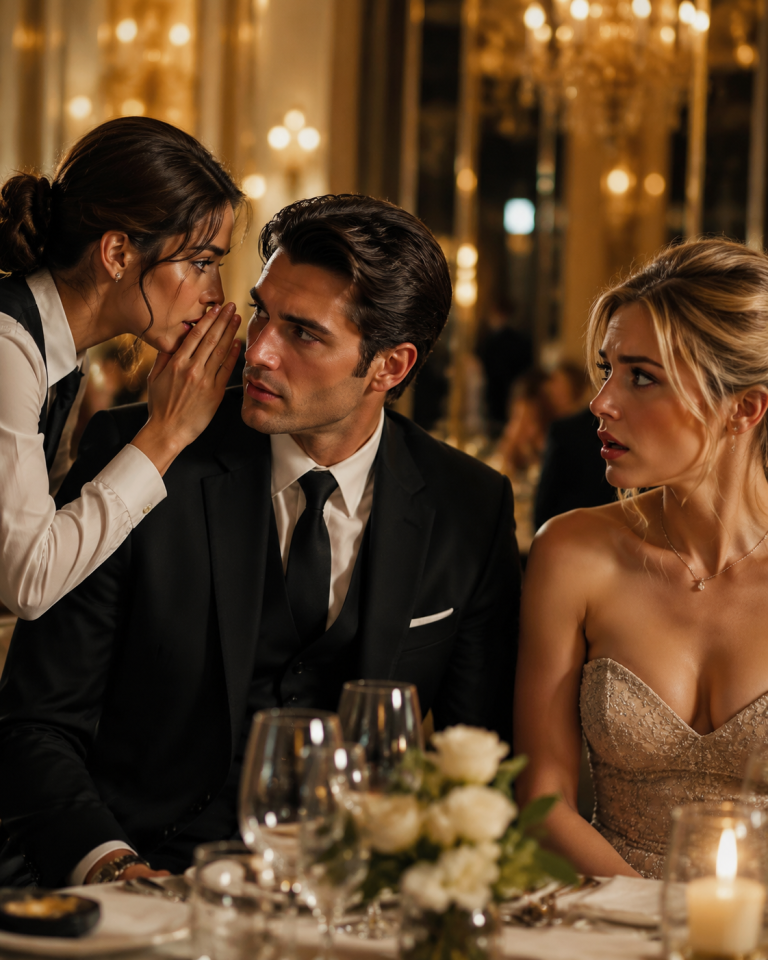
The Photographer Struck the Mafia Boss for Humiliating Her Sister—Then He Forced Her to Play His Lover

## PART 1:
Maya Chen had photographed wars.
Not metaphorical ones — actual conflicts, two of them, on assignment for wire services that paid poorly and expected you to be grateful. She had stood in places where the air smelled like burning and pointed her camera at things that needed to be seen, and she had learned in those places a particular quality of stillness. The kind that lets you stay present in a room when everything in you wants to leave.
She had never once raised her hand to anyone.
Until tonight.
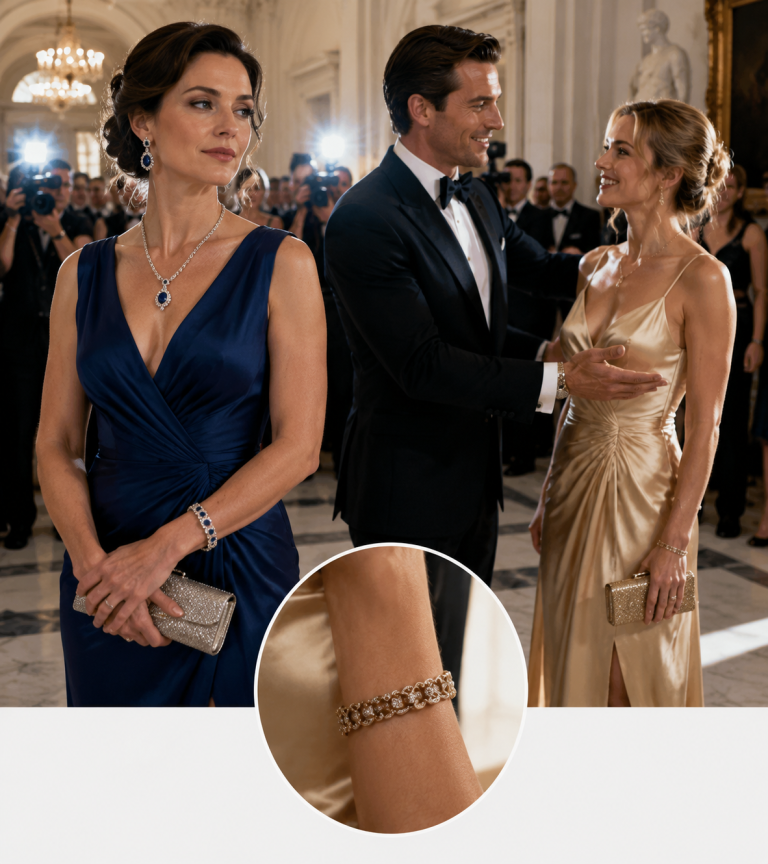
The Harrington gala occupied the entire fourth floor of the Caldwell Hotel, and it was the kind of event that reminded Maya why she preferred being behind a camera to being in front of things. Two hundred people who had long ago confused wealth with virtue, performing generosity for each other under three chandeliers that collectively cost more than her Brooklyn apartment building.
She was here to work. A freelance job — shoot the room, shoot the donor plaques, shoot the handshake moments that nonprofits used for annual reports. Three hours, flat fee, no creative input required.
Lily was here because she had believed, with the specific hopefulness of a twenty-three-year-old in her first year of medical school, that events like this led to research fellowships and useful connections and a future that assembled itself through the right rooms.
Maya had tried to explain that the right rooms rarely worked the way people new to them expected.
Lily had smiled and worn the green dress she’d bought secondhand and borrowed earrings from their mother, and Maya had driven her here because she was the older sister and that was what older sisters did.
She kept one eye on Lily through the viewfinder.
She noticed the room change before she identified the cause.
Conversations didn’t stop — they lowered, subtly, the way audio levels drop when something else demands bandwidth. Bodies reoriented toward the entrance in that involuntary way that has nothing to do with decision and everything to do with the animal part of the brain that tracks dominance.
Five men came through the entrance.
The one at the center was not the largest. That distinction belonged to a broad-shouldered man on his left who looked like he had been built for specific purposes. The one at the center was perhaps six feet, lean, dark-haired, wearing a charcoal suit with no tie and an expression of such complete composure that it read, paradoxically, as more threatening than aggression would have.
A woman beside Maya murmured a name to her companion.
“Damon Vreeland.”
Said the way you say the name of weather.
Maya raised her camera. Force of habit — when something important entered a room, you documented it.
Through the viewfinder she tracked him across the ballroom, watching the crowd adjust around him the way water adjusts around something dropped into it. His eyes moved across the room with the professional sweep of a man who was always, regardless of context, taking inventory.
They landed on Lily.
Maya lowered the camera.
Lily was near the far bar with two classmates and a cluster of men Maya hadn’t seen arrive — three of them, mid-thirties, the kind of polished that takes effort. They were leaning toward Lily’s group with the practiced interest of people who want something from you and have decided charm is the efficient delivery mechanism.
Damon Vreeland reached them before Maya was halfway across the room.
She moved faster.
“Colleagues,” he said, and the word had a quality she couldn’t immediately parse — not warm, not cold. Precise. “I didn’t realize this was on your schedule tonight.”
One of the three men — blond, expensive haircut — produced a smile that had clearly been rehearsed. “Mr. Vreeland. We were just getting acquainted with these ladies. Law students. Very impressive.”
Damon’s gaze moved to Lily.
And Maya, now close enough to see his face clearly, watched something happen in his expression that her camera-trained eye processed as intentional — a shift, a decision, something chosen rather than felt.
“Medical student,” he said, looking at Lily with the flat assessment of someone evaluating inventory. “First year, from the look of it. Still under the impression that the people in rooms like this are here for the reasons printed on the invitation.” He tilted his head slightly. “These three specifically are looking for someone exactly like you — young, ambitious, connected to a university research network, eager enough to overlook the parts of the arrangement they’d explain later.”
Lily had gone very still.
The color had left her face in the particular way that happened when someone said something cruel in a room full of people and no one moved to stop it.
The three men were silent.
The classmates beside Lily were silent.
Forty people in the immediate vicinity had gone silent.
Maya’s camera was in her left hand.
Her right hand moved on its own.
The sound of the slap was clean and flat and carried in the way that sounds carry in suddenly quiet rooms.
Damon Vreeland’s head turned with the impact.
His men moved — not slowly, not hesitantly. The broad-shouldered one on the left had covered half the distance to Maya before Damon raised one hand.
Everything stopped.
He turned back.
He looked at her.
Not with anger. Not with the dangerous, escalating energy she had braced for. With an expression she could not read — and Maya could read most expressions, it was a professional qualification — that was somewhere between calculation and something she might, in other circumstances, have called recognition.
Blood pressure in her ears. Camera strap cutting into her palm where she’d gripped it.
She did not step back.
“My sister,” Maya said, “is not a resource.”
The room held its breath.
Damon Vreeland looked at her for three full seconds.
Then he leaned forward, very slightly, and said something that was not for the room — something quiet and close, meant only for her:
“I know exactly what your sister is. That’s why I needed her to leave this conversation before those three men finished it.”
Maya processed this.
The three men with the polished charm were no longer in her peripheral vision — they had redistributed themselves toward the edge of the crowd with the efficiency of people who’d decided a strategic exit was indicated.
Lily was looking between Maya and the man with the imprint of Maya’s hand on his jaw, her expression cycling through confusion and something beginning to look like understanding.
“What?” Maya said.
Damon straightened.
Something moved at the corner of his mouth. Not a smile. The shape a smile makes when the person has decided against it.
“You can be angry at me on the way out,” he said, “or you can let me explain what those three men were actually here to do tonight.” A pause. “I’d suggest explanation, but I’ve been slapped by angrier people than you, so the choice is genuinely yours.”
Maya looked at Lily.
Lily looked at the place where the three men had been standing.
Maya looked back at Damon Vreeland, who was standing in the middle of a silent ballroom with her handprint on his face and the absolute composure of a man who had anticipated this moment and found it neither surprising nor unwelcome.
“You have five minutes,” she said.
Something shifted in his expression.
“I’ll need ten,” he said. “There’s a room off the east corridor. Private.” He glanced at Lily. “Bring your sister. What I have to say concerns her more than it concerns you.”
He turned and walked toward the corridor.
His men fell into formation around him — except the broad-shouldered one, who paused beside Maya and said, in a voice that was not unkind:
“He’s not going to hurt you.”
“I know,” Maya said, which was interesting because she hadn’t known that until she said it.
She took Lily’s hand.
They followed.
The east corridor room was a small reception space, empty, with one lamp burning on a side table. Damon stood near the window with his back partially to them, and when he turned his jaw carried the red outline of her handprint with what appeared to be complete indifference.
“The three men your sister was speaking with,” he said, without preamble, “work for someone who has been building a network inside university research departments for two years. Medical students in their first year. Specifically those without significant financial backing — people who need funding and are grateful enough not to ask the right questions.”
Lily had gone very still again.
“What kind of network?” Maya asked.
“The kind that needs access to research data before it’s published. Clinical trial results. Drug efficacy numbers.” He looked at Lily directly. “The kind that would have seemed, at first, like a mentorship. A grant. An introduction to people who could help.”
“And then?” Lily said quietly.
“And then you would have owed them something you didn’t understand you were agreeing to.”
The lamp threw a small circle of light between them.
Maya lowered her camera — she hadn’t realized she’d raised it, reflexive documentation, the war correspondent instinct — and looked at this man she had slapped in front of two hundred people.
“How do you know this?” she asked.
He held her gaze.
“Because I’ve been watching them move through these events for four months,” he said. “And because the university they’ve already compromised—” he paused — “is where your sister did her undergraduate degree.”
Maya felt Lily’s hand tighten in hers.
“You could have just told her that,” Maya said. “Without the performance in front of the whole room.”
“I needed them to leave the conversation,” Damon said. “If I’d simply walked up and warned her, they would have waited and tried again. The way I did it—” He touched his jaw briefly, with something that was not quite irony. “They won’t come near her again. They don’t want my attention.”
He looked at Maya with that same unreadable expression from the ballroom.
“You,” he said, “were not part of the calculation.”
“Clearly.”
“No.” Something in his voice shifted — just slightly, just enough to change the texture of the sentence. “I mean you surprised me. That has not happened in some time.”
Maya stood in the lamp-lit room with her camera and her three-year-old dress and her heart still running from the adrenaline of crossing a ballroom to slap a man whose name the room had said like weather.
She thought about what he’d said.
She thought about the three men and where they’d gone.
She thought about Lily, who was twenty-three and wore borrowed earrings and still believed that the right rooms opened the right doors — and who was, it turned out, right, just not in the way she’d expected.
“What do you want?” Maya asked.
Damon Vreeland looked at her for a long moment.
“There’s a function next weekend,” he said. “The same three men will be there. Along with the person they report to, who will be attending publicly for the first time.” He paused. “I need someone who can move through a room without being noticed. Who can document things without appearing to.”
He looked at the camera in her hand.
“Someone who has photographed things that needed to be seen,” he said quietly, “and understood why.”
The lamp flickered once.
Maya looked at her camera. At Lily. At the man by the window with her handprint on his jaw.
“You researched me,” she said.
“After you crossed the room,” he said. “I had four minutes while you were with your sister. You’re thorough, experienced, and you don’t hesitate when someone you love is in the room.”
“That last one is a liability.”
“That last one,” Damon Vreeland said, “is exactly what I need.”
Maya said nothing.
Outside the small room, two hundred people were resuming the performance of generosity. Somewhere in there, the three men with the polished charm were recalibrating.
“Next weekend,” she said finally.
“Yes.”
“And Lily is out of it.”
“Completely.”
Maya looked at him one more time — this man the room named like weather, standing calmly with evidence of her anger on his face, asking her to walk into something she didn’t yet fully understand.
“I’ll need a real explanation,” she said. “Not the five-minute version.”
“Ten minutes,” he said. “I said ten.”
“I’ll need longer than ten.”
Something crossed his face then — so brief she almost missed it, and she was a person trained not to miss things.
It looked, for just that moment, like relief.
—
## PART 2:
The explanation took forty minutes.
He gave it to her over two coffees in a place on Amsterdam Avenue that looked like it had been there since before either of them was born — vinyl booths, fluorescent light, a waitress who refilled without being asked and had apparently decided they weren’t interesting enough to eavesdrop on.
The broad-shouldered man — whose name was Resch — sat two booths away and read a newspaper that may or may not have been a prop. Maya had stopped trying to decide.
Damon talked. She listened. She asked questions at the points where the logic needed support, which was fewer than she expected.
The network was real. Three men at the center of it, the ones from the ballroom, moving through philanthropy events at the intersection of medicine and money. First-year medical students were recruited as research informants — access to unpublished trial data, early-stage drug efficacy numbers, the specific information that moved pharmaceutical investment markets if you had it two weeks before anyone else.
Insider trading wrapped in mentorship.
Four universities already compromised. Enough students to constitute a systemic pattern rather than isolated bad judgment.
“The woman who runs it,” Maya said, when he paused. “The one who’ll be at the function next weekend. Who is she?”
“Her name is Sella Roux,” Damon said. “Publicly: a medical philanthropy foundation director. Board member of three hospital networks. The kind of position that makes people write you checks rather than ask you questions.”
“And privately.”
“The architect of the network. The three men you saw tonight are mid-level. She’s been running this for six years.” He looked at his coffee. “The reason it’s taken this long to get close to her is that she doesn’t attend these events herself. She sends them. Next weekend is the first time she’ll be present.”
“Why?”
“Because there’s a specific research program at Columbia being announced at the event. New cardiac trial. She wants to be in the room when the PI discusses it informally.” He held Maya’s gaze. “She’ll want photographs taken with the principal investigator. Documentation of her philanthropic presence.”
“And you need documentation of her actual presence.”
“Her face, clearly, in the same frame as her three operatives. Timestamped, legally obtained, in a context she can’t claim she wasn’t there for.” He paused. “The kind of photographs that constitute evidence rather than accusation.”
Maya understood what he was asking.
She understood it the way she understood her own work — not just technically but structurally, the way a photograph becomes something that changes what’s true about the public record.
“She knows you,” Maya said.
“She knows who I am. She doesn’t know my current interest in her.” He looked at his coffee. “She will, the moment I walk into that room. Which is why I can’t be the one with the camera.”
Maya turned her cup on the table.
“And she won’t know me,” she said.
“No.” He met her eyes. “You can move through a room like that without being noticed. I’ve seen you do it. And you’re credentialed — a legitimate freelance photographer with two conflict zone assignments and a wire service history. If someone asks why you’re there, the answer is real.”
Maya looked at him.
She thought about what he hadn’t said, which was that she had walked into a room with a dangerous man twice already — once on instinct, once deliberately — and had not flinched either time.
He hadn’t said it because he knew she’d already done the accounting herself.
“I’ll need access to the full briefing before Saturday,” she said. “Names, photographs of all three operatives so I can establish them in frame. The venue layout.” She picked up her coffee. “And I need to know what happens to the photographs after I take them.”
“They go to a federal contact at the SEC,” he said. “Financial crimes unit. I’ve been building the evidentiary file for four months. What I need from Saturday is facial documentation — her, her people, the same room, the same event.”
“And then it’s out of your hands.”
“Yes.”
“And mine.”
“Yes.”
Maya sat with that.
She had spent two years pointing her camera at things that needed to be seen and watching other people decide what happened with them. Editors, wire services, investigators who received her files and built things from them she sometimes learned about later and sometimes didn’t.
That was the job. Document. Hand it over. Step back from what you can’t control.
“Saturday,” she said.
He looked at her carefully. “You’re sure.”
“I’m not sure of anything,” she said. “But I’ll be there.”
Something in Damon Vreeland’s expression settled — not relaxation exactly, the settling of a man who has been maintaining a particular tension and has just been given a reason to reduce it by one variable.
“Thank you,” he said.
It was, she thought, the most direct thing he’d said all night.
—
The Meridian Club occupied the top two floors of a building on 58th Street that existed primarily to remind people that some spaces were not for everyone. Saturday night. A research philanthropy dinner, black tie, two hundred guests who were doctors, donors, and the specific category of person that exists at the intersection of both.
Maya arrived with press credentials Damon’s contact had arranged and a camera bag that looked entirely normal and contained, among other things, a lens that would let her work from across a room in low light without appearing to.
She moved through the cocktail hour with the photographer’s invisibility she had spent a decade developing. Shoot the room. Shoot the donor recognition wall. Stand near the cluster of people who were most likely to be photographed together so you looked purposeful rather than observational.
She spotted the three men within twelve minutes. Separate positions in the room, distributed — not coincidence, arrangement.
She shot them without approaching. Just coverage, the way you shoot a room.
Sella Roux arrived at seven-forty.
Maya recognized her from Damon’s briefing photograph — mid-sixties, silver hair worn precisely, the kind of composed physical presence that came from decades of being watched and deciding what to give the watchers. She moved through the room with practiced warmth: name, handshake, specific compliment, move on. The philanthropist circuit’s specific social fluency.
She watched Sella work the room for twenty minutes, shooting at intervals, establishing documentation.
At eight-fifteen, Sella stepped into a moment with two of the three operatives and the Columbia principal investigator that would have looked, to anyone else, like a natural photograph — donor with researcher, evidence of institutional connection.
Maya moved into position.
She raised the camera.
In the viewfinder: Sella, both operatives, the PI, the program’s banner clearly legible in the background. A clean, timestamped image that put every relevant person in the same room at the same moment.
She pressed the shutter.
She pressed it twice more, bracketing.
And in the third frame — as the group began to naturally shift — Sella Roux turned her head.
Not toward Maya specifically. Toward the camera.
A fraction-second scan of the room that photographers learned to read: the check of someone who was used to being documented and wanted to know who was doing it.
Their eyes met through the viewfinder.
Something happened in Sella’s face.
Not recognition — Maya had never met this woman. Something more specific than that. The particular expression of a person who has seen something they didn’t expect and is very quickly processing what it means.
She looked at Maya’s camera.
At Maya’s face.
And then she looked away, back to the group, and the conversation continued as if nothing had happened.
Maya lowered her camera.
Her hands were steady. Twelve years of pointing a camera at dangerous things had given her hands a professional steadiness that the rest of her hadn’t always matched. They were steady now.
But something had happened. She didn’t know what yet.
She kept working.
At nine o’clock she found Damon near the east wall and passed him a memory card with a hand that didn’t pause, the way they’d arranged.
“She looked at me,” Maya said, keeping her voice at register. “Directly. I don’t know what it meant.”
He didn’t react outwardly. “What kind of look?”
“Like she recognized something. Not me — something about me.”
He was quiet for a moment. “Keep the second card. Don’t pass it on yet.”
“Why.”
“Because if she recognized something about you, I need to know what before those images go anywhere.”
—
## PART 3:
He called her at eleven that night.
She was home, memory card still in her bag, going through the evening’s images on her laptop with the particular focus she brought to edit sessions — clinical, fast, looking for the frames that held rather than the ones that almost held.
She had the images. Three clean frames, all elements present, legally obtained, exactly what he’d asked for.
She also had four frames from the moment Sella Roux had turned to look at her.
She had been studying those four frames for an hour when the phone rang.
“The photograph she recognized,” Damon said. “It wasn’t you. I think I know what it was.”
Maya waited.
“I need to ask you something about your conflict zone work. The second assignment — Eastern Europe, eighteen months ago. Did you file everything with the wire service?”
She went still.
“Standard filing,” she said. “Everything I shot goes through the wire service archive. I keep my own copies.”
“Was there anything you shot that you weren’t certain about? That you might have filed without looking at closely?”
Maya thought about it.
She thought about eighteen months ago. The second assignment — she’d been embedded with a field team covering a specific dispute over mining concessions, the kind of story that didn’t make front pages but mattered to people who tracked resource extraction. She had shot for nine days and filed approximately three hundred images.
There were always images she shot without fully knowing what she was shooting. The reflex frames, the documentation instinct — camera up before the brain had processed what the eyes saw.
“There might be,” she said.
“I’m going to send you a name,” Damon said. “Tell me if you recognize it.”
A text arrived.
A name she didn’t recognize.
Below it: a position. Senior executive of a pharmaceutical supply chain company. Below that: a photograph.
Maya looked at the photograph.
The man in it was somewhere in his fifties — not distinctive, the specific indistinctiveness of someone who had spent a career not being distinctive. She looked at him for a long moment.
She didn’t recognize him consciously.
But something moved in her professional memory — the specific filing system of someone who has looked through hundreds of thousands of images — and she thought: *Eastern Europe. Day four or five. The car.*
“Hold on,” she said.
She went to her archive.
It was organized by assignment and date, which meant finding the correct folder took thirty seconds. Finding the correct sequence took four minutes of scrolling.
Day five.
She’d been shooting an outdoor meeting between local officials and a delegation she hadn’t been briefed on. She’d shot the delegation arriving — reflex frames, documentation of who was present before she knew why they were present.
She found the image in frame 847.
The man from Damon’s photograph.
Clear. Unambiguous. Standing between two people she’d documented in subsequent frames as involved in the disputed concession negotiations.
And standing beside him: Sella Roux.
Eighteen months ago. An outdoor meeting in Eastern Europe. Both of them, documented in a wire service archive and in Maya’s own backup files, at an event that had nothing to do with medical philanthropy.
Maya sat at her desk.
She understood what she was looking at.
Sella Roux’s network wasn’t just pharmaceutical insider trading. The medical research access was one layer. What sat underneath it — what connected a philanthropy director to disputed mining concessions in Eastern Europe — was something larger.
And Maya had photographed it without knowing she was photographing it.
She called Damon back.
“Frame 847,” she said. “My archive. Eastern Europe, eighteen months ago. She’s in it.”
Silence.
“And the man you sent me,” she said. “He’s in it too.”
More silence. A different quality.
“Maya.” His voice was very careful. “Your wire service filed those images?”
“Yes.”
“Were they published?”
“I’d have to check. Some of those frames were background coverage — they might be in the archive without ever running.” She thought about it. “She recognized my camera,” she said slowly. “Not me. She’s been tracking which photographers were present at that meeting. In case images surfaced.” She felt the full shape of it arrive. “She’s been watching the archive.”
“Yes,” Damon said.
“And when she saw me tonight—”
“She saw the camera you used. The same model, same lens configuration, same way of holding it.” He paused. “You have a recognizable working style. People who track photographers learn to recognize the body, not just the face.”
Maya sat with that.
She thought about eighteen months ago. The outdoor meeting, the delegation she hadn’t been briefed on, the reflex frames she’d shot and filed without knowing what she was documenting.
She thought about Lily at the Harrington gala, in her secondhand green dress with borrowed earrings, being approached by three men with polished charm.
Lily wasn’t a random target.
She had been selected because of who her sister was.
Because someone had been tracking Maya’s archive for eighteen months and when they identified the photographer who had been at that Eastern European meeting, they had found a pressure point.
“My sister,” Maya said.
“Yes.” He didn’t soften it. “I believe that was the intent. Not to recruit her for the research network — or not only that. To create a situation in which you would be motivated to cooperate.” A pause. “They didn’t expect me to be at the Harrington event. Or you.”
“What were they going to do. Approach me directly? Tell me to delete the archive?”
“More likely offer you something. A commission. A reason to be somewhere they controlled.” He was quiet. “It’s how Sella operates. She doesn’t threaten directly. She creates leverage through proximity.”
Maya looked at frame 847 on her screen.
Sella Roux, eighteen months younger, standing in afternoon light in a country that was not this one, beside a man whose position connected pharmaceutical markets to disputed resource claims in ways that would not survive examination.
She had taken this photograph without knowing what it was.
She had been carrying it for eighteen months without knowing what it contained.
“The SEC contact,” she said. “The financial crimes unit. Can they handle something bigger than insider trading?”
“Define bigger.”
“International resources. Pharmaceutical supply chains. The connection between what I shot eighteen months ago and what you’ve been building for four months.” She pulled up the frame. “Because I think the medical research network is how she moves money, and I think the photograph I didn’t know I had is why she started building pressure on access to my archive.”
A pause.
“Yes,” Damon said. “The contact can handle bigger.”
“Then I want to send both sets of images,” she said. “Tonight’s and the archive. Everything from that Eastern European assignment that has either of those two people in it.”
“Maya.” A pause. “You understand that puts you on record as having had those images for eighteen months.”
“I know.” She looked at frame 847. “I didn’t know what I was looking at. I filed them and I moved on.” She thought about the reflex frames, the documentation instinct, pointing the camera at things before understanding them. “That’s what the job is. You shoot what’s there. Sometimes you don’t know why it matters until later.”
She thought about Lily in the green dress.
She thought about a woman who had spent eighteen months building pressure on a photographer’s archive through a medical school student who wore borrowed earrings.
“Send me the contact’s information,” she said.
He did.
She drafted the email herself. No intermediary, no filter — her name on it, her archive, her account of both events with precise timestamps. She attached the files in two groups: tonight’s event, labeled and sequenced; and the Eastern European archive, with frame 847 and the fourteen surrounding frames that established context.
She held the cursor over the send button for four seconds.
She thought about what the job was.
She pressed send.
—
She called Lily at midnight.
Lily answered on the second ring, which meant she’d been awake, which meant she’d probably been thinking about the Harrington gala and the things she was still making sense of.
“The men at the event,” Maya said. “The three of them. I need to tell you something about why they were there.”
“I figured it wasn’t just about research fellowships.”
“It wasn’t.” Maya paused. “And it wasn’t just about you.”
She told Lily enough. Not everything — some of it wasn’t hers to share, and some of it was still moving through a federal email system toward a person who would know what to do with it. But enough that Lily understood the shape of what had happened, and why, and what the secondhand green dress and borrowed earrings had been incidental to.
Lily was quiet for a moment after.
“They picked me because of your photographs,” she said.
“Yes.”
“From eighteen months ago.”
“Yes.”
“Were you in danger tonight?”
Maya thought about Sella Roux’s eyes meeting hers through the viewfinder. The fraction-second scan of a woman who recognized the shape of something she’d been looking for.
“Not in the way you mean,” she said. “Not physically.”
“But.”
“But I had something she wanted, and she knew I had it before I did.” Maya looked at her laptop screen — the email, sent, no longer available to unsend. “That’s not danger exactly. It’s — being in the picture without knowing you were in the picture.”
Lily was quiet for a moment.
“Is it handled now?” she said.
“It’s out of my hands,” Maya said. “Which is usually what handled means in this work.”
“Okay.” A pause. “Maya.”
“Yeah.”
“The man you slapped.”
“Damon.”
“Is he — what is he, exactly?”
Maya thought about it.
She thought about a man who had taken a slap across the face in front of two hundred people and used the next four minutes to research her while maintaining composure. Who had asked for her help with the word *please* implicit in the way he’d looked at her camera.
Who had told her something had surprised him, and that it had not happened in some time, and had said it like a fact rather than a compliment.
“I don’t know yet,” she said honestly. “He’s someone who needed something done and asked the right person, which turned out to be me. Past that I’m still figuring out.”
“You going to see him again?”
“He has my work,” she said. “Both sets of images. He’ll be in contact when there’s something to report.”
“That’s not what I asked.”
Maya smiled into the phone, which was a thing she did sometimes when she wasn’t willing to say the thing out loud.
“Goodnight, Lily.”
“Goodnight,” Lily said, with the specific satisfaction of a younger sister who had gotten the answer she was looking for without hearing it said.
—
Three days later, Maya opened her archive.
Not the Eastern European assignment — that folder was now marked in her system with a flag that meant *in use, do not delete*, and she hadn’t looked at it since the email.
She opened the Harrington gala folder.
She went through the full set, which she hadn’t had time to do properly — she’d been editing for the mission, not for the work itself. Now she looked at the whole thing.
Two hundred people in the kind of room that existed to remind you what wealth looked like from the inside. Chandeliers. Gowns that moved like water. The specific micro-expressions of people performing generosity for an audience of other people performing generosity.
She found the frames from the moment she’d crossed the room.
The slap itself she hadn’t captured — her camera was in her left hand when her right moved. But the frames immediately before told the story: Lily’s face going pale. The three men’s postures shifting. The room beginning to understand something was happening before it happened.
And then the frames after.
Damon Vreeland, turning back toward her with the handprint already visible on his jaw. His expression in that moment — she looked at it for a long time. She had read it as unreadable in real time. In the frame, at a fixed distance, she could see what she’d missed.
He hadn’t been surprised.
That was the thing the image showed that the room hadn’t. Not the composure of a man who processed quickly — the composure of a man who had seen exactly what he’d expected to see.
He had known someone would cross that room.
He just hadn’t known it would be her.
She pulled the image up full screen and looked at it for a while.
Then she moved to the next frame, and the next, working through the sequence the way she always worked — not looking for the perfect image but looking for the true one. The one that held something real about the moment rather than a composed version of it.
She found it in frame 23.
Both of them, in the lamp-lit east corridor room, before either of them had said another word. Lily between them, looking at the space where the three men had been. Damon at the window. Maya in the doorway.
She didn’t remember taking it. Reflex frame, camera up before the brain caught up.
The composition was accidental and the lighting was imperfect and it was the most honest photograph she had taken all year.
She sat with it for a long time.
Then she went to make coffee, and while it was brewing she texted Damon the frame number and the folder name and nothing else.
He responded in eleven minutes.
*Can I have a copy.*
She looked at that for a moment.
She sent him the file.
His next response came four minutes later.
*Thank you.*
Two words. Direct. With the weight of someone who had decided what they meant before they said them.
Maya poured her coffee.
She stood at the window of her Brooklyn apartment, which existed in a building that cost less to insure annually than one of the Harrington gala’s chandeliers, and drank her coffee while the city did its ordinary Tuesday things.
She thought about the photograph from eighteen months ago that she hadn’t known she was taking.
She thought about how many things she had documented without knowing what she was looking at — places, moments, people at the edges of events that only made sense later, if you had enough of the picture.
That was the job. That had always been the job.
You pointed the camera at what was there.
You didn’t always know yet what you were seeing.
But you kept the images. You kept them carefully and you didn’t delete them, because sometimes the frame you took without knowing why was the frame that turned out to matter.
She finished her coffee.
She opened her laptop.
She started editing.
—
**THE END**