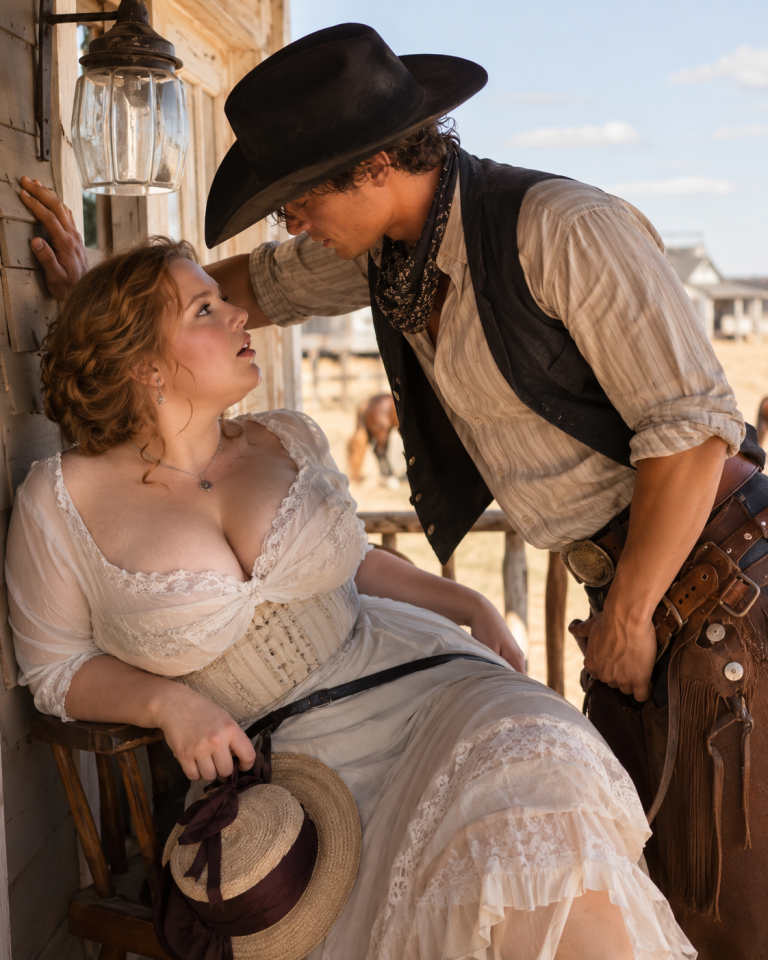
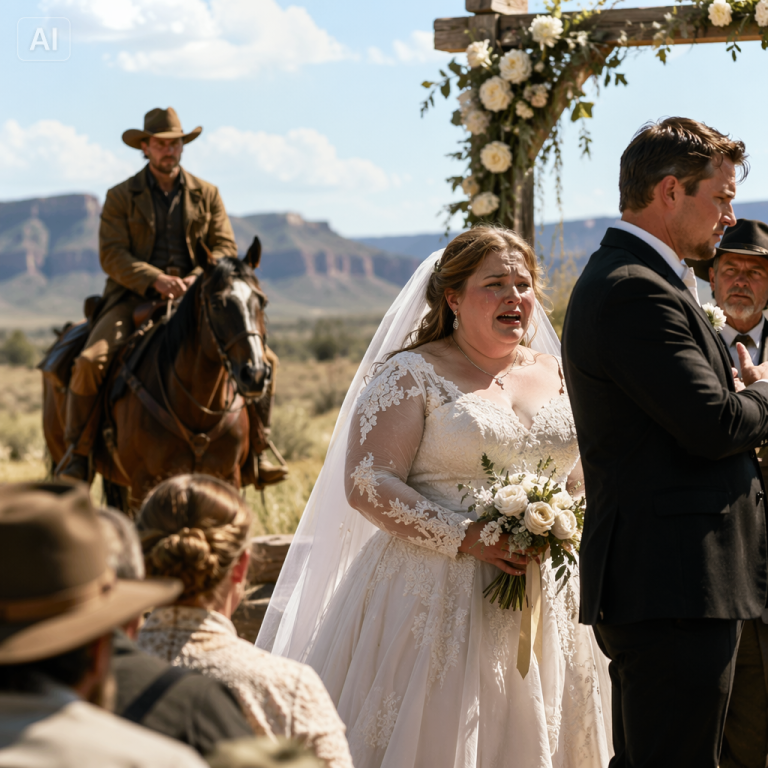
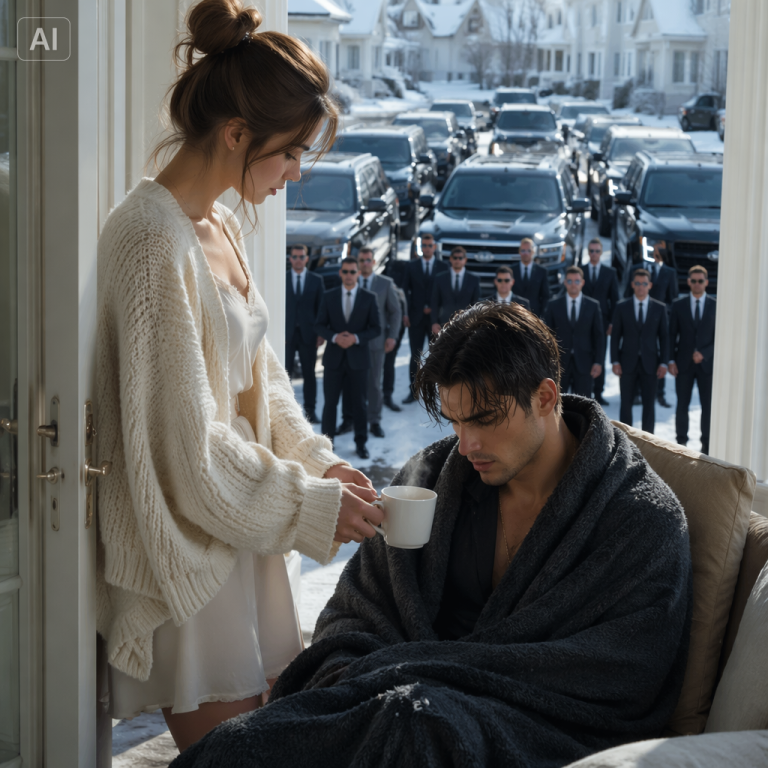
“Cute… You Think You Can Help Me Walk Again?” — The Mafia Boss Mocked Her… Until the Truth Shattered His Wedding Day

## PART 1
Six months ago, men lowered their voices when Rocco Valente entered a room. Now they softened them, which was worse.
He sat under the stone overhang behind his Mercer Island house while October rain stitched silver lines across the garden, a wool blanket over his legs, his wheelchair turned to face the koi pond because he had stopped wanting to look at the house. Houses remembered too much. This one remembered him standing.
“I can help you walk again.”
The voice was so small he almost mistook it for the rain.
A little girl stood three feet away in a damp blue dress, holding a garden trowel as if she’d interrupted her own work only because the matter was urgent. Maybe eight years old, thin as a reed, brown hair in a ponytail, and serious eyes that didn’t belong to a child.
He gave her the tired smile he saved for doctors. “You can help me walk again?”
“Yes. But you have to practice every day.”
He almost laughed. Six months earlier a bomb under his black Cadillac had gone off outside a restaurant in Pioneer Square. Harborview surgeons had pulled metal from his lower back and called his survival a miracle. Since then his legs had grown weaker every week, and the specialists kept circling words like *permanent* and *progressive.* His fiancée, Vivian Locke, reminded him every morning that recovery took patience. And now a gardener’s daughter was offering what million-dollar physicians had quietly given up on.
“What’s your name?”
“Nina Caruso. My dad takes care of your roses.”
Vito Caruso. Quiet man, calloused hands, a widower. Rocco remembered the hospital bills after Vito’s wife got sick; he’d paid them through a third party and forgotten it by Christmas.
“Nina,” he said, lowering his voice, “why do you think you know something my doctors don’t?”
She glanced at the kitchen windows, then back at him. “Because every day you take medicine. And every day your legs get weaker.”
The rain seemed to stop inside his skull.
His two guards were by the hedge, smoking, laughing at something on a phone. They hadn’t heard her. Rocco watched the child’s face, waiting for fear or mischief or confusion — anything that would make the words harmless. He found none.
“How do you know about my medicine?”
“My grandfather was a doctor. He taught me blood has to move. When blood moves, the leg wakes up. When the leg wakes up, it remembers.”
“That isn’t medicine,” Rocco said. “That’s what old men tell children to make them brave.”
“My grandfather is old,” Nina said. “He isn’t stupid.” For the first time in months, something other than anger moved through him. “Can I touch your leg?”
He should have refused. He nodded instead. She stepped close and pressed her small hands to his right calf through the blanket — firm, patient, slow circles, then upward strokes toward the knee. She didn’t chatter. She didn’t look pleased with herself. She worked like someone who’d done this before, or been taught by someone who had. Two minutes passed. Then three. A faint tingling moved under his skin — not pain, not strength, something smaller and stranger, a spark in a room he’d believed had gone dark forever.
She looked up. “You feel it.”
He swallowed. “A little.”
“Then your leg isn’t dead. It’s only asleep.” When she left she didn’t ask for thanks. She just said, “Tomorrow, we try to stand,” and walked back into the rain between the hedges.
Rocco stayed under the overhang long after she vanished. For six months he had believed the bomb stole his body. Now an eight-year-old had suggested something worse — that someone inside his own house might be finishing what the bomb had started.
That evening Vivian came into his study carrying his pills on a silver tray. She was beautiful the way expensive magazines teach women to be — blonde hair smooth, pearl earrings, soft concern arranged perfectly across her face. “You were outside too long. You’ll catch a cold.”
“I needed air.”
She shook two white pills into her palm. “Dr. Pratt says you need rest. More rest, not less.” Every morning she placed them in his hand and watched him swallow. Every morning she kissed his forehead and told him that after the wedding she would take care of everything. He took the pills. He drank the water. She smiled and touched his cheek.
“Three weeks,” she whispered. “Then you won’t have to worry about anything ever again.”
After she left, the words stayed behind. A day earlier they would have sounded like love. Now they sounded like a sentence.
## PART 2
The next morning Nina appeared by the hydrangeas with a plastic bag hidden in her sweater and set it on the bench without looking at him. Inside was one white pill. “Miss Vivian dropped it near the kitchen steps last week,” she said, pulling weeds as though that were the only reason she’d come. “I took it to my grandfather. He says it isn’t nerve medicine. He says it makes muscles weak if you take it too long.” Rocco’s hand trembled around the bag — the same hand that had held guns without shaking. “There’s more,” Nina said. “Two weeks ago Miss Vivian was on the phone in the reading room. She spoke some Italian. I only know a little, but I heard this: *after the wedding, everything will be under control.*”
He closed his fist around the bag. “Why tell me? Why not your father?”
“He’s afraid of losing his job.”
“The police?”
“The police wait at your gate. They don’t come inside.” She tugged a stubborn weed. “You helped my mother when she was sick. My grandfather says when someone saves you, you save them back when you can.”
That night Rocco called Lewis Hartman, his attorney, on a burner hidden behind old law books. By eight the next morning a doctor came through the wine-cellar entrance with a black bag and the face of a man who’d seen enough to stop being surprised. Dr. Owen Halloran tested the pill in the locked study, and when the liquid changed color he took off his glasses. “This isn’t nerve medication. It suppresses muscle response. Taken daily, it would mimic the deterioration of spinal trauma.”
“How long before a man can’t stand at all?”
“Months.”
“I’ve taken it six.”
Halloran’s jaw set. “Then someone has been turning your injury into a coffin. Stop now, and if the nerves aren’t destroyed you can recover some function. But you’ll need movement, circulation, weight on the legs. Every day.”
“I have three weeks. To stand at my wedding.”
The doctor studied him. “Then whoever’s doing this can’t know you’ve stopped.”
So Rocco became an actor — pills under the tongue, water swallowed, his throat moving while Vivian watched. And every morning in the garden, Nina slipped through the hedges with water and a towel and the calm brutality of a coach who refused to pity him.
“Stand,” she said the first day.
“I haven’t stood alone in five months.”
“You haven’t *tried* in five months. That’s different.”
On the third try, he stood for two full seconds. Nina nodded. “Your legs remember.”
## PART 3
Over the next week he gathered evidence by night and strength by day.
Hartman brought a financial investigator who traced shell companies buying up pieces of Rocco’s legitimate businesses. The signatures led back to Vivian Locke. The money led to Salvatore Renzi — “Salvo” — the South Tacoma boss whose family had hated the Valentes for years. A technician named Wes pulled footage from the kitchen camera. No audio, but it showed enough: Vivian switching pills between bottles, checking the doorway, smiling into her phone. A lip reader filled in the rest. *In a few months he won’t be able to walk at all. Salvo will be pleased.* Rocco watched it once. He did not need to watch the woman he loved poison him twice.
The second betrayal came harder. Nico Valente — a young cousin Rocco trusted more than most older men — had been watching Warehouse 14 on Harbor Island. He called at two in the morning, voice low. “Boss. Gabe met Renzi’s men tonight. Containers off the manifest. Long crates. Weapons, I’d bet my life on it. Gabe took an envelope.”
Rocco closed his eyes. Gabriel Marino had carried him out of gunfire in Yakima. Gabe had stood beside his father’s coffin. Gabe had held his hand after the first surgery and sworn he’d find whoever planted the bomb. Twenty years of loyalty had a price, and Salvo Renzi had apparently found it. Rocco wanted the old ways — the cellar, the questions, blood on stone. But he wasn’t strong enough yet to survive a war. So he swallowed the rage the way he pretended to swallow poison. He kept smiling. He let Vivian kiss his forehead. He let Gabe push his chair.
And in the garden, he walked. One step became three. Three became seven. Seven became twelve. On the day he reached twelve he sat beside Nina on the stone bench, gasping, his shirt soaked under his coat.
“You’re angry today,” she said.
“Two of my men were killed last night.”
“Because of you?”
“That’s how it feels.”
She watched a yellow leaf fall between her shoes. “My grandfather says in a war, the fault belongs first to whoever started it.” She turned her serious eyes on him. “I think if you fall, more people die. So you should stand.” The simplicity of it shamed him. So he stood.
That afternoon Vito Caruso built three wooden practice steps behind the tool shed, secretly measured to match the ballroom platform. Nina watched while Rocco climbed them again and again until his thighs burned and his breath tore. “Walking is a decision,” she told him. “My grandfather says that too.”
“Does your grandfather ever say anything easy?”
“Yes. He says oranges need sun.” Despite everything, Rocco laughed — rough and rusty, but real, and for one second the garden felt less like a battlefield than a place where life still knew how to grow.
Ten days before the wedding, Vivian began to suspect. She watched him swallow too carefully. She searched drawers, asked the housekeeper about pills in the laundry, scheduled Dr. Pratt to examine him. Rocco told Nina.
“You have to pretend worse,” she said.
“How does a child know how to fake being sick?”
“I’m a child. Children pretend all the time. I pretend not to hear Miss Vivian on the phone. I pretend not to miss my mother at dinner. I pretend I’m not scared when my dad looks tired.” He had no answer to that.
When Pratt came, Rocco slumped in the chair, let his hand shake around a glass, delayed every answer, gave no reaction when the doctor’s pinwheel rolled across his calf. Vivian sat nearby with wet eyes and a hand pressed to her mouth. “The deterioration is continuing,” Pratt said. “We should begin discussing long-term care and a formal transfer of management.” Vivian nodded as if grieving. Later, when she kissed him and promised she would always be there, he almost admired the performance. Almost.
After she left, he locked the bedroom door, rose from the chair, and walked fifteen steady steps to the mirror. The man looking back was thinner, older — but no longer dying. “She thinks you’re fading,” he told the reflection. “You’re sharpening.”
The final week turned the estate into a stage. Florists and caterers came and went. White chairs filled the ballroom. Black cars with tinted windows rolled through the iron gates carrying men from New York, Chicago, Miami, Las Vegas, and Tacoma, every family wanting to witness what they assumed would be Rocco Valente’s graceful surrender to marriage, illness, and irrelevance. Salvo Renzi arrived with twelve men. That wasn’t a wedding party. That was an invasion wearing cologne. Vivian moved among them in cream silk and pearls, accepting compliments like a queen before her coronation, touching Rocco’s shoulder whenever important men looked their way. “My brave love,” she whispered once. He smiled weakly.
Behind the scenes, the trap took shape. Hartman hid the screen behind the altar flowers. Dr. Halloran waited in the pantry with a sworn statement. Wes sat in a van past the service road, recording every signal. Nico’s loyal men took their places as ushers, servers, and quiet shadows by the exits. Gabriel Marino supervised the official security with the satisfaction of a man who believed every weapon in the room answered to him. He didn’t know half the room had already stopped belonging to him.
The evening before, Rocco met Nina behind the hydrangeas. She wore a pink dress with a lace collar, too small in the shoulders — her mother had bought it before she got sick. “You’ll be there tomorrow?”
“My dad is doing the flowers. I’ll sit in the back.”
He lowered himself carefully until his eyes were level with hers. “When I stand, you get low. When I start speaking, you and your father move toward the velvet curtain by the rear stairs. If you hear one shot, you run. You don’t look back.” Her face tightened. “What are you most afraid of?” he asked.
She looked at her shoes. “That you won’t stand up.”
Rocco rose slowly, without touching the bench or the chair, and took three steady steps toward her. “Nina. I stand because you taught me how.” Her chin trembled once. Then she hugged him quickly, awkwardly, thin arms around his neck — and before he could fully return it she pulled away and ran toward the cottage. He watched her disappear, and for the first time in his life he understood that power was not the same thing as having something to protect.
The wedding day came bright and cold. At one o’clock the ballroom was full. White roses climbed the altar arch; three wooden steps led to the platform; a string quartet played beneath the chandelier. The old dons sat in the front row, the Valente council behind them — including two men Rocco now knew had taken Renzi money. Salvo Renzi sat third row on the aisle, thick fingers folded over a white program. Nina sat in the back beside Vito, her pink dress still, her eyes anything but.
Gabe pushed the wheelchair down the aisle, and sympathy moved through the room like perfume. *Poor man. Brave woman. What a tragedy.* Vivian entered in white, climbed the three steps gracefully, and smiled down at Rocco in his chair. It was a victorious smile. The priest began. Rocco heard almost none of it — he watched Nico’s hand near the flower urn, watched Salvo’s shoulders, watched Vivian hold her bouquet with the fingers that had measured out his poison.
Then the priest paused. “Before the vows, the bride has asked to address the guests.”
Vivian took the microphone. “Thank you all for being here. As you know, these past six months have been difficult. Rocco has fought with extraordinary courage, but his doctors agree he needs extended rest. After our union today, I will formally assume management of Valente family affairs until my husband has fully recovered.”
There it was. Not a whisper, not a document slipped under a sedated hand — a theft spoken aloud in front of every power in the room.
Rocco placed his hands on the armrests. He pushed.
The silence was instant.
He stood. The blanket slid from his lap to the carpet. Vivian’s face emptied of color. Someone gasped; an old don rose halfway from his seat; Gabe froze behind the wheelchair as if the handles had turned to ice. Rocco took one step away from the chair. Then another. His gait wasn’t perfect — his right knee hitched — but he walked to the platform, climbed the three steps, and stood beside the woman who had planned his funeral.
He faced the room. “For six months I’ve been told my legs failed because of the bomb under my car. That was a lie. My legs failed because this woman poisoned me every morning, with her own hand.”
The room broke into sharp breaths and low curses. “Rocco—” Vivian whispered. He raised one hand. The hidden screen dropped behind the flowers, and the kitchen footage began — Vivian, two bottles, the switch, the phone call, and the subtitle along the bottom: *In a few months he won’t be able to walk at all. Salvo will be pleased.* Every head turned toward Salvo Renzi.
“The financial trail shows shell companies tied to Vivian Locke and Salvatore Renzi moving against my holdings,” Rocco continued. “The medical report proves the pills were designed to mimic spinal deterioration. And a sworn witness has testified that after this wedding, I was meant to die of a staged medical complication.” The screen changed — documents, transfers, Vivian’s signature enlarged — then a blurred man describing the plan: the poisoning, the transfer of authority, Dr. Pratt, the false death certificate, the quiet carving-up of the Valente companies. Vivian dropped the microphone. It hit the platform with a hollow sound.
Salvo stood. “Enough.” His hand went inside his jacket.
The ballroom became motion. Nico moved first, pulling a weapon from the flower urn and firing at the first Renzi gunman reaching for his coat. Chairs overturned. Guests screamed. The old dons dropped behind the front pews with the speed of men who had survived too many rooms like this. Nina did exactly what Rocco had told her — Vito seized her hand and ran low toward the velvet curtain, one of Nico’s men holding it open; the pink dress flashed once and vanished down the wine-cellar stairs. Only then did Rocco draw his own gun.
Salvo fired first, wild with rage and humiliation. Nico’s men answered. The chandelier shook; rose petals scattered across the aisle like blood-colored snow. And there in the center aisle stood Gabriel Marino, one hand drifting toward his jacket, eyes locked on Rocco’s standing body — the old guard understanding too late that his betrayal had failed.
“Gabe,” Rocco said. For one second something like grief crossed Marino’s face. Then he reached. Rocco fired twice, and Gabe fell backward onto the white runner. Rocco didn’t watch him die. Salvo was already moving toward a side corridor behind two men. Rocco followed, leg burning, shoulder scraping the wall. Salvo turned and fired; a frame shattered beside Rocco’s head; Rocco returned fire and dropped one guard. The second tackled him into the wall and down, pain screaming through his legs — but his arms remembered the old life. He struck, twisted, broke free, and forced himself upright.
At the end of the corridor Salvo slammed into the side door. It didn’t open. Nico had sealed every exit before the ceremony began. Salvo turned slowly, and the two men faced each other beneath a row of portraits — Valentes long dead, watching the living settle old debts.
“You could have walked away,” Rocco said.
Salvo laughed, breathless. “From your father’s blood? Your docks? Your name?”
“You bought my fiancée. You bought my guard. You killed my men. You tried to turn me into a ghost while I was still breathing.”
“You were already finished.”
Rocco steadied his shaking knee. “No. I was being taught to stand.”
Salvo fired. Pain tore through Rocco’s upper arm. He fired back three times, and Salvatore Renzi dropped in the corridor beneath the portraits of men who had built empires believing power could shield them from consequences. It couldn’t.
When Rocco returned to the ballroom, the shooting was over — Renzi’s men down or disarmed, Nico bleeding by the ruined altar. Vivian crawled from behind the last row of chairs, white dress torn, mascara streaking her face, and fell to her knees. “Rocco, please. Salvo forced me. He threatened me. I loved you. I swear I loved you.”
He stopped two feet from her. For eight months he had slept beside her. For six, she had fed him weakness with a smile. “Did you ever love me?”
She reached for his trouser leg. “Yes.”
He looked at her hand, then her face. “No,” he said quietly. “You loved the chair.” He did not shoot her — the choice that surprised everyone in the room, including himself. He turned to the senior don. “She leaves here alive. She answers to the council, to the evidence, and to every family she tried to deceive. No martyr. No beautiful corpse. No final lie.” Vivian began to scream then — not from pain, but from the terror of surviving. It was one thing to die dramatically in a wedding dress. It was another to live long enough for every mask to come off. The old don studied Rocco a long moment, then nodded. “That,” he said, “is colder than a bullet.”
“No,” Rocco answered, looking toward the velvet curtain where Nina had disappeared. “It’s cleaner.”
Hours later, after the guests had left in silence and the official story had been arranged as an armed robbery by outside criminals, Rocco went down the wine-cellar stairs, his wounded arm bandaged beneath his torn tuxedo. His leg gave out once; he caught the railing and kept going. Behind the third rack, Vito Caruso sat on the stone floor with Nina in his arms. When she saw Rocco in the doorway — blood on his sleeve, dust in his hair — she ran to him. He lowered himself carefully to one knee.
“Are you all right?” she asked.
“I’m alive. Because of you.”
Vito stepped forward, pale. “Mr. Valente, I’m sorry. I didn’t know she was part of it. I would never have let—” Rocco lifted his good hand. “Your daughter saved my life. And maybe more than my life.” Vito’s eyes filled; he turned away, unable to answer. Nina looked up with the same steady eyes she’d carried into the rain.
“You stood up,” she said.
“I had a good teacher.” She nodded, satisfied.
The next week, Rocco moved ten million dollars into a trust for Nina Caruso, protected from every Valente hand, including his own. He bought Vito a house in Bellevue near a good school — a real yard, no guards at the gate. Vito cried when Hartman showed him the deed. Nina didn’t cry. She asked whether the yard had room for roses. It did.
Rocco spent months learning to walk properly again. At first he used a cane. Then he carried it only when the weather turned cold. Eventually he kept it behind his desk — not as a memory of weakness, but as a warning.
Vivian Locke lived. She vanished into a private prison of lawyers, testimony, and families who wanted answers. Dr. Pratt lost every license he’d ever framed on a wall. Gabriel Marino was buried without ceremony. Salvo Renzi’s empire fractured within a year. And people said the wedding had changed Rocco Valente. They were wrong. A little girl in a rainy garden had changed him before the wedding ever began. He moved money out of the dirtiest corners of the family business, cut loose men who enjoyed cruelty, and quietly funded clinics — especially for workers whose names never appeared on any marble plaque. Some called it guilt. Some called it strategy. He never corrected them.
Every spring, a box of oranges arrived from Sicily with pressed leaves tucked between the fruit, and a note in the grandfather’s careful English: *Walking is a decision. So is becoming a better man.* Rocco kept every one.
Years later, when Nina was older, she would remember the mansion less for the gunfire than for the garden — the wet smell of October soil, the white roses, the broken man in the wheelchair who had listened when everyone else would have waved her away. And Rocco would remember the same thing. Not the wedding. Not Salvo’s face. Not Vivian’s last lie. He would remember a child standing in the rain with a trowel in one hand and the truth in the other, saying the words that pulled him back from the grave.
*I can help you walk again.*
She’d been right.
But first, she had helped him wake up.