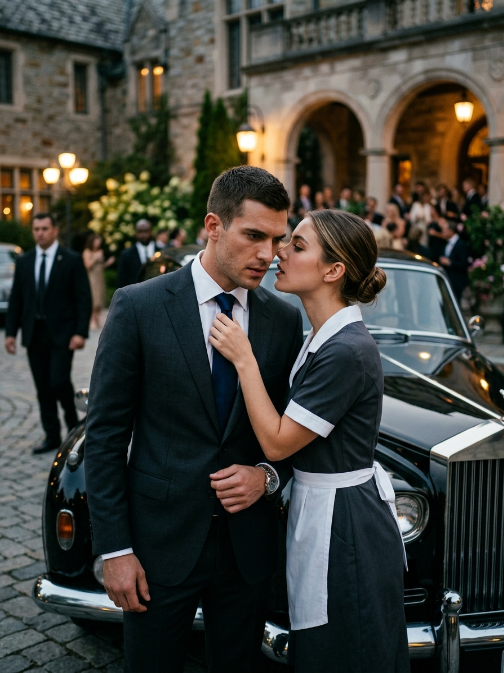
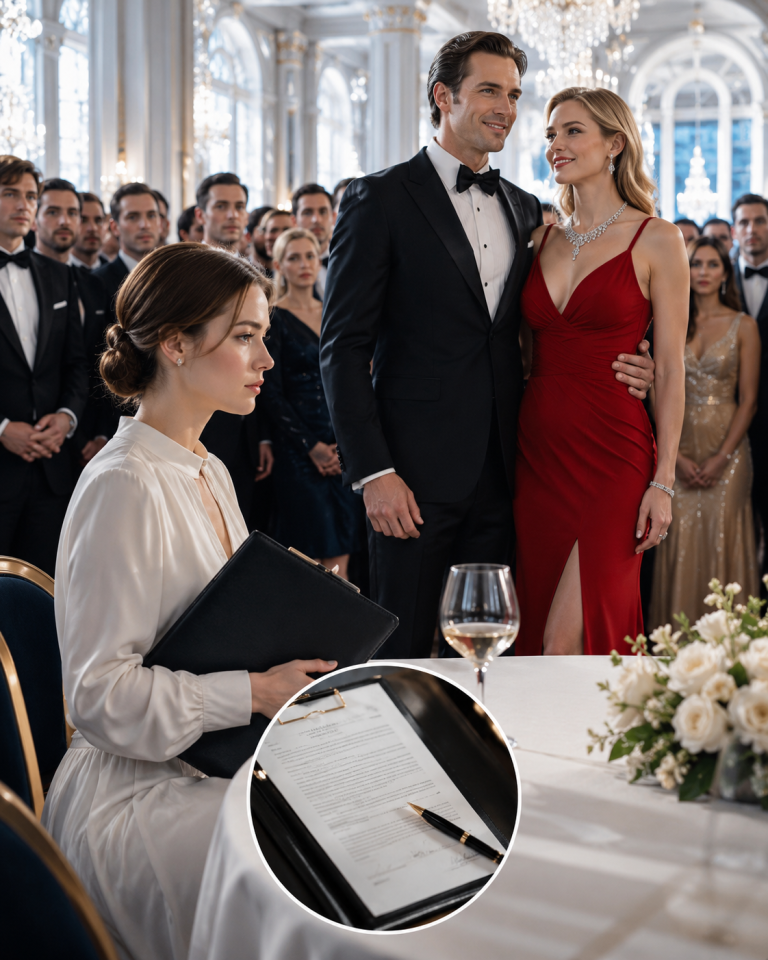
SHE WAS SIGNED AWAY AS HER SISTER’S DOWRY — THEN THE GROOM LOOKED PAST THE BEAUTY AND CHOSE THE DAUGHTER NO ONE WANTED

PART 1
“Sign it,” Silas Calloway said, and Ruth’s hand did not shake, even though this was the hundredth time her father had said those words to her, each one another nail in the coffin of who she might have been.
This time he wasn’t asking her to give up a season’s wages or another stretch of orchard she’d grafted with her own hands. He was asking her to disappear entirely — to sign her share of Calloway Groves over to her sister as dowry, so Junia could marry into the wealthiest citrus family in the valley.
And standing in the doorway, watching all of it with eyes that missed nothing, was Reid Ashford himself. The man who was supposed to want Junia. Not her.
“Read it again,” Silas said, when Ruth didn’t move.
She’d already read it twice. Fifteen years of unpaid, uncredited labor — every graft, every irrigation ditch dug by hand, every frost night spent lighting smudge pots until dawn — signed away in four paragraphs of lawyer’s language.
“It’s very clear,” Ruth said.
“Then sign it.”
“I haven’t said I would.”
The temperature in the room dropped ten degrees. Silas Calloway wasn’t a man accustomed to hearing *no*, least of all from the daughter he pretended didn’t exist except when something needed fixing.
“You’ll sign it,” he said, “or you’ll leave this house with nothing. Not a dollar. Not the mule you broke yourself. Not even the boots on your feet, because I paid for those, too.”
“You didn’t pay for them,” Ruth said quietly. “I did, with the citrus I hauled to Fresno myself when you were too drunk to hitch the wagon.”
His hand came down on the desk hard enough to rattle the inkwell. She didn’t flinch. She’d stopped flinching around him years ago, right around the time she understood fear was just another tool he used to keep her small.
“Junia needs this marriage,” Silas said. “The Ashfords won’t take her without a proper settlement. You want your sister to end up unmarried because you’re too selfish to do what’s right?”
“What’s right,” Ruth said, “or what’s convenient for you?”
That was when Reid Ashford stepped fully into the room. He’d been standing so still in the doorway she’d nearly forgotten he was there, but now he moved with the kind of deliberate weight that made everyone else feel like they were suddenly taking up too much space.
“Mr. Calloway,” he said. “I’d like a word with Ruth. Alone.”
Her father’s face went purple. He argued — of course he argued — but even Silas Calloway wasn’t fool enough to challenge a man whose family controlled every packing house and rail contract between here and the coast. He snatched the papers off the desk and stormed out.
Ruth stood in the sudden silence, aware of every breath.
“You don’t have to sign it,” Reid said.
“I know that.”
“Do you?” He studied her — not the practiced, assessing look men usually gave her, but something more careful, more curious. “Your sister is lovely,” he said. “Charming. Everything a man in my position is supposed to want.”
“Yes.”
“But she doesn’t know a single thing about running a grove.” He turned from the window. “I need a wife who understands what it takes to build something and hold it when the frost comes and everyone else has already given up. Not a decoration.”
“Then you’re courting the wrong sister.”
“I know,” he said. “I’m asking you instead.”
Ruth laughed — sharp, bitter, nothing like Junia’s musical laugh that made men foolish. “That’s not funny.”
“It’s not a joke.”
“My father would never allow it. The papers already have Junia’s name on them.”
“Papers can be redrawn.” He held her gaze. “I don’t particularly care what your father wants. I’m asking what *you* want.”
No one had ever asked her that. Not once, in her entire life.
“Why me?” she said.
“Three nights ago I rode past your east grove and watched you re-graft a whole row of frost-killed trees by lantern light, alone, after everyone else had gone to bed calling the row a loss. You didn’t ask for help. You didn’t wait for permission. You just did what needed doing.” He paused. “I need someone like that standing beside me. Not behind me.”
Every word landed like a small, precise blow, because every word was true.
“This is insane,” Ruth said. “My family will disown me.”
“Very likely.”
“The whole valley will talk.”
“They already do.” A faint, humorless smile. “Might as well give them something worth talking about.”
The door slammed open. Silas stormed back in with Junia trailing behind him, pale and confused, having just heard from someone in town that the wedding might be off before it had ever officially begun.
“What in God’s name is happening?” Silas demanded.
“Nothing’s being called off,” Reid said calmly. “Only redirected.”
Junia’s face crumpled. She looked at Ruth like she’d been betrayed, and Ruth — who had done nothing but stand here and listen — felt the guilt of it anyway.
“You can’t marry *her*,” Silas snarled, jabbing a finger at Ruth. “She’s not what we agreed to.”
“She’s exactly what I need,” Reid said. “The question is whether she agrees.”
Every eye in the room turned to Ruth. She thought about the papers on the desk, about her name being erased from the land she’d built with her own hands. She thought about the frost-killed row she’d saved alone in the dark, and how it had felt to fight for something and win, with no one watching, no one to thank her.
“Yes,” she said. The word came out steady. “I’ll marry him.”
“Like hell you will,” Silas roared. “I’m your father, and I’m telling you—”
“You stopped being my father,” Ruth said, “the day you decided I was only worth what I could do for you.” She turned toward the door. “I’m leaving.”
“Walk out that door and you’re dead to this family.”
She looked at him and felt nothing but a strange, weightless kind of freedom.
“Then I suppose I’m dead,” she said, and walked out into the last gold light of the evening, toward a horse, a stranger’s outstretched hand, and a future with absolutely no guarantee it wouldn’t burn her worse than the one she was leaving behind.
—
PART 2
Ashford Grove Hall came into view an hour later — white colonnades rising out of five thousand acres of citrus, more land than Ruth had known existed under one family’s name.
Reid’s father, Elias Ashford, met them on the porch, sharper-featured and harder than his son, carved down by decades of decisions he never once apologized for.
“This isn’t Junia Calloway,” he said slowly.
“No, sir,” Reid said. “This is Ruth. My fiancée.”
Elias barked out a laugh with almost no humor in it. “You brought home the wrong sister. Do you understand what’s about to rain down on this family?”
“I do.”
“You’d better have a damn good reason.”
“I do,” Reid said again, and didn’t elaborate.
Elias’s eyes cut to Ruth, sharper now, measuring. “All right, then. Bring her inside.” He turned back into the house without waiting for a response.
At the threshold, Reid paused. “Last chance to run,” he said quietly.
Ruth looked at the empire waiting inside — a fortune built, she would come to learn within days, on land the Ashfords had not entirely come by honestly. She thought about the invisible girl she’d been that morning, slowly erasing herself so her sister could have a wedding.
“I’m not running,” she said, and walked through the door into whatever came next.
What came next, within the week, was a supper-table interrogation from Elias designed to break her. A hostile negotiation with a rival grower named Garrett Voss, whose foreman kept a scar across his throat like someone had once tried to hang him and failed. A formal complaint filed by her father with the county court, claiming a broken marriage contract. And, three days after that, a message discovered carved into the trunk of the century-old boundary oak that marked the eastern edge of Ashford land — the same oak, Ruth would learn, that had marked the property line of a family named Whitmore thirty years before the Ashfords ever owned it.
**THE ASHFORD FORTUNE GREW FROM STOLEN SOIL. THE ROOTS REMEMBER. IT’S TIME TO GIVE IT BACK.**
Elias went white reading it. Reid looked like he’d been struck.
“What does that mean?” Ruth asked. “What soil?”
Neither of them answered right away, and the silence stretched out heavy with everything they weren’t telling her.
“If I’m going to stand beside this family,” Ruth said, “I need to know the truth. All of it.”
—
PART 3
Elias sighed, and for the first time since she’d met him, he looked old.
“Thirty years ago,” he said, “when I was building this place, there was a family — the Whitmores — who owned the best water-fed acreage in the valley. They wouldn’t sell. So I found another way. I falsified debts against their land, foreclosed when they couldn’t pay debts they never actually owed, and took it.” He met her eyes without flinching. “They lost everything. I built an empire on it.”
Ruth felt the ground shift under her.
“You destroyed a family.”
“I built an empire,” Elias said. “And yes — I did it by destroying people who stood in my way. The Whitmores weren’t the only ones.”
“And now someone’s using it against you,” Ruth said.
“Against *us*,” Reid corrected quietly. “You’re part of this family now, too.”
She looked at the carved words on the oak, still raw with sap where the knife had cut deep. “We have to fix this.”
“What’s done is done,” Elias said. “I can’t hand the Whitmores back thirty years.”
“No,” Ruth said. “But you can hand them back what they’re owed *now*. Find whoever’s left of that family. Make it right, publicly, before whoever carved this does it for you and controls the story.”
“That could cost us half this grove.”
“Then it costs us half this grove,” Ruth said. “Because everything you’ve told this valley about fairness is a lie until you do.”
Elias stared at her for a long moment. Then he laughed — that same rough, bitter sound she’d learn meant he was impressed despite himself.
“You’re either wonderfully naive,” he said, “or the only honest person I’ve met in thirty years.”
“I’m the person your son chose,” Ruth said. “Start acting like it.”
—
It got worse before it got better.
A grower’s association calling itself the Valley Growers’ Guild formed within days — organized, conveniently, by Ruth’s own father in alliance with Garrett Voss, claiming the Ashfords had operated outside fair business practice for a generation and needed to be broken up.
At the guild’s first meeting, held in the packed grange hall with half the valley in attendance, Silas stood and painted Ruth as the seductress who’d broken a binding engagement and ruined his family’s honor.
“There was no signed contract,” Ruth said, rising to face two hundred hostile faces. “No terms were ever finalized. My father wanted Junia married into this family so badly he was willing to sign away my share of our own land to make it happen. When that fell through, he needed a story about betrayal instead of admitting his daughter simply wasn’t what Reid needed.”
“Why should we believe *you*?” someone called.
“Because I have nothing left to gain by lying,” Ruth said. “My father disowned me the moment I said yes to this marriage. I’m not defending the Ashfords because I have to. I’m defending them because what my father is doing is wrong.”
It should have ended there. It didn’t. Garrett Voss’s foreman — the scarred man, Marcus — stood and needled her about the Ashford family’s “different rules,” until Ruth turned the accusation back on him directly.
“Let’s talk about the Whitmore deed you tried forging two years ago,” she said, “the case that was dropped because they couldn’t afford to keep fighting you in court.”
The room went very still. Marcus’s face went red, and Ruth understood, with a small cold jolt, that she’d just made an enemy who would remember every word of it.
The meeting dissolved into shouting. It was Elias who finally cut through the noise.
“My future daughter-in-law has made valid points,” he said. “You want to break the Ashford grip on this valley — go ahead. But do it honestly. Don’t hide behind Silas Calloway’s wounded pride.”
Nothing was resolved. But as the crowd filed out, Ruth caught her father’s eyes on her — not rage this time, but something colder. Calculating.
*You’re going to regret this,* he mouthed, and walked out into the dark.
—
Two days later, someone burned three acres of the Ashfords’ oldest Valencia trees to the ground, and carved another message into a fresh section of boundary fence:
**GARRETT VOSS’S FATHER LOST HIS WATER RIGHTS TO A FORGED SURVEY. YOU’LL LOSE YOURS THE SAME WAY.**
The following morning, a message appeared on Voss land, too — different secret, same handwriting, same knife-carved cruelty.
“Someone’s digging up every buried sin in this valley,” Reid said, reading it, “and using them as weapons.”
“Or someone’s been here the whole time,” Ruth said slowly. “Someone who already knows every old story. Think about it — who gains if every big grove in this valley tears itself apart fighting each other?”
“Someone who wants to buy up the pieces while everyone’s distracted,” Reid said.
It didn’t take long to find the answer. A land buyer who’d arrived in the valley five years earlier under the name Richard Whitfield — cash purchase of the old packing house, papers claiming money from back east that nobody had ever bothered to verify — had vanished from his property the same week the carvings began.
Ruth’s stomach turned cold before anyone said it out loud.
“Whitmore,” she said. “*Whitfield.* It’s an anagram of the family your father destroyed.”
It was worse than an anagram. When they finally cornered him — at the third grange meeting, standing at the back with a satisfied smile while a young woman named Sarah Whitmore stepped forward with a satchel of documents proving the Ashford fortune’s fraudulent foundation — “Richard Whitfield” revealed himself as Daniel Voss, Garrett’s own brother, a man who had spent twenty-seven years quietly buying up debt, forging fresh claims of his own, and setting neighbor against neighbor for the single purpose of watching the whole valley burn to the ground behind him while he collected the ashes.
“You’re destroying innocent people,” Ruth told him, standing before the entire room. “People who had nothing to do with what Elias Ashford did thirty years ago.”
“Collateral,” Daniel said, unbothered. “Besides — there are no innocent people in this valley. I’ve just been kind enough to expose everyone’s secrets at once.”
Sarah Whitmore, though, was staring at the documents in her own satchel with dawning horror — half of Daniel’s “proof” against the Ashfords, she realized aloud, was forged, exactly the same crime Elias had committed against her own family thirty years ago.
“You’re no better than the man who ruined my father,” she said.
It was Tom Voss — Garrett’s older brother, who had ridden into the meeting hoping to stop a range war he hadn’t known his own kin had engineered — who grabbed Daniel before he could run. The sheriff took him away within the hour.
—
The valley didn’t heal overnight. Nothing that broken does. But something did begin.
Elias sat with Sarah Whitmore at his own desk the next morning, a surveyor’s map between them, his hand steady as he redrew boundary lines that had been wrong for thirty years. Ruth watched from the doorway, Reid beside her.
“He’s giving it all away,” Reid murmured.
“No,” Ruth said. “He’s making it right. There’s a difference.”
It was Ruth who proposed the idea that changed everything — not restitution alone, not simple division of stolen land back to its rightful families, but something bigger: a cooperative. Growers who had spent decades as rivals, sharing water, sharing packing houses, sharing profit according to what each family actually contributed, instead of hoarding it behind fences that had always, eventually, needed defending with violence.
“That’s not how citrus works,” someone objected at the meeting where she pitched it.
“It’s not how citrus has worked,” Ruth said. “Maybe it’s how it should.”
Not everyone stayed for that vision. Some growers walked out, unwilling to give up the old ways. But enough remained. Enough believed.
—
Her father tried one last, desperate thing.
He lured Junia — who had been quietly passing information to Ruth about Silas’s dealings with the Voss brothers — into a locked room, and sent word that he’d hurt her unless Ruth came alone to renounce the marriage publicly.
Ruth rode out with Reid and Elias and half the newly formed cooperative behind her, and found her father on the porch of the house she’d grown up in, a rifle in his shaking hands, more broken than dangerous, though the danger was real all the same.
“I want my daughter back,” Silas said. “I want you to admit you were wrong.”
“That’s not going to happen,” Ruth said steadily. “But I’ll come inside. Let Junia go, and we’ll talk about what’s actually left for you here.”
She walked in unarmed. What she found wasn’t a monster — just a defeated old man who had confused ownership for love his entire life and had nothing left to show for either.
“I’ve lost you both,” Silas said quietly, the rifle finally lowering. “I’ve lost everything.”
“You lost us a long time ago,” Ruth said. “You just never noticed, because we were still standing here.”
Junia — who had never been locked in at all, only told she was, and believed it the way she’d always believed every limit her father set — walked down the stairs on her own two feet, and out the front door into daylight, into a life that finally, belatedly, belonged to her.
—
Silas didn’t disappear from the valley entirely. He showed up months later at a cooperative meeting, sitting silent in the back row, unable to fully let go of the pride that had built and then ruined him, but also, in the end, unable to destroy what his daughters had built without him.
Elias Ashford’s heart gave out that winter, worn down by decades of decisions he could never quite outrun. He died knowing, at least, that the last thing he’d built with the time he had left was something worth keeping instead of something built on other people’s ruin.
“Don’t let Reid think power is the same thing as strength,” he told Ruth, near the end. “Don’t let him forget the people who work this land are people, not tools.”
“He won’t,” Ruth promised. “I won’t let him.”
—
The valley cooperative — they voted, eventually, simply to call it **The Valley**, no qualifiers, no family name attached to a single acre of it — doubled its collective yield within two years by sharing water and packing infrastructure instead of competing for scraps of both. Within three, growers from other counties were riding in to study how they’d done it.
Ruth and Reid married the following spring in a ceremony that was equal parts wedding and cooperative meeting, Sarah Whitmore standing beside Ruth, Tom Voss serving as Reid’s best man, her father sitting quietly in the back with an expression that might, finally, have been something close to pride.
Their daughter was born the following winter — red-faced, furious, fighting the whole way into the world. They named her after no one but the valley itself.
“She’s got your stubbornness,” Reid said, watching Ruth hold her.
“Good,” Ruth said. “She’s going to need it.”
Because what they’d built was fragile, and it would always require choosing, over and over, the harder right thing instead of the easier wrong one. But every single time she looked at the boundary oak on the eastern line — the old scar of the carved words still visible beneath new bark, deliberately left unhealed as a reminder rather than an accusation — Ruth understood exactly why it had been worth it.
The soil remembered everything. It was up to the people standing on it to decide what they wanted it to remember them for.
**THE END**