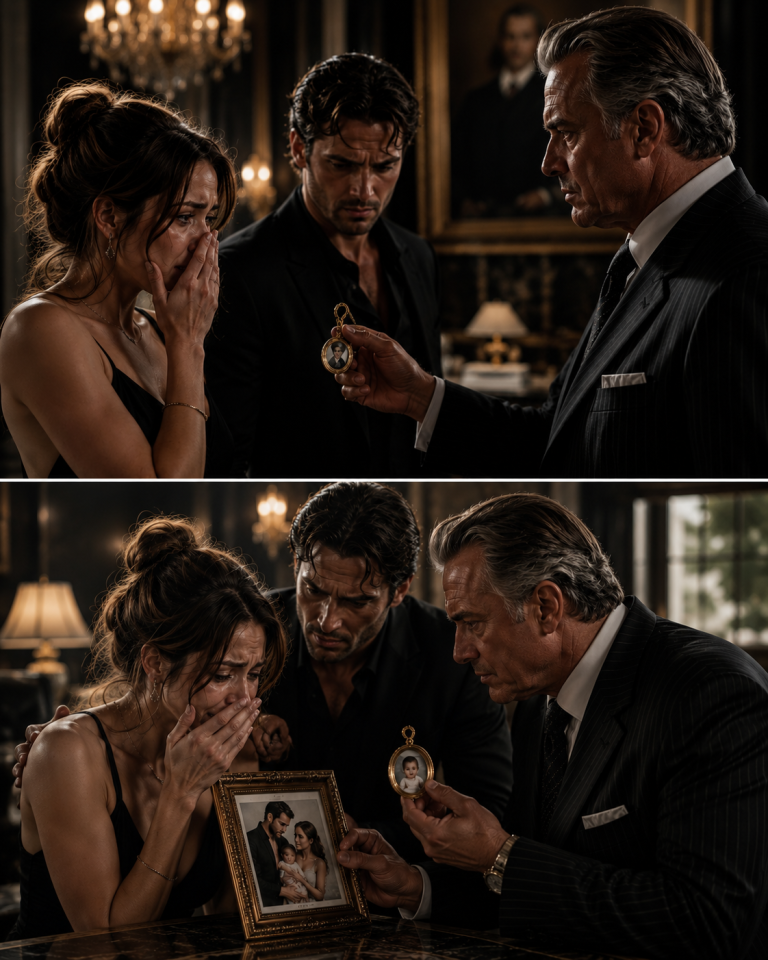
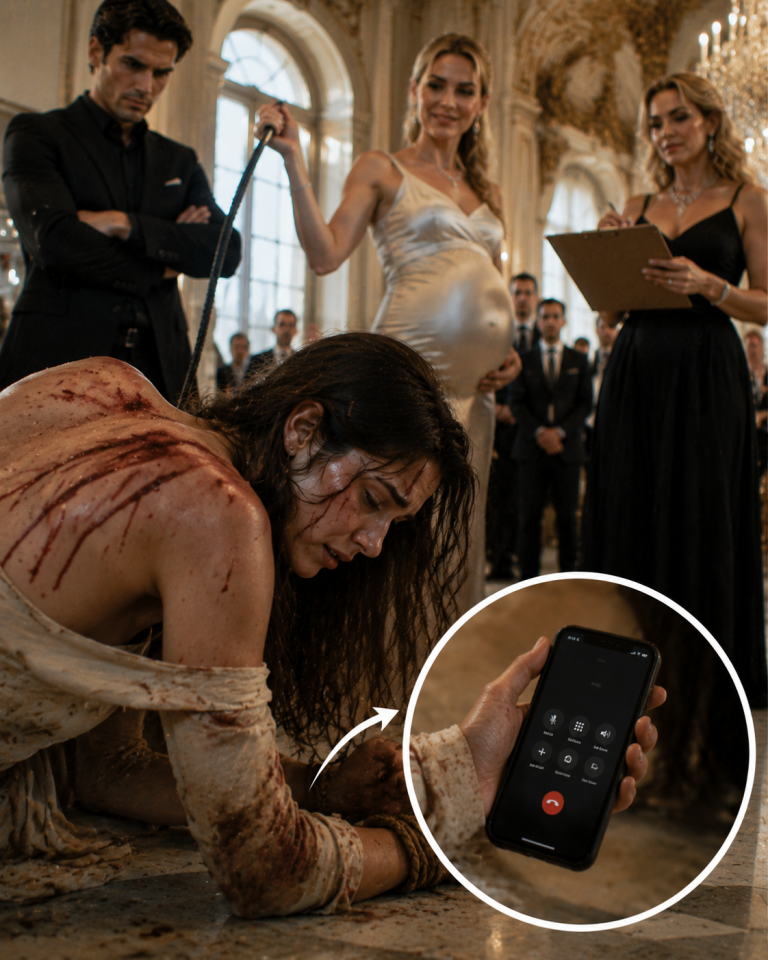
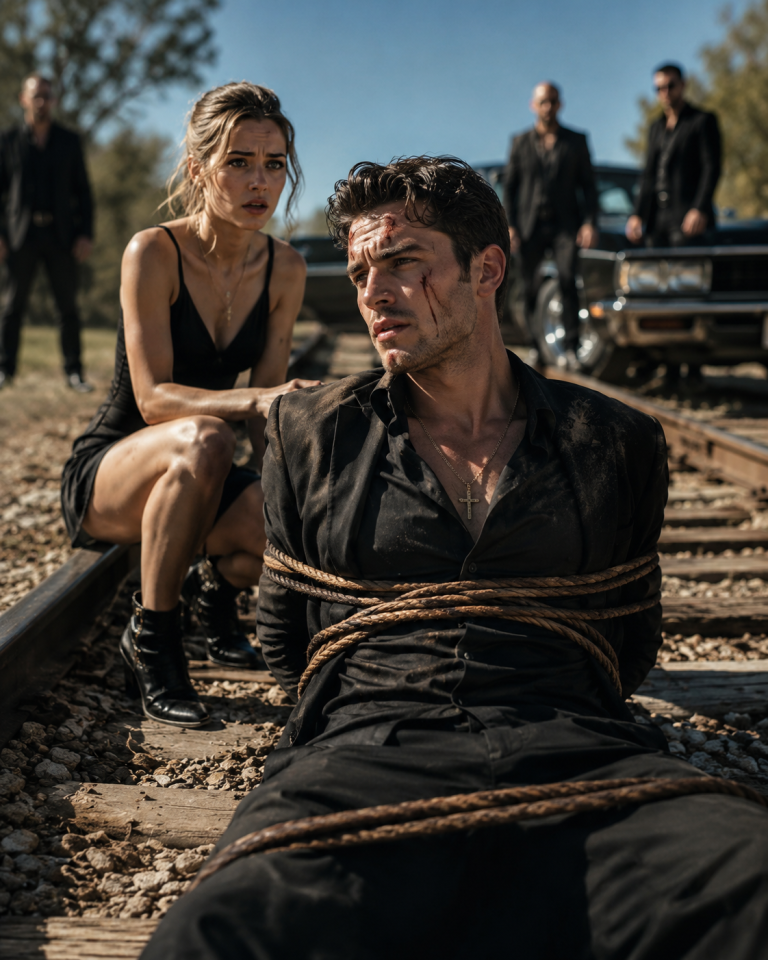
The Mafia Boss Bought Every Painting In Her Gallery — Then Paid For Her Surgery When She Whispered His Name From A Coma

**PART 1**
The first thing Camila Torres smelled was antiseptic — sharp, harsh, unforgiving, burning through the dark before sound found her, before pain found its shape, before she even remembered she had a body at all.
Then the beeping. Slow. Mechanical. A rhythm that didn’t belong to dreams. Somewhere close, tubing clicked against metal. Shoes moved softly across polished tile. A voice, distant, then closer.
“Miss Torres? Can you hear me?”
Her eyes felt sewn shut. Her mouth was sandpaper. A dull ache pulsed through her abdomen, spreading into her ribs with every shallow breath.
“Water,” she managed, a rasp more than a word.
“Of course, sweetheart. Small sips.”
A straw touched her cracked lips. The water was cool enough to hurt. She drank carefully while the world reassembled itself in pieces — ceiling tiles, white light, a curtain rail, a woman in blue scrubs with kind eyes and a badge that read MARISOL.
Then memory arrived. The gallery. Her paintings. Cheap champagne in cheap flutes. Rain on the sidewalk afterward. Headlights. Screeching tires. Glass. Pain — so much pain.
“You were in an accident,” Marisol said gently, as if she could watch the memory land and wanted to soften it before it did. “You’ve been unconscious for two days. You’re at Mercy General.”
Two days.
Two days ago she’d stood beneath track lighting in a small contemporary gallery, wearing a secondhand black dress she’d altered herself, watching strangers study paintings she’d nearly destroyed herself making. Two days ago people had called her work haunting, raw, powerful. Three canvases had sold. For one fragile hour she’d let herself believe she might stop needing catering shifts to make rent.
Now she was broken. Poor. Alone.
She tried to shift and a blade of pain cut through her side. Marisol’s hand landed gently on her shoulder. “Try not to move. Three broken ribs, a concussion, internal injuries — they took your spleen. You’re very lucky to be alive.”
*Lucky.* The word sounded hollow. Lucky would have been getting home safely. Lucky would have been a hangover from celebratory wine, not a bill she couldn’t pay attached to a body that no longer felt hers.
No insurance. No savings — the gallery fee, the framing, the paint, the transport, everything she’d poured into the one night meant to change her life. Now it would all vanish into medical debt.
“Is there someone we can contact?” Marisol asked.
Camila almost shook her head, then stopped as pain flared behind her eyes. “No,” she whispered. “There’s no one.”
It was brutally true. Her mother had died three years earlier after a long fight with cancer, leaving grief, unpaid bills, and a silence in the apartment that never fully lifted. Her father had never been in the picture. A cousin in Arizona exchanged holiday texts more from obligation than love. For three years Camila had lived like a woman holding herself together with paint — canvas, catering shifts, coffee, cheap rent, bus rides, color. Friends in the loose way struggling artists collect them: people who liked your posts, promised to come to your shows, and vanished the moment someone needed to sit beside a hospital bed.
Marisol hesitated. “There is one thing. You kept saying a name in your sleep.”
A strange coldness moved through her. “What name?”
“Nico.”
Camila’s breath caught too sharply, and pain flared in her ribs.
“Easy. Breathe slowly,” Marisol said.
*Nico.* It made no sense. She’d met him once. Barely.
Nico Salerno had walked into her gallery opening like the room had been waiting for him without knowing it. She remembered the moment with total clarity — the gallery warm with too many bodies and too much cheap wine, everyone pretending not to care who bought what. She’d been standing beside her largest painting, a violent wash of red, gold, black, and bruised blue, trying not to look as anxious as she felt.
Then the door opened, and conversations lowered without quite stopping. People turned without meaning to.
He’d entered with two men behind him, dark-suited, watchfully silent. Nico wore black like it had been invented for him — tall, broad-shouldered, expensive without looking decorative, dark hair pushed neatly back, jaw sharp, eyes so dark they seemed to miss nothing and forgive less.
The gallery owner had nearly run to greet him. “Mr. Salerno. What an honor. Are you interested in contemporary art?”
Nico had looked past him, straight at Camila’s painting. Then at Camila.
“I’m interested in beauty,” he’d said, voice low, rough velvet, the kind that didn’t need volume to be heard.
Later people whispered near the wine table — old family, real estate, shipping, private equity, political connections, and other connections people lowered their voices to name. Camila hadn’t known what to believe. She only knew his gaze kept returning to her all night, not in the lazy way wealthy men looked at young women they found attractive, but measured, curious, as if he were reading brushstrokes across her skin.
By the end of the evening he’d bought three paintings without negotiating price. Then, when the crowd thinned, he’d approached her.
“Your work speaks of pain,” he’d said. No introduction. No small talk. “But there’s strength in it too. Resilience.”
Most people talked about her colors, her texture, her “emotional palette” — a phrase people used when they had nothing real to say but wanted to sound educated. Nico had seen the wound under the paint.
“That’s perceptive of you,” she’d managed.
“I recognize what I understand.”
He’d extended his hand. “Nico Salerno.”
“I know,” she’d said, the faintest curve touching his mouth. “It’s your show.”
A smaller man had murmured something in his ear; Nico’s expression hardened for a flicker before smoothing back to calm. “A pleasure, Miss Torres. I look forward to seeing where your talent takes you.” Then he was gone.
A conversation under two minutes. A handshake. Three sold paintings. One look she hadn’t been able to forget.
And now, apparently, she’d been calling his name while unconscious.
“No,” Camila said quickly. “You don’t need to call him. I barely know him. It must have been the medication.”
Marisol looked unconvinced but kind enough not to argue. “All right. The doctor will be in soon. Rest.”
*Rest.* As if her body weren’t broken. As if her life weren’t quietly collapsing around her. As if the name Nico weren’t now beating inside her mind in time with the machines.
The day passed in waves — doctors, nurses, medication blurring the world’s edges, words floating above her bed: trauma, internal bleeding, critical, stable, recovery plan. A social worker asked about insurance, employment, emergency contacts, discharge arrangements. Camila answered what she could and avoided what she couldn’t.
No insurance. No family. A fourth-floor apartment with no elevator. No savings. No realistic way to recover.
By evening a different nurse came on — older, efficient, no-nonsense — and helped her sit up enough for three spoonfuls of broth before nausea stopped her.
“You had a visitor earlier,” the nurse said, checking the IV. “Very well-dressed man. Spoke with the doctor for quite a while.”
Camila’s hand tightened on the blanket. “Did he leave a name?”
“No. But he left those.” The nurse nodded toward the window.
White lilies stood in an elegant arrangement on the sill — not grocery-store flowers, sculptural, expensive, restrained enough to feel personal. Their fragrance softened the sterile room.
“There’s no card,” Camila whispered.
“Some things don’t need saying, I suppose.”
That night she dreamed of the gallery, empty this time — no patrons, no wine, no applause, only Nico standing before her largest painting, his back to her.
“Why did you call for me, Camila?” he asked without turning.
Before she could answer, the dream shifted — rain, headlights, the street slick and black, a car rushing a red light. But this time Nico was there, his arm locking around her waist, pulling her from the curb.
“I’ve got you,” he murmured against her hair. “You’re safe.”
She woke with a gasp. Pain punished the movement instantly. The room was dark except the green glow of monitors. The clock read 3:07 a.m.
A shadow moved near the door.
A tall figure stepped into the dim light. Black suit. Broad shoulders. Stillness.
Nico Salerno stood at the foot of her bed, watching her.
“You’re awake,” he said softly.
**PART 2**
“How did you know I was here?” she asked, too startled at first for anything else.
His gaze moved over her face, the IV, the bandages beneath the gown. “I know many things, Camila.” The way he said her name made something in her tighten — not fear, exactly. Something more complicated.
“What are you doing here?”
“You called for me.”
“So I’ve been told.” Her voice was weak, but she forced it steady. “I don’t know why.”
“Don’t you?” He moved closer, steps soundless. “Sometimes the unconscious mind recognizes what the conscious mind isn’t ready to admit.”
“That sounds like something a dangerous man says when he wants to sound poetic.”
A faint smile. “Your spirit remains intact.”
“What do you want from me?” The question came out sharper than she meant. She felt suddenly exposed — gown, bruises, tubes, no makeup, no art between them, nothing but her.
He studied her a long moment. “I want you to recover.”
“That’s all?”
“For now.”
The door opened; one of his men appeared. “Sir. It’s time.”
Nico nodded but lingered, reaching into his jacket to set a cream business card on the bedside table — no name, no company, just a phone number embossed in black.
“When you’re released, you’ll need somewhere safe to recover.”
“I don’t need charity.”
“It isn’t charity.”
“Then what is it?”
“An investment in your future. Your talent deserves the chance to survive what happened to your body.”
The words landed too close to tenderness. She looked away first.
At the door, a question broke through her. “The driver. The one who hit me. Did they stop? Was anyone else hurt?”
Nico paused, his back to her. “The driver is alive. No one else was injured.” Something in how he said *alive* made her pulse stutter. He turned slightly. “He was texting. He ran the light. But there is more to the story.”
“What does that mean?”
His eyes darkened. “It means some debts are medical. Some are legal. Some are personal. Rest for now.”
Then he was gone, leaving lilies, a business card, and the impossible feeling that the room had become both less safe and more safe at once.
**PART 3**
Morning brought doctors, tests, medication. Dr. Bennett reviewed Camila’s chart with a neutrality that felt rehearsed. “Your recovery is progressing better than expected. The surgical team is pleased.”
“That sounds like a miracle.”
The doctor hesitated. “You had excellent care. Additional support was arranged quickly after you arrived — specialized monitoring, a trauma consultant, equipment we don’t usually access this fast. It made a difference.”
Camila understood before she finished. “How much did that cost?”
Dr. Bennett’s face closed gently. “You should focus on healing.” Not an answer. An admission.
Later, Marisol confirmed the hospital hadn’t contacted Nico. “There was a lawyer at the nurses’ station yesterday. Said he represented Mr. Salerno. Very formal. We couldn’t give information, of course, but he left contact details about your care arrangements.” She added, quieter, “There are men in the waiting area. One by the elevator. Security asked — they said they were ensuring your privacy.”
*Privacy.* One word for it. Guarding was another.
By evening a small duffel appeared beside her bed — toiletries, soft pajamas, clean underwear in her size, and her sketchbook with charcoal pencils from her apartment. Inside was a note: *You mentioned once you never go a day without drawing. —N.*
She’d never told him that. Not at the gallery. Not here. Not ever. Which meant either he’d researched her thoroughly, or someone had gone inside her apartment. Both possibilities should have terrified her. They did. But under the fear was something worse — relief. The sketchbook felt like oxygen.
The days formed a strange routine: physical therapy mornings, rest afternoons, flowers daily, men outside pretending not to guard her. Nico didn’t return, but his presence lived everywhere — in the care that kept improving, the soft clothes, the way nurses spoke as though arrangements had been made far above their pay grade.
On the fifth day, walking the hallway with a walker, she stopped in front of one of his men reading a magazine he clearly wasn’t reading.
“I know you’re watching me. Tell Nico if he has something to say, he should say it himself.”
He closed the magazine. “Ms. Torres, Mr. Salerno is respecting your space.”
“Strangers monitoring my every move isn’t exactly comfortable.”
Concern flickered across his face — real concern. “You should return to your room. You’re pale.”
“I’m fine.” Her legs trembled, mocking her.
“I’m Luca. Mr. Salerno’s associate. He’d be displeased if your recovery were compromised. Please.”
The *please* did it — sincere, not forceful. As she turned back, Luca added, “He asks about you every hour. I’ve never seen him so concerned about anyone.”
That night she couldn’t sleep. Just after midnight, the hospital phone rang.
“Camila.”
Nico’s voice filled the dark — low, close, impossible. “I’m told you spoke with Luca today. And that you pushed too hard in therapy.”
“I’m trying to recover so I can leave.”
“To what end? Your apartment is on the fourth floor with no elevator. You can’t climb those stairs. You can’t work. Your medical bills will be considerable.”
“Stop. You don’t know anything about my life.”
“I know your mother died three years ago. I know you work catering shifts between painting. I know your landlord raised your rent last month. I know you put everything into that gallery opening.” His voice hardened. “I know the driver who hit you was not as accidental as he appears.”
Cold moved through her. “What does that mean?”
“It means you’ll need to make a decision when you’re discharged.”
“And if I don’t call the number?”
“My men withdraw. Your medical support continues — that’s already arranged. You’ll be free to return to your apartment and recover alone.”
*Alone* landed harder than she wanted.
“Why did I call for you?” she whispered. “When I was unconscious. Why your name?”
A long silence. “Perhaps because, on some level, you recognized what I recognized the moment I saw you.”
“What?”
“That we are the same.”
“I’m nothing like you.”
“A survivor,” he said. “A fighter. Someone who creates beauty from darkness. Someone used to standing alone.”
She closed her eyes, because that was the first thing he’d said that frightened her completely — not because it was wrong. Because it was true.
—
The next morning, a severe woman in a tailored suit entered. “Ms. Torres. I’m Adriana Conte. I manage Mr. Salerno’s household affairs.” She placed a leather portfolio on the tray. “These are your discharge arrangements. A private ambulance transfers you to a recovery facility. Your belongings are packed and secured.”
“Excuse me?”
“Mr. Salerno believed you’d be amenable.”
“Mr. Salerno is mistaken. I make my own decisions.”
Something like respect flickered across Adriana’s face. “I see. I’ll leave the documents. The offer stands until noon tomorrow.” At the door she paused. “I’ve worked for Nico Salerno for fifteen years. I’ve never seen him extend this level of care to anyone. Think carefully before refusing it.”
The portfolio held photos of a modern recovery building — gardens, private suites, nurses, therapists, every expense covered. Perfect. Terrifying. The alternative was her fourth-floor apartment, pain, stairs, no income, debt. But nothing from a man like Nico Salerno came without strings.
That night Luca entered, grave. “Ms. Torres. There’s been a situation. Mr. Salerno believes you should move tonight.”
“I haven’t agreed.”
“I understand.”
“What situation?”
“Precaution.”
The hallway lights flickered. Voices rose in the distance. Luca extended his hand. “Please. Mr. Salerno insists on your safety.”
Camila looked down at her sketchbook — she’d drawn Nico’s face without meaning to, his eyes staring back shadowed and intense. She closed it. “All right. I’ll go.”
The transfer moved through back corridors, no main exits, no attention. A black SUV waited, windows dark, two men scanning the lot. She was too exhausted and medicated to fight; the drive blurred into turns, doubled routes, quiet orders, the low hum of the engine.
When they passed through iron gates, the house wasn’t the recovery facility from the portfolio. It was a mansion — stone and dark wood, old money, private, protected.
“This isn’t the facility,” Camila said.
Luca looked out the window. “Plans changed. This is Mr. Salerno’s residence. The most secure location available.”
*Secure.* Beautiful when you needed it. Frightening when someone else decided what it meant.
Adriana waited at a side entrance; a nurse named Priya helped settle Camila into a suite that looked like a luxury hotel room pretending to be medical housing — large bed, sitting area, bookshelves, heavy curtains, a private bathroom fitted with new handrails and a shower bench.
“Mr. Salerno is away on business,” Priya said, checking vitals. “He returns tomorrow.”
Camila should have felt relieved. Disappointment moved through her instead, before she could stop it.
Morning revealed gardens beyond the windows — formal beds, roses, hedges, paths toward a lake, and a glass-walled studio near the water shining like a secret.
Theo, her day nurse, helped her shower, dress, eat, sit by the window. “Mr. Salerno designed the garden himself,” he said when she asked. “A personal passion.”
Nico Salerno. Mob boss, businessman, protector, collector of injured artists, apparently a gardener too. It made no sense, which only made him harder to dismiss.
By afternoon, Theo wheeled her outside. Air smelling of roses and cut grass, sunlight on her face, the estate peaceful in a way that felt almost staged. Near the lake, a black sedan arrived. Nico stepped out, spoke briefly to another man, then turned toward her.
Even at a distance, something in her shifted. Her pulse quickened.
Theo withdrew as Nico approached. “Camila. You look better.”
“Hard not to, compared to a hospital bed.”
A ghost of a smile. “Indeed.” He turned to Theo. “I’ll take Ms. Torres from here.” Then, behind the wheelchair: “Do you mind?”
“Would it matter if I did?”
He stopped, came around to face her. “Yes. It would.”
The simple answer disarmed her. She nodded. He pushed her along the path, gentle in a way that didn’t match his power.
“The hospital situation is resolved,” he said. “But it confirmed you weren’t safe there.”
“What situation?”
“There are people who’d use anyone connected to me as leverage. Someone became aware of my interest in your welfare.”
“Connected to you? I barely know you.”
“Perception creates reality in my world.”
“So I’m in danger because of you.”
“You’re safe because of me,” he corrected. “Here.”
“For how long?”
“As long as necessary.”
He stopped at a pavilion overlooking the water and crouched so they were eye level — a strangely respectful gesture from a man who could have towered over her.
“The accident wasn’t random, Camila.”
The world narrowed. “What?”
“The driver was paid to run the light.”
“No.”
“Yes.”
“Why would anyone do that?”
“Because I showed interest in you. Because I bought your work. Because for one evening, I allowed myself to care about something in public.”
“You’re saying I almost died because you bought my paintings.”
His jaw tightened. “I’m saying my enemies saw a weakness.”
“I am not your weakness.”
“No.” His gaze softened. “You’re not weak. That’s precisely why this frightens me.”
He told her then — not everything, enough. The Salerno family had controlled parts of the city’s economy for generations, some businesses legitimate, others less clean. Territory. Influence. Private agreements. Old enemies. The Bellandi family testing boundaries. A warning sent through her.
Camila listened with the stillness of someone watching a storm arrive and realizing it already had.
“You’re talking about organized crime.”
“A crude term. Not inaccurate.”
“Did you hurt the driver?”
“He’s alive. Cooperating with authorities through my legal team.”
That surprised her. “I expected something darker.”
He looked toward the lake. “Years ago, perhaps. Not now. Not for you.”
“What does that mean?”
“It means I’m trying to choose differently before there’s nothing left in me capable of choosing at all.”
The honesty unsettled her more than the confession had.
—
That evening they had dinner on a private terrace outside his study — small, candlelit, intimate, not the formality she’d braced for. He helped her into the chair himself. The wine sat untouched because of her medication, and he replaced it with sparkling water without comment.
They spoke of grief — her mother, and his parents and younger brother, all lost in a car bombing when he was twenty-four. His brother’s name had been Luca, and his most trusted associate now carried it in honor. That explained the loyalty. The sadness beneath the authority.
Adriana interrupted with a quiet message; Nico took a call inside, and through the glass Camila watched him transform — the man who’d spoken softly to her becoming colder, sharper, power returning like armor.
When he came back, she asked directly. “Who are you really, Nico?”
He sat slowly. “Are you certain you want those answers?”
“Yes.”
“Some knowledge can’t be unlearned.”
“I think I crossed that line already.”
So he told her — the legitimate businesses, the gray ones, the families, the Bellandi pressure, the accident, the negotiations arranged to ensure she’d never be targeted again, regardless of whether she stayed under his roof.
“Regardless?”
“If you leave, you leave protected. Not punished.”
“I’m not your prisoner?”
“No.”
“Your guest?”
“For now.”
“And beyond that?”
For the first time, this powerful man looked uncertain. “Beyond that is for you to determine.”
—
Three weeks passed — physical therapy mornings, afternoons in the garden with her sketchbook, evenings with Nico. Sometimes dinner, sometimes silence while he worked and she drew, sometimes conversations stretching late into the night. He mentioned his glass studio by the lake but didn’t invite her in; she respected it. Everyone deserved one locked room inside themselves.
She told him about her mother’s laugh, about painting through grief, about catering trays and rent notices and making art from scraps of energy after long shifts. He listened — really listened, no phone in hand, no wandering attention, no rich-man impatience. The connection grew not like fire but like light moving slowly across a wall. Subtle. Inevitable.
Danger stayed at the edges. Men came and went. Calls interrupted evenings. Adriana’s face carried news she never spoke aloud. Luca watched the perimeter with increasing intensity. But Nico came back to Camila every night, and each time something in him seemed a little less armored.
On the morning marking one month since the accident, Dr. Whitfield allowed short walks without the wheelchair. That evening Nico appeared in the garden with champagne and two glasses. “Theo told me the good news.”
“I still move like a very elderly ghost.”
“An elegant one.”
She laughed, and his eyes warmed. They toasted to healing, both knowing they meant more than ribs and scars.
Then he said, “I’ve been thinking about your paintings.”
“That sounds dangerous.”
“They’re extraordinary. Raw. Honest. You shouldn’t be working catering shifts to survive.”
She stiffened before he finished. “No.”
“I haven’t asked anything yet.”
“You were about to offer connections.”
“Yes.”
“And I was about to refuse.”
His face tightened. “I wouldn’t insult your work by promoting it if I didn’t believe in it.”
“I need my art to stand on its own.”
“It will. Opening a door isn’t painting the canvas for you.”
“And what would you want in return?”
Hurt crossed his face, quick but real. “Is that what you still think? That every gesture is a transaction?”
Shame washed through her. “No. I’m sorry. I don’t think that. I’m just used to surviving by refusing anything that feels too good to be safe.”
His expression softened. “When this began, I told myself I was acting from obligation — that I owed you protection because my enemies targeted you.”
“And now?”
“That was a lie I used because the truth was more dangerous. The truth is that from the moment I saw you at the gallery, standing beside all that pain and color like you’d dragged beauty out of a wound with your bare hands, I wanted to know you. Not own you. Not collect you. Know you.”
His hand rose slowly, touched her cheek with the backs of his fingers. “I’ve spent my life building walls. With you, I want to take them down. I don’t know how to do that without frightening both of us.”
“I am afraid.”
“Of me?”
“Of wanting you.”
Understanding crossed his face. “Because of what I am.”
“Yes.”
“My world is dangerous.”
“Yes.”
“And yet?”
She looked at him, at the garden, at the house, at the man who’d brought her sketchbook to a hospital room and admitted truths most men like him would bury beneath power.
“And yet.”
He stood and offered his hand. “There’s something I want to show you.”
—
He led her slowly toward the glass studio by the lake, unlocking the door with a small silver key. Inside, Camila stopped. It wasn’t an office. Not a weapon room. Not a strategy chamber. It was an artist’s studio — canvases on easels, shelves of oils, brushes, solvents, charcoal, landscapes in progress, studies of sky and water and hands, worktables covered in sketches.
“You paint,” she whispered.
“Since I was a boy.”
She moved through the space. His style was controlled, classical, disciplined — the opposite of her raw, emotional work — but there was real talent there, not hobbyist vanity, and loneliness under every careful brushstroke.
“These are beautiful.”
“They’re technically adequate.”
She turned. “Do not insult my eye in your own studio.”
A real smile broke through, small, almost boyish, changing his whole face. “Fair.”
“Why show me this?”
“Because I want you to know there’s more to me than what I inherited. More than what my enemies see. More than what my father made.” He stepped closer. “This was the only place I created instead of destroyed. The only place I belonged to myself.”
The gift of that truth settled around them. He wasn’t showing her wealth. He was showing her vulnerability.
“What are you offering me, Nico?”
“A choice.”
Her heart pounded.
“Stay,” he said simply. “Not as my patient. Not as someone under protection. Not as an obligation I created. Stay as my partner, in whatever form you decide that means.”
“And if I say no?”
“Then I arrange your recovery somewhere safe. I help with your apartment if that’s what you want. I ensure the Bellandi threat can’t touch you. And you never have to see me again.”
The cost of the words showed in his eyes. He meant them anyway. That was what made her step closer.
“If I stay, I stay as myself. My art remains mine. My decisions remain mine. My life doesn’t become something you manage.”
“Yes.”
“I will not be hidden.”
“No.”
“I will not be owned.”
His face changed. “No, Camila. Never.”
She believed him — not because he was perfect, he wasn’t, but because he understood the weight of the word *owned* and looked almost offended she’d think he might want that.
“I want to stay,” she said. “Not because I need protection. Because when I’m with you, I feel alive in a way I thought grief had taken from me.”
His hand came to her face. “Camila.” Her name sounded like a prayer in his mouth.
When he kissed her, it began softly — a question, an offering. She answered by sliding her arms around his neck, and the long loneliness in both of them loosened its grip.
—
The future didn’t become easy after that. Real life rarely rewards honesty with simplicity. Nico’s world stayed complicated — the Bellandi family forced into negotiations through mediators and pressure from older families who didn’t want a public war. The driver testified. The money trail surfaced. The attack on Camila became evidence, not a romantic secret.
She insisted on that. “No more shadows where my life is concerned,” she told him. “If someone tried to kill me, the law handles what the law can handle.”
He’d looked at her a long time, then nodded. “For you, I’ll try the cleaner road first.”
“Not for me,” she said. “For yourself. I refuse to be the only reason you choose differently.”
He absorbed that like a hard truth, and then he did something she’d later understand as love — he listened.
The Bellandi matter ended without public violence. Arrests happened through federal channels. A financial case opened. A traffic accident became conspiracy. Men who thought power meant never answering questions found themselves under subpoena and surveillance. Nico hated the slowness of it. Camila knew. But he endured it, and that mattered.
During her recovery he made calls in the art world — with her permission, only after she approved every conversation. Her work was reviewed by a serious curator who spent two hours with her paintings, not with Nico. A gallery in Los Angeles requested a portfolio. A collector in Chicago asked for first access to new work. Doors opened. Camila walked through them herself.
At the same time, Nico began painting again in earnest — not landscapes only, but portraits, hands, light through glass. One painting showed Camila seated in the garden with a sketchbook across her lap, face turned away, profile caught in gold afternoon light.
“You made me look peaceful,” she said, seeing it.
“You were.”
“I never think of myself that way.”
“I know.” That was why he’d painted it.
By spring she could climb stairs slowly. Her scars had softened. Her ribs still ached in rain. Her body had changed, and she learned to love it again — not through denial, but through gratitude. It had survived.
Her first new solo show after the accident was titled *What Survives the Wreck.*
Nico hated the title at first. “It sounds painful.”
“It is.”
“People will ask questions.”
“Good.”
The show opened in June, not in the tiny gallery from before but in a respected contemporary space downtown. The paintings were larger now, braver — shadows still, but light cutting through with more authority. One canvas showed a hospital window filled with white lilies. Another showed a black SUV reflected in rainwater. The largest was all gold, black, and green — the garden, the body, the danger, the choice.
Critics called it a breakout. Collectors called it urgent. Camila called it honest.
Nico stood near the back, trying to avoid attention and failing spectacularly. People noticed him, of course — whispered, wondered, guessed. Halfway through the night, Camila crossed the room and took his hand in front of everyone.
His eyes flickered. “You’re sure?”
“Yes.”
“People will talk.”
“They already do.” She looked around at the paintings, the buyers, the light, the life she’d nearly lost. “Let them say I survived.”
His thumb brushed over her knuckles. “You did more than survive.”
—
Two years later, Nico formally stepped away from the last gray parts of the Salerno empire. It took lawyers, money, threats that never became actions, deals Camila didn’t ask to hear in detail and Nico no longer hid in ways that insulted her intelligence. He shifted the family holdings toward legitimate real estate, art patronage, restoration grants, medical funds for uninsured trauma patients, and a foundation for artists recovering from catastrophic injury.
Camila named it the Torres Studio Fund. Nico wanted to name it after her differently; she refused. “Torres is enough,” she said. “It was my mother’s name too.”
The fund paid for surgeries, studio rent, medical recovery, emergency housing for artists living one accident away from losing everything — because Camila knew exactly what that edge felt like.
At the opening gala, a young painter approached her with tears in her eyes. “You don’t know what this means.”
Camila looked across the room at Nico, standing quietly near one of her paintings, watching not with possession but pride. “I do,” she said. “That’s why we built it.”
That night, back at the estate, she found him in the glass studio painting the lake under moonlight.
“You disappeared.”
“I needed quiet.”
She moved behind him, rested a hand between his shoulders. “Too many donors?”
“Too many people calling me generous.”
“You are generous.”
“I’m trying to be useful. There’s a difference.”
She smiled. “Your words are getting better.”
“You taught me to stop hiding behind polished ones.”
He set down the brush and turned to her, opened a drawer, and pulled out a small velvet box.
“Nico.”
“I know,” he said quickly. “You hate grand gestures when they corner you. So this isn’t a corner.” He opened it. Inside was a ring — simple, beautiful, a dark sapphire between two small diamonds, the color of night rain.
“I love you,” he said. “Not because you called me from a hospital bed. Not because fate, or accident, or danger pushed us together. I love you because you argue with me when I’m wrong. Because you refuse to let me mistake protection for control. Because you create beauty without lying about pain. Because with you, I’m not only the man I was made to be.” His voice roughened. “I’m asking if you’ll build a life with me. Publicly. Freely. With every door open and every choice yours.”
Camila looked at him — the man from the gallery, the man from the hospital shadows, the man who’d guarded her, frightened her, listened to her, changed for himself because she wouldn’t carry the entire weight of his redemption.
“Yes,” she said.
His eyes closed; the relief on his face nearly broke her.
“But I’m still keeping my studio.”
His laugh was low and real. “I’d expect nothing less.”
—
They married in the garden at the estate — small, not grand, because it was where Camila had chosen to stay. Adriana cried discreetly and denied it later. Luca stood beside Nico with pride in his face. Theo and Marisol came, and Dr. Bennett too, along with the curator from the gallery, three artists from the Torres Studio Fund, and a few old Salerno allies who’d survived the transition into legitimacy and looked faintly uncomfortable in all the sunlight.
Camila wore ivory silk with sleeves that covered nothing deliberately, her scars visible where the dress opened at her back. She didn’t hide them. Nico noticed, of course.
“You are beautiful,” he said when she reached him.
“I am alive.”
“That too.”
Their vows weren’t fairy-tale vows. They were honest ones. He promised not perfection, but truth. Not safety without danger, but transparency without control. Not a life free of shadows, but one where he’d never ask her to stand in them alone. She promised not to save him — because people can’t be saved by those who love them unless they’re already willing to do the work. She promised to choose him while he kept choosing the better road, even when it was slower, even when it cost more, even when the old ways whispered.
When they kissed, Camila remembered the first time she’d woken in darkness and found him at the foot of her hospital bed, wondering what a man like Nico Salerno could possibly want from a struggling artist. Now she knew. Not ownership. Not gratitude. Not rescue.
He had wanted truth. And somehow, terrifyingly, beautifully, he’d found it in her.
Years later, when people told their story, they always began with the accident — the artist hit by a car after her first gallery show, the powerful man who bought her paintings, the hospital room filled with white lilies, the midnight transfer, the mansion, the rumors, the forbidden romance. Those details made it sound dramatic. It was.
But Camila knew the real story was quieter. It was Marisol holding water to her lips. A sketchbook placed beside a hospital bed because someone had learned what she needed to breathe. Nico crouching in front of her wheelchair so power didn’t have to loom. Her saying, “I make my own decisions,” and him learning to honor it. A dangerous man choosing legal consequences over private revenge because the woman he loved refused to become another excuse for darkness. An artist painting pain until it turned into light. A house that could have been a cage becoming a studio, a sanctuary, a place where two wounded people learned that survival isn’t the same as living.
Camila never found out exactly how she’d called Nico’s private number from a hospital bed while half-conscious. Maybe there was a logical explanation — a card glimpsed, a number spoken near her at the gallery, a nurse’s mistake, one strange accident in a chain of stranger ones. Or maybe some part of her had recognized him before reason caught up.
She stopped needing to know. Because the call was never the miracle.
The miracle was what came after. A man answered. Then he stayed. Then he changed. And so did she — not into someone softer, not into someone dependent, but into someone braver about wanting, braver about being seen, braver about believing that even after impact, something beautiful could remain.
So when young artists asked Camila Torres Salerno how she’d built a career after nearly losing everything, she never gave them a romantic answer. She told them the truth.
“Keep creating while you’re afraid. Accept help without selling your soul. Know the difference between protection and control. And never confuse being rescued with being chosen.”
Then she’d look across the room at Nico, older now, silver at his temples, standing in front of one of her paintings like he still saw the first gallery opening every time he looked at her work.
And she’d remember that first antiseptic breath. The beeping machines. The white lilies. The cream card with no name. The dangerous man in the doorway. The question that once haunted her — *why him?* Why had her broken body called out for a stranger?
Now, years later, the answer felt simple.
Because sometimes the soul recognizes safety before the mind recognizes danger. Sometimes the person who finds you in the wreckage isn’t the one who saves you from life. Sometimes he’s the one who helps you return to it.
And sometimes, after the glass, the rain, the headlights, and the pain, a woman wakes up believing everything has been taken from her — only to discover that the life waiting on the other side isn’t the one she lost.
It’s the one she was always meant to paint.
THE END.