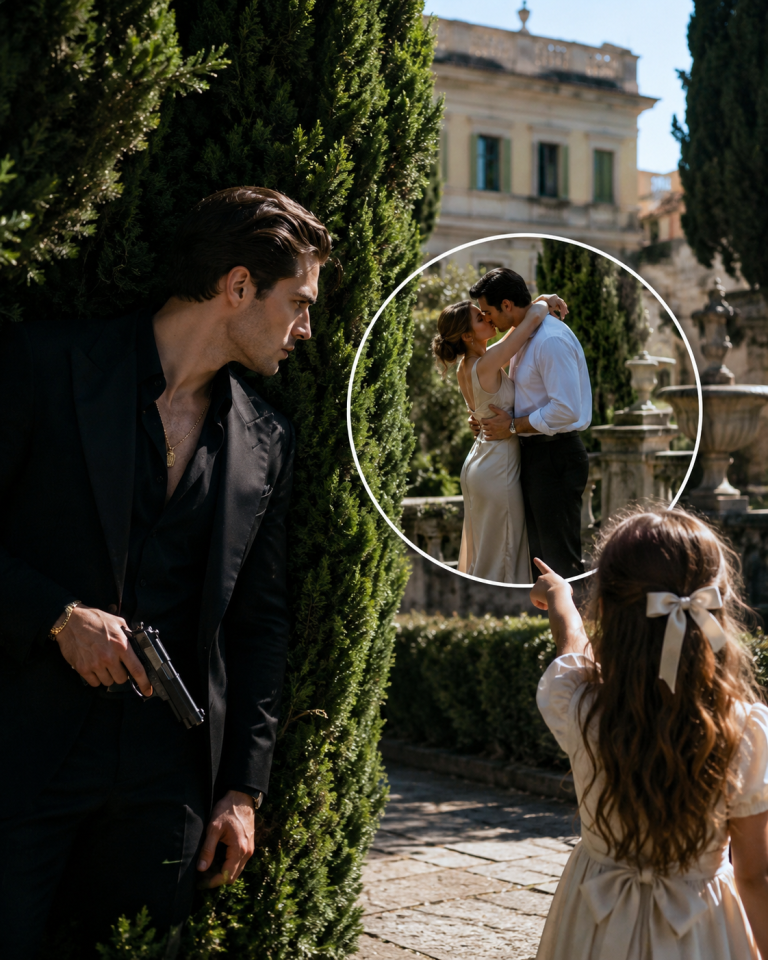
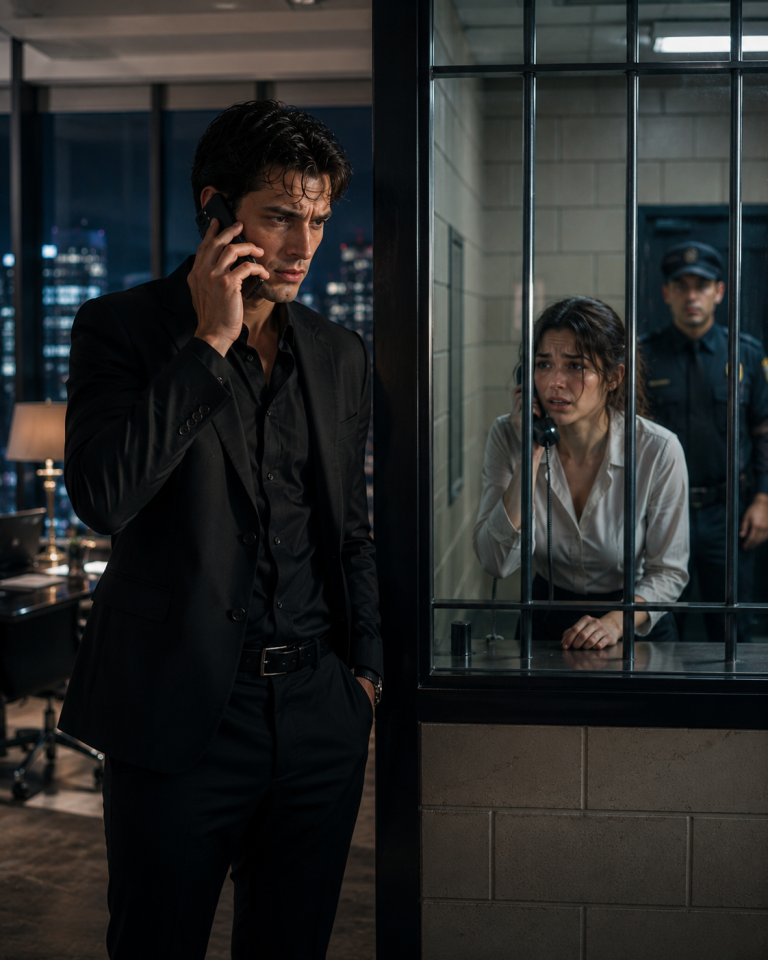
Everyone Called the Plus-Size Maid Useless—Until She Locked the Mafia Boss Inside and Exposed the Men Planning His Death

## PART 1
She had mopped that same hallway three hundred and forty times.
She had counted.
Not from boredom. Not from loneliness. She counted because routines were maps, and maps kept people alive. Every Thursday, the security rotation shifted twelve minutes late. Every Friday, the man near the east wing stairwell left his post to take a call that lasted exactly four minutes and twenty seconds. Every other Sunday, the encrypted router on the study shelf blinked amber instead of green — which meant someone had touched it between midnight and three.
Nadia kept all of it in the back of her mind, filed neatly behind the blank expression and the lowered eyes.
She was good at blank expressions.
She had been practicing for three years.
The penthouse sat on the forty-first floor of a building that cost more per square foot than most people earned in a decade. Glass, titanium, marble floors that caught light like the surface of still water. The kind of place designed to make men feel untouchable. From the windows, you could see the whole city in either direction — the river silver in the morning, the lake pale blue at dusk, the streets below carrying their ordinary people through their ordinary lives.
Nadia pushed the vacuum over the Persian rug in the study and thought about exits.
She always thought about exits.
She had three mapped. One through the freight elevator behind the kitchen pantry. One through a ventilation shaft on the sublevel that connected to the utility corridor below street level. One through a window she had measured carefully — a three-foot gap onto a maintenance ledge that workers used twice a year to clean the exterior glass. None of the men in this penthouse knew about that ledge. They were not the kind of men who looked at the things other people cleaned.
The study doors opened.
Carmine Voss entered like he owned the air inside the room.
Thirty-six years old. Head of a Chicago crime network that controlled four port districts, two offshore accounts, and the quiet loyalty of enough law enforcement officials to make a federal prosecutor weep. He wore charcoal today, something expensive, his jaw tight with whatever meeting had just ended badly. Two men followed him — Torre and Fenwick, both built like furniture, both looking at the world with the flat patience of people paid to absorb violence.
“The port deal is collapsing,” Carmine said, pulling off his jacket.
Torre crossed his arms. “We send a message.”
“Messages make noise. I want silence. Cut their fuel supply. Freeze their shipments. Let them figure out who’s responsible.”
Nadia moved the vacuum carefully along the bookshelf edge.
She heard everything.
She always did.
Fenwick passed by the desk. As she moved with the vacuum, the cord caught slightly on the chair leg, and her hip bumped the corner of the side table. The lamp wobbled. A pen rolled.
Fenwick looked at her with contempt.
“Watch it.”
“Sorry, sir.”
“You’re like a cart with flat tires. Try walking without destroying things.”
Nobody defended her. Carmine poured a drink without looking up. Torre checked something on his phone. The room’s attention slid past her like she was part of the floor.
She lowered her head.
Swallowed it.
Kept moving.
Because here was the thing about being ignored: it was armor. Not the soft kind. The hard, invisible kind that let you go anywhere, hear anything, and be in every room of a dangerous man’s life without once being seen as dangerous yourself.
Nadia had learned that the hard way.
And she had turned it into the only weapon she needed.
Then the elevator exploded.
The sound arrived before the shockwave — a sharp mechanical shriek, then a concussive blast that rattled the floor-to-ceiling windows and knocked the lamp clean off the shelf. The chandelier swayed. Dust and smoke rolled in from the foyer like a curtain being drawn.
Carmine hit the floor hard, his drink shattering on the marble.
Torre and Fenwick were already reaching for weapons — professional instinct, hands moving before minds caught up.
But the men coming through the smoke were faster.
The shots were quiet. Suppressed. Precise.
Torre dropped near the balcony door without finishing his draw. Fenwick turned, fired twice into the smoke, then folded across the desk and was still.
Carmine scrambled backward, reaching for the pistol he kept near the humidor. His hand found empty air — the blast had knocked it somewhere under the bookshelf. A red targeting dot appeared on his chest, steady as a heartbeat.
For the first time in twelve years of running this city, Carmine Voss had nothing left to do.
Then something hit him from the side.
Hard.
A body low and solid, driving him sideways off the line of that red dot just as three rounds tore through the credenza where he had been crouching. Wood exploded. Glass rained down.
He tried to fight off whoever had him.
A grip caught his lapel. Iron. Not gentle.
“On your feet.”
He looked up.
It was Nadia.
Not the soft, apologetic Nadia. Not the woman who bumped furniture and said sorry. This was someone else entirely — standing straight, breathing steadily, her dark eyes sweeping the room with the calm efficiency of someone doing a job they knew very well.
“How—”
“Now.” She hauled him upright and dragged him toward the back wall.
“That’s a—”
“I know what it is.”
She knew where the concealed panel was. He had never shown it to anyone on staff. She punched the release and shoved him through into the vault corridor with a force that sent him stumbling to his knees on the titanium floor.
He turned, expecting her to follow.
She stood in the doorway, smoke curling past her silhouette.
“Lock it from your side,” she said.
“What? Come in, we can both—”
“Lock it.”
Then she slammed the door.
The magnetic seals engaged with a sound like finality.
And Carmine Voss, feared by everyone who had ever sat across a table from him, pressed both fists against bulletproof glass and watched the woman he had never once truly looked at walk back into the smoke.
—
## PART 2
She didn’t hide.
That was the first thing that broke through his shock.
He expected her to press herself into a corner. To crawl under something. To do what people did when men with automatic weapons moved through a building.
Instead, Nadia climbed.
He watched her through the vault window — confused at first, then with a growing, stomach-dropping understanding — as she hauled herself up onto the narrow ledge above the corridor doorway, braced against the wall, and went completely still.
She looked like part of the architecture.
The first contractor moved through the door below her.
She dropped.
The impact was exact. No wasted motion. The man’s weapon came loose before his body registered what had hit him. Nadia landed in a low, controlled crouch, checked the corridor in both directions, took his sidearm, and was moving again in under four seconds.
The second man turned from the balcony.
He saw a heavy woman in a gray maid uniform.
He hesitated.
That half-second of biological disbelief — the delay of a brain refusing to process what the eyes were sending — cost him everything she needed.
She fired twice.
He went down.
The third man, the team leader, moved with more care. He had seen enough to update his assessment. He flanked wide, tossed something small and dark behind the desk where Nadia had ducked.
She read the trajectory and kicked the Persian rug up over it in one smooth motion, muffling the blast before it could light the room.
Then she came around the opposite side.
The team leader stared at her.
That was his mistake — giving her a second of surprise.
She closed the distance, struck at the points that dropped a large man fast, and put him into the wall. He slid down the plaster and didn’t get back up.
The penthouse went quiet.
Sprinklers activated. Smoke drifted.
Nadia turned to face the vault.
Their eyes met through the glass.
Carmine had seen violence before. He had ordered it. He had watched it. He had survived it twice at close range.
He had never seen it performed with the precision and calm that woman had just shown inside his own home.
She entered the vault code.
He stepped back.
The code changed every Tuesday. Nobody on staff had ever been given it.
Nadia entered six digits.
The lock released.
Carmine didn’t move.
“Who are you?” he said quietly.
She looked past him at the stacked ledgers on the shelf.
“We have maybe two minutes before their secondary unit reaches this floor,” she said. “Your cousin gave them the building layout.”
The air went out of the room.
“My cousin.”
Her eyes finally met his.
“This was never about the port deal.”
Somewhere below them, something heavy shifted in the walls.
A sound that had no business being in a building like this.
Boots on a service ladder.
Nadia turned toward the vault entrance.
“Round two,” she said. “And this time, you carry your own bag.”
—
## PART 3
She had been running for six years.
Not always physically. Sometimes it was paperwork, a new name, a dye job and a different city. Sometimes it was the particular stillness of someone who has learned to make themselves easy to overlook — not invisible, exactly, but below the threshold where dangerous people bother to look twice.
She had been very good at it.
Three years in the Voss penthouse had been the longest she had stayed anywhere since Prague. And she had stayed because of what she’d found when she arrived: a household wrapped in the kind of careless arrogance that left every drawer slightly open, every password written in haste, every conversation half-finished in front of staff who were assumed not to matter.
She had gathered it all.
Not for Carmine. Not at first.
Because she had learned that leverage was the only currency that didn’t require trust.
Now she moved through the ruined kitchen ahead of Carmine Voss, and he followed. She noted that. Noted how quickly the instinct had shifted. Power wasn’t the chair at the head of the table. Power was the person the other one followed when things went wrong.
She had always known that.
He was just learning it.
The kitchen was standard to a penthouse of this type — stainless surfaces, hanging copper, a walk-in that smelled of imported citrus and cold fat. The freight elevator waited at the far end of the pantry corridor, behind a stacked row of linen crates.
She pressed the call button.
Mechanical groan from somewhere below.
“I was in a private military unit,” she said, without turning. “Extraction specialist. Seven years of pulling targets out of places that didn’t officially exist — black sites, fortified compounds, sealed borders. I was good at it.”
Carmine was quiet.
“Then they sent me to Prague. Asset retrieval. Compromised courier, they told me. Dangerous. I prepped for three days. Full operational package.”
She pressed the button again.
“It was a fourteen-year-old girl.”
The elevator groaned louder.
“She had seen something she shouldn’t have seen. Names on payments, orders tied to people who would rather disappear than be named. They wanted her alive long enough to find out who she’d told. After that, she was going to be erased.”
The doors rattled.
“I killed the man giving the order. Took the girl out. Burned my identity behind me.”
“And the girl?”
“Safe.” She didn’t elaborate.
The doors opened. They stepped into the elevator car — small, smelling of bleach and old linen. She pulled the gate and hit the sublevel button.
The car dropped.
In the dim light, Carmine watched her check the weapon she’d taken, her hands sure and practiced.
“The men upstairs,” he said. “The unit.”
“Veles. Private. They operate in jurisdictions where law stops being enforced and starts being sold. They don’t stop working a contract until the problem is resolved.” She paused. “I’m the problem.”
“But they came for me.”
“They came through your cousin. The contract on me is old. Your cousin found them, or they found him. Either way, the arrangement was simple: your life in exchange for delivering me.” She met his eyes. “He assumed I would run the moment it went loud.”
Carmine’s jaw tightened.
“He doesn’t know you.”
“No. He saw the same thing you saw. A woman who bumped the furniture.”
That landed.
He didn’t look away.
The elevator lurched to a hard stop. The lights cut.
Emergency red blinked on.
“They found the shaft,” Nadia said, already moving toward the ceiling hatch.
“We’re between floors—”
“We’re in a choke point. There’s a difference.” She stood on a supply crate, pushed the hatch open, and reached down. “Up.”
He grabbed her wrist without argument this time.
She pulled him through like he weighed half what he did, and they emerged into the elevator shaft — cables, darkness, the distant bloom of flashlights above.
“Maintenance ladder,” she said, pointing. “Four floors down. Weight against the wall.”
“I’ve never—”
“I know. Go slow.”
He went. She followed, and above them voices echoed in the shaft, flashlight beams slicing across the cables. She pressed them both flat against the wall at the right moment, one hand covering his mouth, both of them still as stone for five full seconds while the beam swept past.
Then they climbed down.
The sublevel opened into the commercial laundry — a vast, hot, thundering room full of industrial machines, steam pipes, and linen carts. The kind of space nobody thought about because nobody important ever had a reason to go there.
Nadia moved through it like she’d drawn the floor plan herself.
Three contractors entered from the far side.
She pointed Carmine behind a dryer. “Don’t fire unless you’re being touched. Muzzle flash gives position.”
Then she was gone into the steam.
What followed was not a fight in any conventional sense. Fights were mutual. What Nadia did inside that laundry room was geometry — movement, timing, the studied patience of someone who understood how three trained men would each think they were the one maintaining situational awareness.
She took the first from beneath a linen cart, hands closing fast before a sound could escape.
She used a pressure burst from an overhead pipe to mask her movement to the second.
The third one broke. His training cracked open under the weight of watching two partners disappear without explanation, and he fired blindly into the steam.
She stepped out into his sightline fifteen feet away.
He aimed.
She fired once — not at him. At the floor two feet from his leg. The fragment impact dropped him, his weapon skidding under a machine, and then she was standing over him before he’d finished registering the pain.
“Who opened the building to your team?” she asked.
He spat.
She waited.
“I’ll ask again.”
He looked at her face. Whatever he saw there was enough.
“Marino,” he said.
Carmine stepped out of the steam.
“What name?”
The man’s eyes moved to him. Something like dark satisfaction flickered through his pain.
“Luca Voss. Your cousin. He gave us the full access grid. He gets the organization. We get the woman.”
Carmine stood very still.
“By morning,” the contractor continued, “you were supposed to be a headline. Albanian retaliation. Clean and already blamed.”
The laundry machines thundered on.
Nadia watched Carmine’s face move through things in sequence — disbelief, recognition, something cold settling behind his eyes. She had seen people absorb betrayal before. Some of them exploded. Some of them deflated. The useful ones got quiet.
Carmine got quiet.
“Where would he be waiting for confirmation?”
She had expected to have to prompt him.
“The Meridian,” he said. Not asking. Knowing. “Private room on the upper floor. He’d wait there with a drink and his phone and call it grief when the news broke.”
Nadia nodded once.
“Then that’s where we go.”
She led him to a maintenance locker behind the boiler block that she had prepped fourteen months ago — not for this exact scenario, but for a version of it. She had always known that staying in one place long enough meant eventually needing a reason to leave fast.
Inside the locker: clothes, cash, two phones, passports she wouldn’t need tonight, and a tactical vest built to fit her actual body. Not a man’s vest with the straps pulled tight. Hers. She’d had it made eighteen months ago by someone in Pilsen who didn’t ask questions.
She changed quickly. Handed Carmine a clean jacket, a pistol, and spare ammunition.
He took them without comment.
She caught him looking away while she dressed. Not from indifference. From something more deliberate.
“You can look,” she said.
“I’m adjusting.”
“To what?”
“To being the person who needed saving tonight.”
She zipped the vest.
“You’ll live,” she said. “That’s what matters.”
“Not to me. Not entirely.” He met her eyes. “I looked through you for three years.”
“Yes.”
“That’s going to take longer to sit with than tonight.”
She studied him for a moment. There was no performance in it — no practiced remorse, no charm deployed to recalibrate the situation. Just a man encountering himself honestly for the first time in a while.
“Good,” she said, and meant it.
—
The Meridian occupied the top three floors of a converted warehouse near the North Branch, the kind of private club that didn’t have a sign, only a door code and a reputation. Old money and newer danger shared space there over single malt and the understanding that what was said inside stayed inside.
Nadia cut the security feed from a junction box in the alley while Carmine stood behind her. Forty seconds. She’d mapped this building twice — once six months ago when she’d identified it as a potential Voss family asset, once three months ago when she confirmed Luca used it for meetings he didn’t want logged.
They went in through the service entrance.
Two men down in the stairwell before those men had time to form a question.
The private room on the top floor was warm, paneled in dark oak, smelling of cigars and bourbon. Luca Voss sat at the head of a long table, his phone face-up in front of him, his drink half-finished.
Four men around him. Captains Carmine knew by name — men who had eaten at his table, sworn loyalty with their hands over their hearts.
Men who were waiting to see which way tonight fell before committing to grief.
Luca was mid-sentence when the lights dropped.
All at once. Then back, flickering twice.
He lowered his glass.
“Check the breaker,” he told the enforcer near the door.
The enforcer walked out.
Didn’t come back.
“Donato,” Luca said.
“Donato’s unavailable.”
Carmine Voss walked into the light.
His suit was destroyed. His face was cut. He was holding a pistol loosely at his side, and his eyes were the eyes of a man who had moved entirely past shock and arrived somewhere on the other side of it.
Luca’s glass tipped and shattered on the floor.
The men at the table looked at Luca. Then at Carmine. Then at the woman standing behind Carmine — not in gray, not with a mop — in black, broad-shouldered, completely still, her weapon level and unhurried.
One captain reached inside his jacket.
Nadia moved her barrel one degree.
He stopped.
“Hands,” she said.
Every hand in the room found the table.
Luca pressed himself backward until the bar was behind him.
“Carmine. Thank God. We thought—”
“You thought I was dead.”
“The Albanians—”
“Didn’t do anything.” Carmine walked the length of the table slowly. “You gave them the grid. You gave them the elevator codes, the camera schedule, the vault approach. You sold my life for this chair.”
Luca’s mouth worked.
“I was protecting the organization. You’ve been too cautious, too slow—”
“You hired soldiers to kill me in my own home and planned to pin it on a rival.”
Silence.
“That’s not protection. That’s succession.”
Luca’s eyes went to Nadia.
“She brought this to us. They wanted her, not you. I made an arrangement that kept everyone else safe—”
“Everyone except me,” Carmine said.
Nadia set a phone on the table and pressed play.
Luca’s own voice filled the room.
*”Once Carmine is done, the north port authority is mine. The woman is their problem — I don’t care what they do with her. Just make it clean enough to look external.”*
The captains sat very still.
Luca went pale.
“That was taken from your lead contractor’s phone,” Nadia said. “They record their conversations as insurance. Standard practice for a unit that works for people who might later want to deny the arrangement.”
She placed a second object on the table.
A slim black drive.
Luca’s eyes fixed on it with the expression of a man seeing something he thought was buried.
“That’s not—”
“It is.” Nadia picked it up. “Fourteen months of your private accounts. Payments to Veles going back two years. The names of six city officials you’ve been running. Three judges. Port inspection contacts. And the internal memo you wrote eighteen months ago outlining what you called the long transition plan.” She looked at Luca. “You spelled Carmine’s name wrong in the title.”
One of the captains made a sound that was half laugh, half horror.
Carmine looked at the drive, then at Nadia.
“How.”
“Sticky notes near the router. Phone left unlocked during conference calls. Drunken conversations in rooms you assumed were empty because the woman with the vacuum had already passed through.” She held the drive between two fingers. “You build networks, Carmine. He built a paper trail. I collected it.”
Luca lunged.
He got three steps.
Carmine stopped him with a forearm across the chest that sent him back against the bar hard enough to rattle every bottle on the shelf. Luca slid down. Sat on the floor. Breathing fast.
Carmine crouched in front of him.
“You wanted a public death,” he said quietly. “I’m going to give you a public accounting instead. Every captain in this room, every name on that drive, every payment and transaction — it all becomes visible. To the right people and the wrong ones. You don’t get to be a martyr or a successor. You get to be a cautionary story that men like you tell each other at tables like this one.”
Luca stared at him.
“Veles doesn’t stop,” he said. “You think any of this matters? They’re already outside.”
Nadia had moved to the window before he finished the sentence.
Across the street, a single red light blinked on a rooftop.
Then another.
Then four more in sequence across different buildings — a spread pattern, professional, the kind of positioning that wasn’t about one team, wasn’t about pursuit.
It was an enclosure.
Every phone in the room buzzed simultaneously.
Carmine looked at his screen.
A video file, no sender. He opened it. Interior penthouse footage — not from any camera he had installed. A different angle, placed before tonight. Watching the entire sequence. Watching Nadia move through the smoke and the steam and the darkness, clear-faced, no compression artifacts.
The final frame froze on her face.
A single line of text beneath it.
*Hello, Gemma. We’ve been watching.*
The room went cold.
Nadia stood at the window with the drive in her hand and her eyes on the skyline.
“That’s the name I used before,” she said, more to herself than anyone.
Carmine came to stand beside her.
Seven red lights now, spread across rooftops in a rough circle.
“You said making yourself too expensive to pursue—”
“Was the theory.” She turned the drive over in her hands. “The theory was that if Veles lost an entire insertion team, burned an asset, and had documented evidence of their own payment arrangements in the hands of a Chicago organized crime network, the cost-benefit calculation would shift. Pursuing me would mean exposing their other operations.”
“But?”
She looked at the rooftops.
“But they didn’t send a team tonight to retrieve me. They sent a team to deliver a message.” She held up the drive. “This changes what I’m worth to them. Not because of what I know. Because of what I can prove about them.”
Luca, still on the floor, laughed bitterly.
“You just made yourself the most wanted person in this city.”
“No,” Nadia said. “I just made the information on this drive the only thing standing between them and full exposure.” She looked at the captains around the table. “Which means it needs to be in more than one place. And more than one person needs to know it exists.”
One of the captains — older, quieter, the one who had said the least all evening — leaned forward.
“What exactly are you proposing?”
Nadia turned from the window.
In the red-tinged light, with the city spread below and armed men on rooftops and a room full of dangerous people watching her, she looked exactly like what she was: someone who had spent six years thinking two moves ahead of people who were very good at the game.
“I’m proposing that the most effective protection against a unit like Veles isn’t firepower. It’s distribution.” She set the drive on the table. “Copies of this go to six locations. Different cities, different people, different types of institutions. Some legal, some not. Veles cannot silence all of them without creating the exact exposure they’re trying to avoid.”
“And in exchange?” Carmine said.
She looked at him.
“I stop being a cleaning woman.”
He didn’t smile. This wasn’t a moment for smiling.
“You stopped being that tonight,” he said.
She shook her head once.
“I stopped pretending. There’s a difference.”
The captain who had spoken leaned back.
“What about the men on those rooftops?”
“They’re watching,” Nadia said. “If they were going to move, they would have moved already. The message was to let me know they knew where I was. They’re waiting to see what I do next.”
“And what do you do next?”
Nadia looked at the seven red lights arranged like a constellation across the Chicago skyline.
Three years of mopping floors. Three years of bowing her head and letting cruel men aim their smallness at her and absorbing it without flinching because the armor of invisibility was worth more than dignity in the short term.
Six years of running from something she had never fully outrun.
The girl from Prague was safe. That would always matter. That would always be the fixed point everything else organized around.
But running was finished.
She had made herself too expensive to kill and too dangerous to ignore, and that, she realized, was the only kind of safety that had ever been available to someone like her.
Carmine reached out.
Not like a man extending command. Not like a boss gesturing for something he expected. Like someone offering partnership to a person they had badly underestimated and were smart enough to admit it.
Nadia looked at his hand for a long moment.
She thought about the laundry cart and the vacuum and the way Fenwick had said *cow* like it was just a descriptor, like it carried no weight, like she was less than furniture.
She thought about the fourteen-year-old girl in Prague who had looked at her with the particular terror of someone who has learned that no one is coming.
She thought about six years of exits and safe houses and blank expressions and the specific exhaustion of making yourself small enough to survive.
Then she took his hand.
Her grip was firm. Not tentative. Not deferential.
“I don’t do floors anymore,” she said.
“No.” His voice was even. “You don’t.”
Behind them, Luca sat on the floor and looked at his hands.
Across the table, the captains looked at each other with the quiet recalibration of people who have just watched the balance of power shift in real time and are deciding whether to lean into it or stand on the wrong side.
The older captain made his decision first. He reached into his jacket and pulled out his phone. Set it on the table, screen down — the gesture that meant he was done recording and done hedging.
The others followed.
Nadia turned back to the window.
Outside, one by one, the red lights were going dark.
Not retreating. Watching. Calculating the same arithmetic she had already run: exposure versus cost, risk versus return, the particular logic of organizations that operate in the dark and cannot survive too much light.
The last light blinked out.
The rooftop was empty.
Nadia stood with her hand around the drive and the city below her, and she breathed slowly, and she let the quiet settle into her chest without flinching from it.
It wasn’t over. It wouldn’t be over for a while yet. There would be conversations and contingencies and nights when the arithmetic would need to be run again. Veles would recalibrate. People who built organizations around erasure didn’t simply accept the ledger being rebalanced — they waited, and they were patient, and they were very good at the long game.
But so was she.
She had learned from the best of them, and then she had learned what they refused to teach her, which was that patience and invisibility were not the same as defeat.
They were, when used correctly, the sharpest tools available.
Carmine came to stand beside her.
“What happens now?” he asked.
Nadia slipped the drive into her vest pocket.
“Now,” she said, “we make the copies.”
She looked at the empty rooftops. The dark city. The river catching light far below.
“And then,” she said, “we stop waiting for the next thing to find us.”
It was the most honest thing she had said in three years.
It was, she realized, the first thing she had said in three years that felt like the beginning of something rather than the continuation of a retreat.
Somewhere in the building, a door opened and closed — one of the captains making a call, setting things in motion, the machine of consequence beginning to turn. Luca would answer for his choices. The contractors would be accounted for. The ledger would be balanced in the way that ledgers in this world got balanced, which was not always clean and not always quick but was, in its own way, inexorable.
And Nadia, who had spent six years being no one in order to survive, stood at the window of the forty-first floor and looked out at the city that had spent three years looking right through her.
She was no longer invisible.
She had chosen that.
And choice, from a woman who had earned hers at every step, was the only thing in any room that truly couldn’t be taken away.
—
*THE END*