The Mafia Boss’s Fiancée Dumped His Beloved Dog — A Poor Employee Became Its Hero

## PART 1
The thing about grief is that it teaches you to recognize itself in others.
Not in people. People hide it. They dress it up in competence and kept schedules and grocery runs and small talk. But animals don’t know how. And that night — the third week of November, 2:00 a.m., county road south of Atlanta, rain already done but the asphalt still dark with it — I saw grief lying at the edge of the road in the body of a dog, and I knew it before I even got out of the car.
My name is Callie Drummond. I was twenty-six, working overnight at a roadside gas station because the day shift had better tips but worse hours for visiting Gran Etta at the nursing home. I drove a 2009 Civic with one working headlight and a glove compartment so full of overdue billing statements that I’d stopped opening it in parking lots because the shame felt too public.
I wasn’t supposed to be on that road. I was running a part to the supply depot two exits down and taking the county route to avoid the interstate toll.
The headlight caught him: a black mass at the gravel edge, as still as a dropped bag of concrete. My foot came off the gas on its own — some old reflex I couldn’t talk myself out of — and the car rolled forward and stopped.
He breathed.
One long, slow rise of his side. Then it dropped. Then nothing for a long time.
I sat with both hands on the wheel and told myself what a woman alone at 2:00 a.m. is supposed to tell herself. I had the whole speech memorized. Do not stop. Do not roll the window down. Do not let feeling make you stupid. Survive.
But my hand was already on the door handle.
He was enormous. A Neapolitan Mastiff — I knew the breed the way poor children from rural Tennessee know things we were warned to stay away from. Wrinkled black skin. A head the size of a cinder block. Shoulders built to guard a gate, not bleed out in wet gravel.
His muzzle was bound shut with dirty cloth. Not loosely. Tight enough that the skin had begun to swell around the knot.
His eyes were open.
They didn’t find me. Didn’t search. Didn’t plead.
They looked at nothing. The way eyes look when they’ve stopped expecting anything to come.
I crouched three feet away and stayed still. He didn’t growl. Didn’t lift his head. One ear twitched in my direction and then gave up.
That was the thing that broke me open. The ear giving up.
I loosened the cloth with my fingernails. The knot had been wet, then dried, then re-soaked in rain. It took longer than it should have. When the fabric finally came away, he opened his mouth and drew one full breath. Then another. He didn’t whimper. Didn’t make a sound. The silence felt like something he’d learned the hard way — that sound got no answer, so sound was wasted.
I turned the collar to read it in my single working headlight.
The leather was old. Tooled by hand, I thought. The buckle dull silver, the stitching worn pale at the edges. And in the center, cut deep enough that years of use hadn’t softened the letters:
**HOLD**
Not a name. An instruction. Or maybe a prayer.
I spread my old moving blanket across the back seat. Then I spent ten minutes on my knees in wet gravel helping one hundred and thirty pounds of exhausted dog crawl into my car, one inch at a time, his hind legs dragging, my arm under his belly, both of us breathing hard.
“Almost there,” I kept saying. “Just a little more. I’ve got you.”
I don’t know if he understood the words. But he kept crawling.
Doc Waverly opened his clinic door at 3:00 a.m. with silver hair sticking sideways and the look of a man who had answered this kind of knock before. He didn’t ask many questions. He checked the dog’s eyes, pressed a stethoscope to his ribs, ran his fingers along the spine, then scanned the back of the neck for a chip.
The scanner beeped.
The screen showed one line.
*No data.*
“Chip’s been disabled,” Doc said, without looking up.
“What does that mean?”
“Means someone shut it off before they dumped him.” He set the scanner down. “Callie. Someone with resources owned this dog. A Neapolitan Mastiff isn’t a backyard animal. They cost. They’re trained. They’re kept behind locked gates by men who can afford to lose a lot of things — but not usually this.”
He held the collar under the light and read the engraved word.
His voice went flat. “You want to be careful.”
I looked at the dog on the steel table. His eyes were closed now. His chest moved. He was alive, but barely, and the barely felt tenuous, like a candle in a doorway.
“Can you treat him?” I asked.
Doc exhaled. “The body? Yes. Fluids. Food. Rest. His back legs are weak but not broken. He’ll live.” He paused. “His head is another thing. Whatever he believed about the world — whatever he trusted — it’s gone. That part I can’t fix.”
He looked at me over his glasses.
“That part might fall to you.”
I named him Smoke. Not because he was gray — he was black as a closed room — but because he was present and absent at the same time. Solid enough to touch. Gone enough to wonder about.
He wouldn’t eat when I watched. I’d set the bowl down and leave the room, and when I came back, the bowl was empty. He never let me see. Trust, it turned out, had to be rebuilt one unseen moment at a time.
He kept the collar beneath his head. Always. When I tried to move it once to clean the leather, he made a sound I’ve never forgotten — not a growl, not a bark. A small, high, broken noise. Like a child reaching for the one thing left of something lost.
I pulled my hand away and didn’t try again.
Every night after my shift, I sat six feet from him on the linoleum floor and read out loud. Bills, mostly. Nursing home invoices for Gran Etta, past-due account summaries, the water bill I’d been ignoring. Numbers that frightened me less when spoken into a room where no one could judge me for being behind.
The first week, Smoke kept his back turned.
The second week, he turned over.
The third week, during a night with hard rain against the windows, I closed my eyes for one second — just one — and felt something settle across my legs.
His head. Heavy and warm, resting on my thighs.
His front paws still clutched the collar. But his face had crossed the room to find me.
I didn’t move for a long time. My hand hovered above his forehead.
Then I set it down, gently, into the folds of his skin.
He breathed out.
Long and slow and complete.
Like he’d been holding that breath for three weeks and had finally found somewhere safe to leave it.
I should have known, right then, that something was already in motion. That the collar hadn’t found me by accident. That the word engraved in the leather was going to mean something — not just to a dog, not just to whoever had lost him, but to me.
But I didn’t know yet.
I only knew I wasn’t going to leave him.
—
## PART 2
The night I met his owner started the way most bad things do — with something ordinary.
A black Escalade pulled into the station at 1:10 a.m., followed at a careful distance by a second dark SUV. Too clean. Too controlled. The vehicles had the particular stillness of things that moved through the world without being questioned.
I’d brought Smoke to work that night. The manager let me keep him in the back room between the motor oil and the snack restocks. Smoke lay on his blanket and watched the wall.
The Escalade door opened. One man got out alone.
Tall. Wide through the shoulders. A face made of straight lines and deliberate silence. He walked to the coffee station and poured a black cup with the efficiency of someone who had stopped tasting things years ago.
Then from the back room — sound.
Not the empty silence I’d grown used to. Something different. A low vibration, rising, becoming a growl that traveled through the concrete floor and into my shoes.
The man went still with the cup suspended in his hand.
He set it down. He didn’t ask permission. He walked toward the back room like he already knew what was there.
When he pushed the door open, Smoke was standing.
The first time I’d ever seen him stand without help.
His back legs shook. His whole body trembled with the effort. But he was upright, and his nose was working — pulling scent, verifying, rechecking — and then some dam broke open behind his eyes.
The man dropped to one knee on the concrete floor.
Smoke moved forward one labored step at a time. He pressed his cold nose into the man’s palm. He breathed across the wrist. The sleeve. The shoulder. As if confirming something too fragile to believe.
The man’s hand found the collar.
His fingers gripped it.
For one second — just one — I watched his shoulders shake.
Then he looked up at me.
“This dog,” he said, voice low and controlled. “Where did you find him?”
I told him. All of it. The road. The muzzle. Doc Waverly. The disabled chip. The three weeks.
With each thing I said, his jaw tightened.
“Thank you for keeping him,” he said when I finished.
He carried Smoke — one hundred and thirty pounds — to the Escalade like the weight was nothing. Laid him across the back seat. Then turned back once.
Just those five words.
The convoy pulled away and the taillights disappeared down the road and I was left standing in the parking lot holding a cleaning rag, and the back room had an old blanket with the shape of a dog still pressed into it, and a half-full water bowl, and three black hairs on the floor.
I sat down against the wall and stayed there for a long time.
I’d told myself he wasn’t mine to keep.
What I hadn’t told myself was how much it would cost me when he left.
Four days later, a man built like a closed door was standing in the overgrown grass of my front yard at seven in the morning.
Rafferty Cole. That was the name I would learn. The restaurants. The nightclub. The businesses on paperwork and the ones that weren’t. The way rooms quieted when he entered them. The way men who ran entire cities moved sideways when he stood still.
That morning, all I knew was the look on his face.
“He won’t eat,” Rafferty said. “He won’t sleep. He lies in the living room all day watching the door.”
“So what?” I said.
“He’s looking for you.”
I didn’t go that day. He left a number on the porch step. I didn’t pick it up until 1:00 a.m., when my phone rang and I heard — through the receiver, unmistakable — the sound of Smoke calling.
Not barking. Not whining in pain.
Calling.
The way dogs call when they’ve decided someone belongs to them and they can’t understand why that person isn’t there.
I stared at the ceiling for a full minute.
Then I said: “Tomorrow morning.”
What I didn’t know — what none of us knew yet — was that tomorrow morning would begin unraveling something that started long before I stopped my car on that wet road in November. Something arranged deliberately. And the person who arranged it was not finished.
—
## PART 3
The gate was iron, twice my height, with cameras on both pillars. The driveway was long enough to change your mind twice. The house beyond it was stone and glass and polished silence, the kind of place where sound felt expensive.
I stood outside it in worn jeans and an old jacket that still smelled like gas station coffee and thought very seriously about turning around.
The gate opened.
Inside, Smoke lay in the center of the living room with his head on his paws and his eyes aimed at the window. He had the particular stillness of an animal that has decided hope is not worth the energy it costs.
I stopped at the threshold.
One shoe clicked on the floor.
His ear moved. Just one. A small pivot toward the sound.
His whole body changed.
He raised his head slowly, the way you move when you’re afraid to believe what you’re perceiving. Then he saw me. And he stood — trembling, hind legs unsteady, moving with the careful determination of something that refuses to be stopped — and crossed the room and pressed his entire weight into my legs.
I braced against the wall and went down to my knees and held his face in both hands, my forehead against his.
My eyes went hot. I didn’t cry. But it was close.
From the doorway, Rafferty watched. His face didn’t change. But something behind his eyes had shifted. A man accustomed to rooms rearranging themselves for him, watching a gas station girl in old jeans, on her knees, holding his dog’s face — and understanding something for the first time.
Doyle, who stood at Rafferty’s shoulder, said quietly: “First time he’s wagged his tail since he came back.”
I started coming every evening. Not for dinner. Not for conversation. I sat beside Smoke for an hour while he leaned into me and breathed steadily, and when I left, he watched the door but didn’t call, because he was learning I would return.
Then Smoke told us something we weren’t expecting.
A man appeared in the inner hallway near the study — suited, quiet, talking to one of Rafferty’s people in a low voice. I didn’t know him. Smoke did.
He launched from the floor before I could blink. Not slowly. Not weakly. All his recovered weight, all his relearned muscle, aimed at that specific person with a ferocity I hadn’t seen before.
The man went pale. Stepped back. The wall caught him.
I watched and thought: *He doesn’t react to strangers. He reacts to a specific scent. Something on that man he’s smelled before.*
Rafferty appeared at the hallway entrance. I said it out loud. “It’s not aggression toward new people. He’s reacting to something he already knows on that man.”
Two words from Rafferty to Doyle: “Check him.”
Twenty-four hours later, the answer came back.
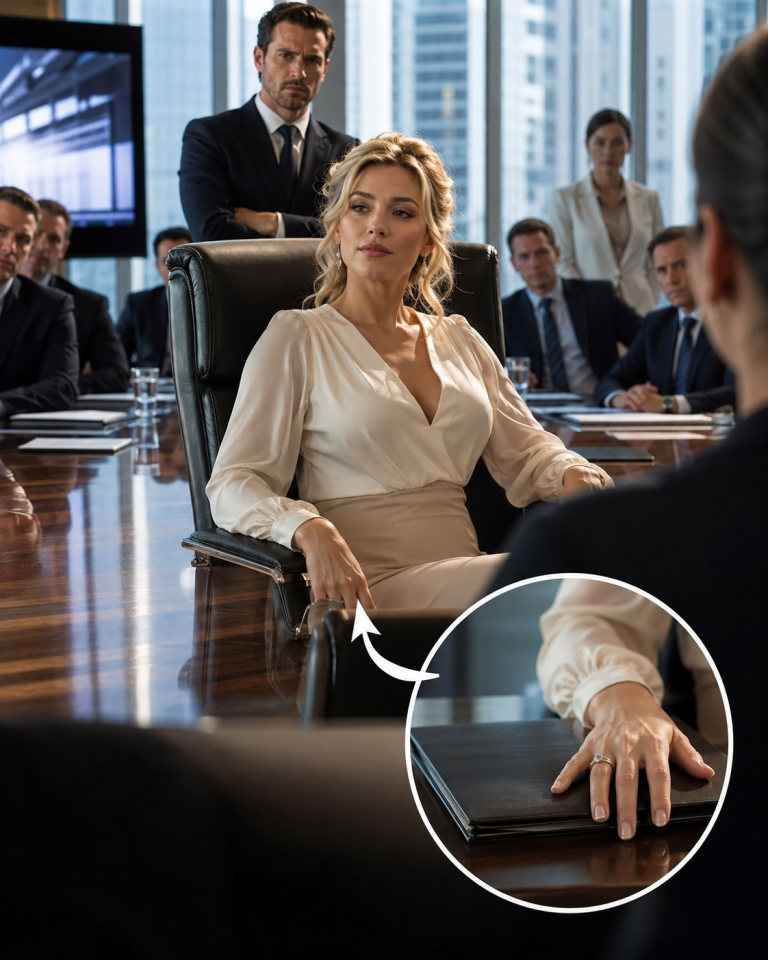
The man worked for Douglas Vane — the Savannah shipping boss, who controlled underground gambling networks and port cargo routes and, more relevantly, was the father of Serena Vane, who had spent two years inside Rafferty’s life learning its geography before she’d made her move.
Two years of careful performance. The right dress, the right tone, the right moment to laugh. Two years of proximity to power, which in her world was its own form of currency.
The one problem had been Smoke.
He’d known from the first day. Planted himself between her and Rafferty. Growled when she came too close. Turned his back to her in rooms like a living wall saying: *not this one, not safe.* Instinct doesn’t need evidence, and Serena had no argument against it.
So when Rafferty left for Savannah on business, she’d acted. Sedated food. A contact with veterinary access to disable the chip. A driver who didn’t ask questions. Dirty cloth around a muzzle. An abandoned industrial district.
Not killed. Just gone.
The man in the hallway had been planted to watch. To track me. To report back to Serena what leverage remained.
Rafferty had him removed. Cleanly. All access points cut. Every property closed.
I found an envelope three days later on the passenger seat of my locked car.
Photographs. My house at night. Gran Etta’s nursing home, taken from across the street. A handwritten note on plain white card.
*Some things are better forgotten.*
I folded it and put it under my mattress. I didn’t call Rafferty. I’d learned early that protection borrowed from powerful men came with interest rates nobody ever showed you up front.
Then Rafferty made the mistake that taught him what I was.
He paid Gran Etta’s nursing home balance. Three months overdue. Future care arranged. I found out through the billing office on a Tuesday morning and drove to the mansion in my uniform, still smelling of coffee and register ink, and walked into the living room.
“You paid her bills.”
“Yes.”
“I didn’t ask you to.”
“You were short. She needed care. I had the money.”
“The problem,” I said, “is that I’m not yours.”
The words went into the room and stayed there.
“I’m not something you buy by settling accounts and waiting for gratitude to fill in the rest. I come here because of that dog. That’s all this is. Don’t turn it into something else.”
No one spoke to Rafferty Cole like that. Not with a straight spine and no fear of consequence and willingness to walk out rather than owe him.
He watched me leave. I stopped long enough to put my hand on Smoke’s head, then walked out.
I learned later from Doyle — who told me in the parking lot one evening with the deadpan delivery of a man who had worked for Rafferty for eight years — that after I left, Rafferty sat in the study for an hour and didn’t take any calls.
“I don’t think he knew you could do that,” Doyle said.
“Do what?”
“Leave without needing something from him first.”
A week later, I took Smoke to visit Gran Etta.
Doc Waverly lent me his pickup because my Civic would never have fit the mastiff. At the nursing home, the nurses stared. Smoke walked gently on his leash, claws soft on the tile, head low and calm.
Gran Etta sat by the window in her usual chair. She was small now, thinner than she’d been at Christmas, her white hair fine as January light. Some days she called me by my mother’s name. Some days she wasn’t sure what decade it was. The doctors called it a slow fade. I called it watching someone I loved leave one room at a time.
Smoke crossed to her without prompting.
He lowered his enormous wrinkled head into her lap.
Gran Etta’s hand — trembling always, since the last year — lifted and settled on his forehead.
She stroked him.
Once.
Twice.
Her eyes cleared. Not slowly. All at once, the way a window clears when the fog burns off.
She looked at me — really looked, the look she used to have — and said, in her certain voice, the one that didn’t waver:
“You hold onto him, you hear me? Don’t lose him.”
I broke.
Not loudly. Not dramatically. The tears just fell onto her hand and she covered them with her thumb and didn’t say anything else, which was exactly the right thing.
Smoke stayed still against her lap. Eyes closed. Breathing slow and even.
*Hold on. Don’t lose him.*
Two different losses. Two different people. The same fear underneath: that the things we love most will be taken before we understand what they meant.
Serena ran out of time the way people who’ve been performing always do — the audience runs out of patience before the performer runs out of material.
With her planted contact gone and Doyle pulling Douglas Vane’s financial records, she did what her father had always done when the legal route closed: she aimed at the soft thing beside the wall.
That was me.
A dark SUV blocked my car at 6:15 a.m., after my shift. Two men. One request that wasn’t a request.
The warehouse was gray brick, rusted roof, one hanging bulb. Serena was already inside at the table, and I’ll give her this: she didn’t circle. She slid a thick white envelope across the wood.
“Enough to move your grandmother to a better facility. Any city you choose. The only condition is that the city isn’t Atlanta.”
I looked at the envelope. I didn’t touch it.
“And if I stay?”
Her smile held. “Then I can’t promise what happens to the people you care about. The old woman. The dog.”
I asked her: “Do you hate him that much? The dog?”
Her composure slipped — just slightly, just at the edges. The first real thing I’d seen from her.
“I don’t hate the dog,” she said. “I hate that he saw through me.” Her voice sharpened. “Two years. I did everything right. Every room, every dinner, every conversation. I was exactly what was needed. And one animal — one animal with no language, no logic, no reasoning — decided in thirty seconds that I wasn’t real. And there was nothing I could do about it.”
She stood.
“Tomorrow morning. Decide.”
The door locked.
I sat alone with the envelope and the single bulb swinging faintly in a draft from somewhere, and I thought about Smoke on the road in November. Muzzle tied. Eyes empty. Thirty seconds from dying. And me — who had no reason to stop, who knew better than to stop, who had told myself a hundred times that getting involved was how you got hurt — sitting down in the wet gravel because I recognized something in him.
I thought about Gran Etta’s hand on my tears.
*Hold on.*
The next morning, when I didn’t arrive at the usual time, Smoke knew first.
He got up. Went to the door. Came back. Got up again. The whine in his throat built slowly, like a pressure that had nowhere to go.
Rafferty called twice. Then he called Doyle.
Doyle called back from the gas station parking lot: “Her car’s here. Bag on the seat. Keys in the ignition. Shift ended at six. Nobody saw her leave.”
Rafferty looked at Smoke.
Smoke looked back. Then ran to the door and stopped and looked back again.
Rafferty opened the Escalade.
Smoke got into the front seat without being told.
They drove the gas station route first. Then the road to my house. Then Rafferty turned south, toward the industrial district, and Smoke came alive — front paws on the dash, nose pressed to the cracked window, body vibrating.
Then one sharp, fierce bark.
He knew that ground. The smell of wet concrete and old chain-link and the particular cold of a space that had held him while he was dying. And beneath that smell, something newer.
Me.
Doyle broke the lock. Smoke went in first.
When the door burst open, I squinted against the sudden light.
Then he reached me.
He didn’t lean into my legs this time. Didn’t rest his head in my lap. He licked my hands — both of them, every finger, my wrists, the backs of my knuckles — checking, verifying, running the inventory of a creature who needs to confirm, piece by piece, that the person is still whole.
Something gave way inside me.
Real tears. The kind that come from a place you’ve been guarding. My shoulders shook. My breath broke. I wrapped my arms around his neck and pressed my face into the warm skin of his throat and cried the way I hadn’t let myself cry since the night I found him on the road — since before that, maybe. Since the bills started. Since Gran Etta started forgetting. Since I learned that surviving and living are different things and I had only been doing one of them.
Rafferty stood in the doorway with the light behind him.
When he spoke, his voice was low and even and left no room for argument.
“From now on, no one touches you.”
Not romance. Not confession. It was the way he said things that would simply be true from now on. The way he’d decided.
But I’d already learned that his version of protection — the instinct to surround, to pay, to arrange, to place himself between me and the world — was real. It was the form his caring took. The only form he’d ever been taught.
I was beginning to understand the difference between a man who wants to own the safe thing and a man who is terrified of losing another thing he loves.
Rafferty dismantled Douglas Vane the same way he did most things: not with noise, but with light.
He read the Vane financial files for two consecutive nights. Shell companies, ghost shipping contracts, port revenue that didn’t match the declared cargo, overseas transfers through three intermediaries. Douglas Vane had been careful. Meticulous, even. But meticulous isn’t the same as invisible, and Rafferty had people who understood the difference.
He met an independent attorney at a downtown coffee shop, handed over copies of everything, and left after fifteen minutes.
Federal investigators opened a case within three days. Accounts frozen. Containers held. The partners who’d built their livelihoods on Douglas Vane’s network began quietly distancing themselves, which is the financial equivalent of rats and ships.
Within two weeks, the Savannah port operation collapsed.
Not because Rafferty shot anyone. Because he turned something on.
Underground empires run on darkness. They need everyone to agree, collectively, not to look too closely. Rafferty looked closely. That was all it took.
Serena came to the mansion one last time at Rafferty’s request.
He didn’t offer water. Didn’t stand when she entered. He set Smoke’s collar on the table between them — the old leather, worn pale at the stitching — and left it there.
“My mother said that word before she died,” he said. “I was fourteen. She was in a hospital bed and she told me to hold on.” He touched the leather. “I spent twenty years thinking she meant hold on to power. Control. Territory. Things that couldn’t leave.”
His hand stilled on the collar.
“She meant hold on to whatever keeps you human. I didn’t understand the difference until I met a woman who stopped her car for a dying dog on a county road because she recognized something broken and couldn’t drive past it.”
Serena said nothing.
“You tried to take that from me,” Rafferty said. “And when that didn’t work, you aimed at her.”
He stood.
“You’re finished here.”
Serena left the mansion and did not come back.
He fastened the collar around Smoke’s neck when she was gone. The buckle clicked softly. Smoke pressed his nose to Rafferty’s hand, then set his head on Rafferty’s knee.
For a while, things settled into something that felt, tentatively, like ordinary life.
I came in the evenings. Rafferty and I talked in the kitchen while Smoke distributed himself across the floor in the way of large dogs who have decided a room belongs to them. Slowly, without agenda, without the strange weight of debt and power that had complicated everything at the start, we found something that felt honest.
He didn’t try to pay for anything without asking.
I stopped refusing everything on principle.
We learned each other the way people do when they’ve both survived something — slowly, with more care than we’d planned on.
Then the summer storm hit.
Georgia storms in August are not subtle. The thunder over the mansion that night cracked like something structural giving way. Lightning broke white across every window. Rain came down like it meant to flatten everything underneath it.
Smoke panicked.
Not the ordinary fear some dogs have of thunder. Something deeper. The sound of rain on pavement. The specific smell of wet concrete and night air. Memory, not instinct.
He went through the side door before anyone could stop him. Into the rain, into the dark, moving faster than his hind legs should have allowed, driven by something that bypassed all the healing we’d done and went straight to November.
I ran after him without thinking.
Rafferty followed in the Escalade with the headlights up.
He found us at the abandoned industrial lot. The last warehouse on the road.
Smoke had come back here. To the specific ground where he had been left. Where the smell of abandonment had been the last thing he’d known before I stopped the car.
He lay in the wet gravel, shaking. His head was in my lap. I sat in the rain with one hand resting on his forehead, soaked through, not moving.
Rafferty pulled up. Got out. Stood in the downpour looking at us.
Then he took off his jacket and draped it across my shoulders and Smoke’s back.
Then he sat down. In the wet gravel. In the rain. With no orders. No arrangements. No walls.
Just sat.
The three of us, in the dark, under the storm.
After a while, I said: “He didn’t run away. He came back here to check if this time, someone would come looking.”
Rafferty looked at the dog. Then at me.
“And you’re always the one who comes looking.”
We sat there until the storm passed.
After that night, everything changed. Not all at once. Not like a door opening. Like a season turning — gradual, and then suddenly undeniable.
Rafferty found a house. Small, one-story, eastern suburbs. White brick. A yard with actual grass, fenced, wide enough for a mastiff to run clumsy circles in the sun.
I refused it.
“I won’t take a house from you.”
“It’s in your name. You can pay installments if you want. Or don’t. But the dog needs a yard.”
I looked at Smoke sniffing the fence line, tail making unsteady rotations.
“Installments,” I said.
Rafferty nodded. No argument. No comment about how he could cover the entire thing without noticing. He’d learned, somewhere in the months between November and now, that the way he used to give things — surrounding the recipient, removing their agency, making the gift so large that refusal was impossible — was just control wearing a generous face.
I’d learned how to receive something without making it mean more than it was.
Doc Waverly talked me into enrolling in a formal veterinary program. Rafferty covered tuition through an arrangement with paperwork and defined terms — a loan, not a gift, with a repayment schedule we both signed. Not charity. Not a gesture. A structure between two people who respected each other enough to do things properly.
I accepted.
Smoke moved into the new house with me. His bed went in the living room. His bowl in the kitchen. His yard, full of winter-bare grass that would be green by spring, out back.
One morning in early December, I unclipped the old leather collar from his neck.
He’d worn it every day since I found him. He’d clutched it through three weeks of not eating, not trusting, not looking at anyone. He’d held it under his head like the last evidence of a time when he belonged somewhere.
This time, he didn’t flinch. Didn’t make the small broken sound. Didn’t try to hold it.
He let me take it off.
Because he didn’t need it anymore to know where he belonged.
I hung it on the hook beside the front door, where I’d see it every time I came in or went out. The leather darkening with age, the buckle going soft, the letters still legible:
**HOLD**
Not as a command. Not as a warning.
As a reminder. For all of us.
A dog abandoned in November. A girl who stopped her car because she recognized something broken. A man who confused holding on with holding tight, and had to lose the thing he loved most before he understood the difference.
Some wounds don’t announce themselves. They wait until someone sits close enough, long enough, quiet enough to notice.
Some things find their way home — not back to the place they came from, but forward to the person who refused to leave them behind.
On a cold morning in December, I walked out to where Smoke was turning slow, satisfied circles in the pale yard, and I had the old collar in my hand.
I knelt beside him in the dry grass.
I clipped it back around his neck — not because he needed it, but because some things are worth carrying forward. Some words earn their place.
He pressed his nose into my palm.
I scratched the worn folds behind his ear.
Then we both sat in the winter sun and stayed there for a while.