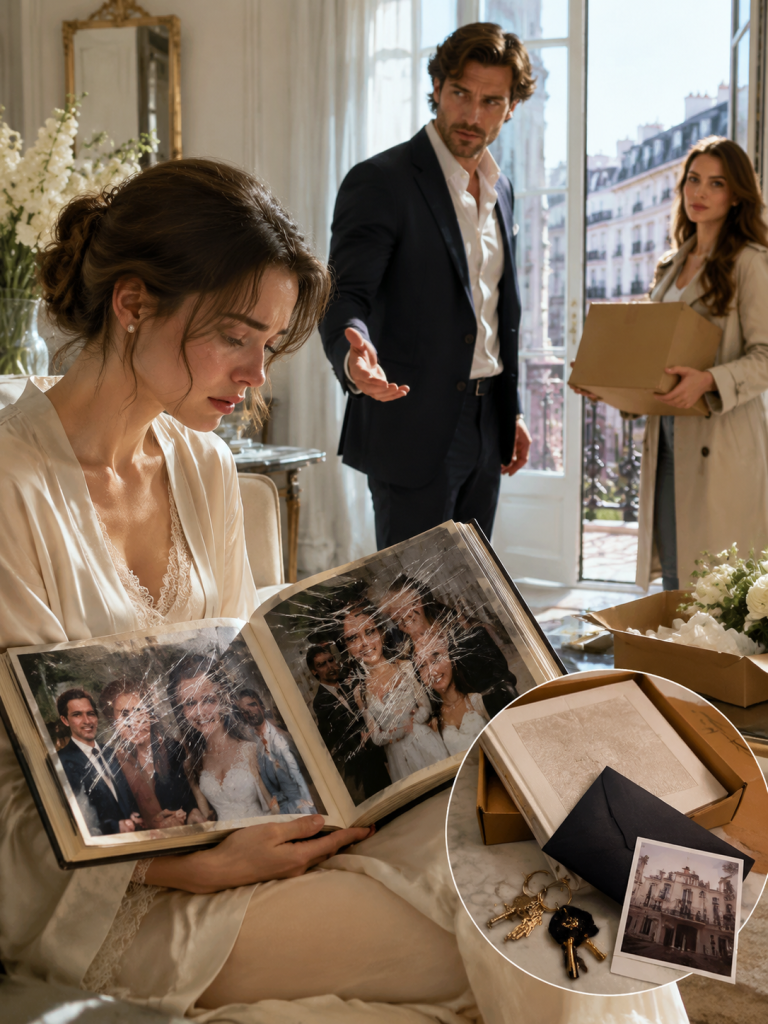
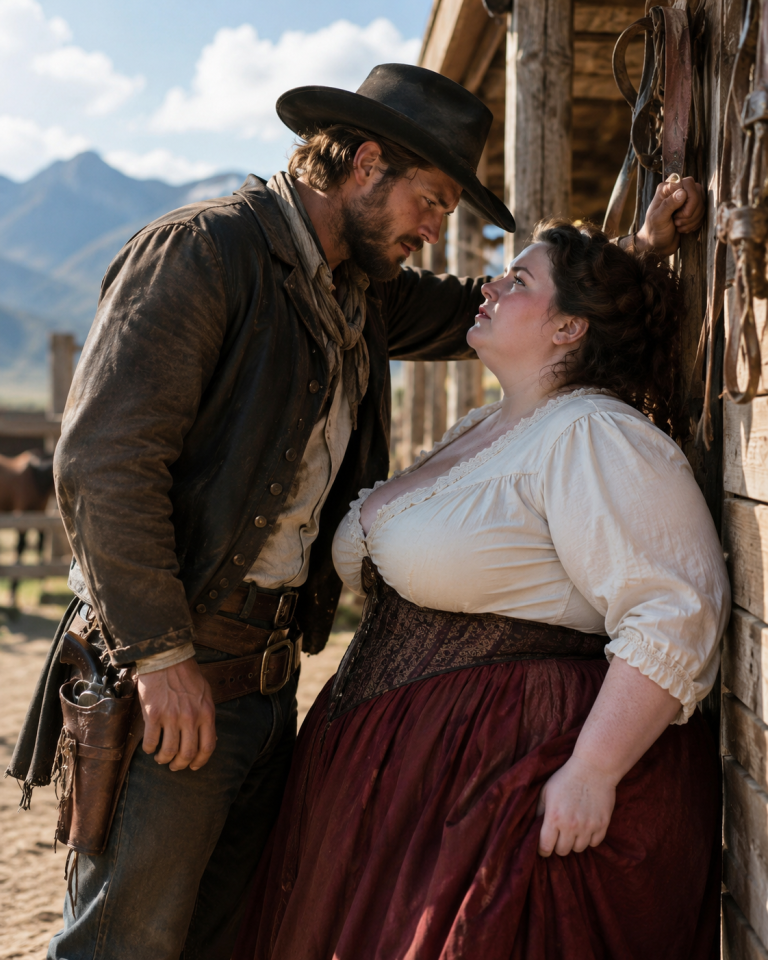
She Gave the Mafia Boss a Fake Name—But He Found Her Flower Shop Anyway

## PART 1
The bouquet gave her away.
Nora Callahan recognized it the moment the man walked through the door — white peonies, silver brunia, and a single hidden sprig of thyme tucked low under the ribbon, which was a thing she had started doing because her mother believed every beautiful arrangement deserved one secret ingredient the eye couldn’t find.
She hadn’t sold that bouquet.
She had built it, centerpiece number eleven for the Harrington Winter Gala, and left it on a table she would never be invited to sit at. Someone had taken it. And the someone who had taken it was now standing among her carnation buckets in a charcoal coat that cost more than three months of her rent, looking at her like he was trying to solve a puzzle he hadn’t agreed to play.
He was not supposed to be alive.
Nora had heard the plan. She had seen the crate. She had done the only thing her whole life had taught her to do in the presence of danger — move fast, say nothing, and don’t look back.
She had given him a false name. She had taken four different bus routes home. She had burned the latex gloves in the metal drum behind the shop and told herself that men like Roman Vasile did not thank women like her. They acquired them, or they neutralized them, and the distinction depended entirely on what she had seen.
But here he was.
Tall, unhurried, dark eyes already moving past the sympathy lilies and the chalkboard menu and the cracked cardboard taped over where a window used to be — directly to her.
He set the bouquet on the counter between them.
“Good morning,” he said.
His voice was quiet enough to make a room feel smaller.
Nora’s fingers closed around her pruning shears. “We’re not open yet.”
“Your door was unlocked.”
“That was a mistake.”
He looked down at the bouquet. Then he looked at the brass name tag crooked on her apron strap.
NORA.
Not Rose. Not the name she’d given him in the dark of a service corridor while champagne dried on both their clothes and men with guns searched the floor below.
She watched him read it.
For one suspended second, the whole shop seemed to hold its breath.
—
The night before, Nora Callahan had not been invited to the Harrington Winter Gala.
Girls who grew up in Dorchester foster placements did not receive invitations to glass-walled ballrooms overlooking the harbor. They arrived through loading docks with cold fingers and invoices they were never quite sure would be paid, and they stayed until the work was done and then they became invisible.
She had pulled up to the Meridian Club at just past four in a white delivery van that started on the third try and heated on the fifth. Boston in December was the color of old iron — gray sky, gray water, gray streets reflecting the lights of buildings she’d never enter as a guest.
In the back, forty-two floral arrangements rode in careful rows. White peonies, ranunculus, lamb’s ear, dusty miller, silver brunia. Nora had built them through the night. Her hands still smelled of cold water and stripped stems.
She was beautiful work, that collection. Not pretty — beautiful. The kind that made people slow down without realizing they had.
Her mother, Clare Callahan, would have put her palm against one peony and said: *There you are. You always did know how to make something that costs nothing look like it cost everything.*
But Clare had been dead five years, and the shop — Thistle & Thread Florals, South Boston, twelve hundred square feet of warmth in a neighborhood that kept threatening to stop being affordable — had been quietly bleeding since.
Nora carried the first arrangement toward the service entrance.
She made it four steps.
“You’re behind,” said a woman in a cream coat.
Nora had recognized her from the society pages: Daniela Harrington. Thirty-three, heir to Harrington Property Group, founder of two charitable foundations whose boards contained no one from the neighborhoods featured in the brochures. Auburn hair, flawless posture, eyes that only warmed when a lens pointed at her.
“Delivery window is four to five-thirty,” Nora said.
“The room should look finished at four, not *be finished* at four.” Daniela smiled with all her teeth. “There’s a difference, sweetheart.”
That word.
Nora had been hearing versions of it her whole life. In social services offices. In apartments she couldn’t afford. In bank branches where the teller’s eyes dropped to her jacket and back up to her face with that particular recalibration.
*You may stand here. That’s all.*
“I’ll have everything ready,” Nora said.
Daniela stepped closer. “Service elevator. Not the lobby. And try not to mark the floors — they’re Brazilian cherry.”
Inside, the service corridor smelled like bleach and old steam. Kitchen sounds leaked through the walls. A string quartet rehearsed something mournful on the other side of a door marked STAFF ONLY.
Nora worked.
That was her particular talent — disappearing into the labor until only the output remained. Table by table, she placed and turned and adjusted until the ballroom shifted from a catered space to something that looked like it had always been beautiful.
Tall windows faced the harbor. Chandeliers scattered light across name cards written in calligraphy. On the stage: a banner reading THE HARRINGTON FOUNDATION — INVESTING IN BOSTON’S FUTURE.
Nora almost said something to it.
She was adjusting the final stage arrangement when she heard a voice through the ballroom doors say the name Roman Vasile, and her hands went still.
Everyone in Boston knew that name, the way everyone knew certain addresses: by instinct, by implication, by the stories that circulated in whispers outside his actual presence. Vasile Holdings. Vasile Development. Vasile money in waterfront contracts, restaurant groups, and federal cases that never made it to trial.
Roman Vasile had taken over at twenty-eight after his father died of a stroke on a courthouse step. He was twenty-nine now. The papers called him a businessman. His neighborhood called him untouchable.
When he entered the ballroom with two men behind him, Nora understood why.
He wasn’t handsome in the curated way of the charity circuit men she usually avoided eye contact with. His face was harder — strong jaw, dark brows, a stillness that felt less like calm and more like a very controlled pressure. His suit fit the way expensive things did when someone had been measured standing absolutely straight.
Daniela crossed the room to meet him, and Nora watched her face change.
“Mr. Vasile.” Both hands extended. “We’re so honored.”
He took one. “Your people were persistent.”
Nora might have stopped watching entirely if, for one strange moment, his gaze hadn’t drifted across the room and found her.
Not her dress, faded black. Not her shoes, still damp from the loading dock.
Her hands.
She had picked up a brunia stem with a thorn she’d missed. A small dark bead had risen on the heel of her palm.
Roman Vasile noticed it the way a man notices a detail that doesn’t fit.
Nora closed her fist.
He looked away.
She went back to work.
She was finishing the cocktail pieces near the north lounge when she heard footsteps in the narrow service hall behind the bar. Two men. One in a dark suit, one in a Boston Police Department dress uniform.
She was invisible, carrying a tray. She did not slow down.
“—corridor will be clear at nine,” the suited man was saying.
The officer answered, “Cameras thin by then. Just make sure Vasile stays out of the main room until—”
Their voices dropped as they turned a corner.
Nora put down her tray.
Every instinct she’d spent twenty-six years developing in conditions that required survival first and questions second went rigid.
She told herself she’d misheard. Rich people always sounded like conspirators in hallways. Men with authority always spoke like things were already decided.
But then she found the gun.
It was in the bottom of one of her empty floral crates outside the north storage room, wrapped in a white linen napkin that had fallen partway open. Black metal. Latex gloves beside it. And below those — a length of Thistle & Thread ribbon. Her ribbon. The blush-and-ivory satin with the T&T mark she had printed at the shop.
A server named Petra, first week, lipstick half-gone, stood two feet away and had seen exactly what Nora had seen.
“That’s yours,” Petra whispered.
Nora looked through the corridor window.
Daniela Harrington was guiding Roman Vasile toward the north side of the ballroom. His security had dispersed — one at the bar, one on a call. He was alone in any way that mattered.
Nora understood the shape of what she was looking at.
Her ribbon. Her crate. Her delivery paperwork still on the service desk.
When the story got told afterward, she was already in it.
She thought of her mother.
Clare Callahan, who drove an hour in a snowstorm to bring flowers to the funeral of a man who had been mean to her for years, because *grief is not a means test, baby girl.*
Clare, who said: *The thing about keeping your head down is eventually you look up and someone’s already decided who you are.*
Nora picked up a full champagne tray.
She walked into the ballroom.
—
—
## PART 2
Nora did not walk like a rescuer.
She walked like a woman who had made one very bad decision and was already committed to it.
Daniela was steering Roman toward the north corridor when Nora stepped directly into their path and let the tray go.
Eight champagne flutes. Down the front of Roman Vasile’s shirt.
The ballroom flinched as one organism.
Daniela’s face went surgical. “What on earth—”
“I’m so sorry.” Nora grabbed a napkin, pressed close, and dropped her voice so low only he could hear it. “Gun in a floral crate. North storage. Your escort is the setup. The corridor’s the kill zone.”
Roman did not move.
Not for three full seconds.
Then one of his men stepped forward. Roman raised one hand without looking at him, and the man stopped as if he’d hit glass.
Daniela laughed — a thin, managing sound. “Mr. Vasile, I’m so deeply sorry. If you’d like to clean up, there’s a private lounge—”
“The service hall is closer,” Nora said, still pressing the napkin to his lapel, voice pitched to sound like panicked professionalism. “There’s a private washroom through here.”
Roman looked at Daniela. “I’ll be a moment.”
Daniela’s eyes narrowed. “The donor lounge is right through—”
“I said a moment.”
No volume. No threat. Just the quiet weight of a sentence that ended any argument it touched.
Daniela stepped back.
They moved into the service hall. One of Roman’s men followed until Roman said, without turning, *stay*, and the man stopped like a door closing.
The moment the corridor door swung shut, Roman’s hand closed around Nora’s wrist.
Not hard.
Just definitive.
“Name,” he said.
She pulled free. “Walk first.”
“Name—”
“Walk or die in this hallway. Those are the options.”
He walked.
She took him through the kitchen steam and the stacked linen and the back passage she’d memorized through four hours of delivery work. Concrete walls swallowed the gala noise behind them.
“Who are you?” he asked.
“Someone who heard something she wasn’t supposed to.”
“What did you hear?”
“Your name. A time. A corridor that would be cleared.” She stopped at a junction. “There’s a cop involved. His name’s Detective Farrow — I heard him talking to a man in a gray suit. They used my crate and my ribbon. When the story breaks, they want me in it.”
Roman’s jaw was stone. “Farrow.”
“You know him?”
“I know what he was paid to look away from.”
She swallowed. “They made it look like I brought the weapon in.”
Now his eyes changed. Not softer — more focused. The way attention sharpens when something important becomes clear.
“Why warn me?”
The question landed harder than she expected.
*Because no one warned me when it would have mattered,* she almost said. *Because someone should have.*
Instead: “Because being a bystander is a choice too. And I’m tired of making it.”
A door slammed somewhere behind them.
Voices.
Nora grabbed his sleeve and pulled him into the linen room.
Narrow. Warm. Floor-to-ceiling shelves of folded tablecloths that smelled like starch and the memory of other people’s celebrations.
Roman closed the door.
Through the gap, Nora watched Detective Farrow pass with the gray-suited man.
“She took him through the kitchen,” Farrow said.
“Find them before he calls out,” the other man snapped. “Harrington said no witnesses.”
*No witnesses.*
Not just Roman.
Her.
The cold arrived in Nora’s chest and settled like a stone.
Roman reached inside his coat.
Nora shook her head. Held up one hand. *Not here.*
His jaw tightened.
The footsteps faded.
They slipped out through a back door that Roman opened with something from his coat pocket in under ten seconds. She didn’t ask what it was.
They crossed the loading dock into December rain. Nora’s van sat crooked between two catering trucks.
She climbed in before he could suggest otherwise.
He folded himself into the passenger seat like a very large threat making itself temporarily compact.
The engine coughed three times.
“Come on,” Nora whispered. “Not tonight.”
It started.
She pulled out into the wet dark just as figures appeared at the loading dock behind them.
—
Later, parked under a highway overpass in Southie, Roman made one phone call. He told someone named Declan to pull everyone quietly from the Meridian Club, not to contact Farrow’s precinct, and to find his sister before anyone unknown did.
He hung up.
Nora stared at the rain on the windshield.
“Where do you want me to drop you?” she asked.
“It’s not safe for you to go home.”
“I don’t remember asking.”
“They have your name. Your shop is on the delivery paperwork.”
She already knew that. She had known it from the moment she saw the ribbon.
“I’ll figure it out,” she said.
“They’ll move faster than that.”
“I’ve had problems move fast before.”
“Not like this.”
She turned to look at him.
In the low light, he looked less like the newspaper photographs. Younger, in a way she hadn’t expected. Still controlled. Still carrying that particular weight of someone who had inherited consequences along with everything else.
“Tell me your name,” he said. “Your real one.”
Her whole life had taught her what names were. They were how people found you. How creditors called at 7 a.m. and landlords sent their brothers. How social workers looked you up. How men who owed you nothing felt entitled to something anyway just because they knew what to call you.
“Rose,” she said. “Rose Mercer.”
He watched her say it.
She knew he didn’t believe her.
“Rose Mercer,” he repeated, like he was leaving room for the truth to fit itself in around the edges.
“Yes.”
“All right.” He reached into his coat and placed a phone on the dash between them. “Call me if they come near the shop.”
“I won’t.”
“You might.”
“I’m dropping you here,” she said. “And then we’re even.”
“Saving a person’s life isn’t even. That’s not how debts work.”
“I didn’t do it for a debt.”
“I know,” he said quietly. “That’s exactly why.”
She drove him three blocks to a corner where a black car was already waiting, because of course it was. Men like Roman Vasile did not wait in the rain.
He stepped out without hurrying. Turned back once.
“Thank you, Rose Mercer.”
She drove away before he finished saying it.
She did not go home. She circled the neighborhood twice, checked her mirrors, parked behind the shop, and sat in the dark van for a long time before going in.
She was still sitting there when she realized her phone was gone.
Not in her jacket. Not on the passenger seat. Not in the van door pocket.
Her phone, which had a video she hadn’t known she’d taken — propped against a silver bowl at the stage to capture the finished room for the shop’s social account, left running when Daniela called her away, recording for twenty-two minutes of the most important evening of Nora’s life.
She searched everywhere.
By midnight, local news had posted an alert: *Incident at Meridian Gala — Organized Crime Connection Suspected.*
By 1 a.m., a blurred photo of Nora from the ballroom circulated on three accounts: *FLORIST SOUGHT FOR QUESTIONING.*
She had not been questioned. No one had called.
By 2:15 a.m., Thistle & Thread had nine one-star reviews it hadn’t had that morning.
By 4 a.m., someone had put a rock through the front window.
Nora swept glass until the sky lightened. She did not sleep. She changed into a clean apron, put her name tag on crooked out of habit, and opened the door at 7:50 because she had two funeral consultations and the grief of strangers did not wait for her problems to resolve.
At 8:09, the bell above the door rang.
And Roman Vasile walked in carrying a bouquet she had built with her own hands.
—
—
## PART 3
Nora’s first thought was that nothing about him looked like a man who had nearly died eight hours ago.
That irritated her more than it should have.
He set the peonies on the counter.
She looked at the ribbon around the stems.
Not the one she’d used on table eleven. Different — blush-and-ivory, with the tiny T&T imprint along the edge. Her stock ribbon. The kind she kept in the crates.
“Where did you get that?” she said.
“The gala.”
“That bouquet was on stage.”
“It was.”
“You took a centerpiece.”
“I took evidence.” He turned the arrangement slightly. “The ribbon is from your crate. Not from this arrangement — someone re-tied it after you left. Around the gun.”
Her throat tightened.
“My people retrieved the crate before Farrow’s team logged it. The weapon was clean. The ribbon had your shop mark.” He looked at her steadily. “So I found the shop.”
“You traced me.”
“I traced what they built around you.”
“You walked in calling me Rose.”
“I wanted to see what you’d do.”
“That’s not a justification.”
“No,” he agreed. “It isn’t.”
Outside, rain moved against the cardboard in the broken window frame. The refrigeration unit in the back hummed its usual complaint. A bus sighed past the curb and the whole shop shivered.
Roman reached inside his coat again.
He set her phone on the counter.
Screen cracked. Battery dead. Still hers.
She grabbed it immediately. “Did you—”
“No.”
She looked at him.
“Check,” he said.
She plugged it into the counter charger with hands that weren’t entirely steady and waited through the black screen. When it came back, nothing had been opened. Photos intact. One percent battery.
She opened the video she hadn’t known she’d taken.
Stage peonies, glowing under chandelier light. The hum of the room behind them. At the four-minute mark, voices drifted close to the silver bowl she’d propped the phone against.
Daniela: *”Farrow handles the weapon. Vasile goes north at nine. The corridor will be clean.”*
A man: *”And the florist?”*
Daniela: *”Poor girl with a failing shop. She’ll take the deal they offer her.”*
Nora stopped breathing.
Farrow’s voice came next, closer now.
*”Make sure something of hers is on the crate. People want a struggling woman. They always do.”*
The words sat in the room like smoke.
*People want a struggling woman.*
There it was — the whole architecture of it, five words.
Not guilt. Believability.
Cracked-window believable. Overdue-invoice believable. Alone-enough-to-use believable.
Roman watched the clip without expression. But the stillness around him changed in a way that felt, if she was honest, nothing like indifference.
At the six-minute mark, Daniela’s voice again: *”The redevelopment vote is Thursday. Once Vasile is out of the picture and the florist is the story, we clear the row. No objections. No sympathy coverage.”*
*The row.*
Nora looked up sharply.
“Play it again,” she said.
He did.
*Clear the row.*
Thistle & Thread sat on a stretch of old commercial storefronts that Harrington Property Group had been circling for eighteen months. The bakery beside her — owned by the Okafor family, three generations deep. The watch repair shop, Mr. Seo, who opened at seven and closed at seven and had never once taken a sick day. The corner pharmacy. Four upstairs apartments.
Nora had refused every offer letter because the shop was her mother’s and the mortgage was almost paid and some things were not for sale.
Daniela had not just wanted Roman gone.
She had wanted Nora’s credibility destroyed so publicly and so completely that the bank would call the note, the city would cite the address, and the whole block would finally be clearable.
The gala invitation hadn’t been an opportunity.
It had been a mechanism.
Roman spoke quietly. “She didn’t choose your shop for the flowers.”
Nora already knew. The knowledge sat in her chest like something she’d swallowed wrong.
“She said my arrangements looked trailer park,” Nora said. “The brunia. She told me to remove it from the visible pieces.”
Something moved in Roman’s face.
“She said that?”
“Quietly. Just for me.”
“What did your mother use brunia for?”
Nora blinked. “How do you—”
“The original request specified it. *Signature brunia detail. Essential.* I had my assistant pull the correspondence.”
Nora turned to look at the framed photograph behind the counter.
Clare Callahan, laughing, a stem of silver brunia tucked behind one ear.
She had been known for it. An old neighborhood paper had called it her *signature winter touch.* A brief write-up after she’d provided flowers for a fire victims’ memorial, ten years ago. Nora had been sixteen.
“She researched me,” Nora said.
“She studied your vulnerabilities. And she mistook them for your only characteristics.”
Nora crossed to the laptop at the back counter, pulling up old email archives. The gala inquiry. The inspiration board attached. She clicked the image file metadata.
Source: an archived article, dated ten years prior.
*Local Florist Donates Arrangements After Elkin Street Fire — Vasile Family Among Those Receiving Flowers.*
The photograph showed her mother handing a white-and-silver bouquet to a dark-haired woman with hollow eyes. The caption: *Clare Callahan presents a donated arrangement to Irina Vasile following the Elkin Street tragedy.*
Nora turned the screen.
Roman looked at the photograph for a long moment without speaking.
When he did, his voice was different.
“My brother was in that building,” he said. “He got out. My mother didn’t sleep for two weeks. She refused to leave the church after the memorial.” He stopped. “Your mother came in while everyone else had cameras. She left flowers and asked nothing.”
Nora looked at Clare’s face in the photograph. Tired, warm, entirely herself.
“She did that a lot,” Nora said.
“My mother kept the brunia from that bouquet. I found it pressed into her address book after she died.” He paused. “I didn’t know until I saw the arrangement in the ballroom tonight that I recognized something about it.”
The shop was absolutely quiet.
Nora had spent five years telling herself her mother’s generosity had dispersed into nothing — given to strangers who took and moved on, a kindness without record. The shop stayed open because she willed it open, on credit and stubbornness and very little sleep.
But here was a thread.
A sprig of silver brunia traveling from a church hall into a mother’s address book, surviving grief, crossing a decade of city history, and arriving in a ballroom where it was used against the daughter of the woman who grew it.
Daniela had looked at Nora’s life and inventoried the weaknesses.
She had missed the depth.
“Daniela didn’t request the brunia because she liked it,” Nora said.
“She requested it because it tied the evidence to you specifically. Something anyone could Google and find.”
“She needed the setup to look personal. Like I had a grudge. Like I’d been hired through an existing relationship.”
Roman nodded.
“She thought I had no one,” Nora said.
“Yes.”
“She was mostly right.”
“No,” Roman said. “She was entirely wrong.”
The bell above the door rang.
They both turned.
Daniela Harrington stepped into the shop in a camel coat, leather gloves, and the composed expression of a woman who had already written the ending of this scene.
Behind her stood Detective Farrow, in plainclothes, with a posture that meant business.
And behind him, Mr. Okafor from the bakery, who had clearly been following them from outside and wanted them to know it.
Daniela’s eyes found Roman and went briefly, perfectly still.
“Mr. Vasile,” she said. “What a coincidence.”
“Is it,” he said.
Farrow stepped forward. “Miss Callahan. We have a few questions about last night.”
Nora’s hand closed around her phone.
Farrow saw. His gaze sharpened.
Daniela looked at the cardboard window, the sale bucket, the chalkboard with corrected prices. A small smile moved across her face that never reached the level of public expression.
“Nora,” she said, voice softened to silk. “This must be incredibly overwhelming. Sometimes people in precarious circumstances make choices under pressure that they can’t undo alone.”
*Precarious circumstances.*
She was already writing the story. Real time. In front of Roman.
Farrow reached for the phone. “We’ll take that for now.”
“Not without a warrant,” Nora said.
“Don’t complicate this.”
“Do you have a warrant?”
Farrow’s face tightened.
Daniela sighed, the gentle exhalation of someone exercising patience. “Nora. Cooperation is the only thing that makes people sympathetic.”
Nora looked at her.
She had been hearing versions of that sentence her whole life.
Cooperate and maybe we’ll be kind to you. Be grateful and maybe we’ll notice you. Make yourself small enough and maybe we’ll call you a success story instead of a cautionary tale.
She was done cooperating with the premise.
“No,” she said.
Daniela blinked.
“No to the phone. No to *sweetheart.* No to *precarious circumstances.* No to the performance.” Nora’s voice was steady in a way that surprised even her. “I am not your narrative.”
The shop went quiet.
Farrow took a step forward.
Roman moved — just enough. Just between them.
Farrow looked up at him.
“Move,” Farrow said.
“You’re in a flower shop,” Roman said pleasantly. “With a cracked window. And no warrant. And a federal flag on your precinct’s evidence submissions as of six this morning.” A pause. “How’s that going.”
Farrow’s face cycled through three expressions.
Daniela recalibrated visibly. “This is theatrics,” she said. “Nora, whatever he’s told you — men like this use situations. That’s what they do.”
“I know,” Nora said. “I’ve noticed the difference.”
Daniela’s public face cracked slightly at the edges.
Then the door opened again.
A woman in a navy suit with a leather briefcase. A man with a press camera. And behind them, Mr. Seo from the watch repair shop in his work vest, and both Okafor daughters, and the two pharmacy clerks who had been watching from the curb.
The woman in the navy suit held up credentials. “Mira Voss, counsel for Miss Callahan and Mr. Vasile. Detective Farrow, please step away from my clients.”
“Your clients,” Nora said.
“We’ll do the paperwork after we deal with the active criminal misconduct happening near your carnations.”
The photographer raised the camera.
Daniela turned toward it with the instinctive grace of someone who had been photographed her whole life, expression shifting to something grave and concerned.
“This young woman is clearly being manipulated,” she said. “I came here personally because I care about what happens to her.”
Nora lifted her phone.
“I’m recording,” she said. And pressed play.
—
Mira Voss stopped her before the full clip played in that room.
“Not here,” she said firmly, her palm over the phone. “Not with a dirty detective present and no chain of custody. Not while Harrington’s people are deciding how to spin whatever they hear.”
Daniela started to object.
“Save it,” Mira said. “You’ll have a much larger audience for the performance on Thursday.”
The hearing was scheduled for the next morning.
Forty-two hours.
Thistle & Thread became a different kind of operation for those two days.
The front room filled with people. Mira and her associate took the back office. Mr. Seo brought extension cords. The Okafor family contributed a folding table and a tray of chin chin that nobody touched but everyone was grateful for. Maddie, the server from the gala, arrived the second morning in tears and gave a statement about everything she’d heard in the prep room.
“I should have said something,” Maddie kept saying.
“You’re saying it now,” Nora told her, and held on until the shaking stopped.
Roman’s people located the man in the gray suit: a private contractor named Elliot Marsh, with sealed settlements connecting him to Harrington Property Group and a gas station receipt placing him in Providence the morning after the gala.
Mira found the better thing: a payment from the Harrington Foundation to Thistle & Thread that had not come from the foundation account. It had originated from a shell company — the same entity currently filing an emergency nuisance complaint against the block.
Daniela had hired Nora with her own redevelopment budget.
The setup wasn’t personal. It was corporate infrastructure.
Nora found the last piece herself, at eleven on Wednesday night, sorting through the original booking email. An attached inspiration board. A note on the brunia request: *Client specification — signature detail essential for event identity.*
Below it, an image file.
She recognized the photograph before she’d fully processed it. Her mother at the Elkin Street memorial. The bouquet. The caption.
Daniela had screenshotted a ten-year-old neighborhood paper article and built an entire evidence frame around a dead woman’s floral signature.
Nora sat with that for a long time.
Then she went out front where Roman was reviewing documents with Mira, and she turned the laptop toward him.
He looked at the photograph of his mother’s face, her hollow eyes, the bouquet being placed into her hands.
“She made it look like you had a personal connection to my family,” he said.
“So when the weapon appeared, it would look like I’d been cultivating it.”
“A motive that predated the gala.”
“A story that wrote itself.”
He was quiet for a moment.
“Your mother gave flowers to a family in crisis without being asked,” he finally said, “and a decade later someone used that kindness as a weapon against her daughter.”
Nora nodded.
“Then we make sure it’s the last time that works,” Roman said.
—
The hearing room at City Hall smelled like institutional carpet and old authority.
Daniela arrived first. Navy wool, understated jewelry, two lawyers and a board member she’d coached on elevator rides. She took her seat at the front table with the particular ease of a person who had never once entered a formal room doubting her reception.
Nora arrived with the whole block.
Not symbolically. Actually. Mr. Okafor in his good suit. The Seo family. Mrs. Adeyemi from the upstairs apartment, who was seventy-eight and had written her statement in neat cursive on lined paper. The pharmacy clerks with binders. Maddie in the back, still pale but present.
Mira walked ahead.
Roman sat three rows back, alone, no entourage. He had left his coat at the door.
Daniela spoke first, of course.
She had a gift for it — that particular charity-circuit cadence that moved between gravity and warmth, always just barely tearful, never quite losing composure. She spoke of community safety. Of responsible stewardship. Of the difficult duty of development in neighborhoods where criminal activity had, regrettably, taken root. She expressed personal concern for a young woman who had clearly found herself in a dangerous situation not of her choosing.
She said dangerous situation like she had not authored it.
She turned toward Nora at the end, eyes soft.
“And I want to say, for the record, that I hope Nora finds the support she needs.”
The council chair turned. “Miss Callahan. Do you wish to respond?”
Nora stood.
For one terrible moment, the room was too large and too full of eyes that had already decided.
She looked at her hands.
Cracked knuckles. The faint thorn-mark on her palm. Brunia stain under two nails that never quite washed out.
Her mother’s hands.
She lifted her head.
“Yes,” she said.
She did not start with Daniela.
She started with the block.
She told the council about the bakery that stayed open during the 2019 freeze when the chain grocery three blocks away closed. About Mr. Seo repairing the watch of every boy in the neighborhood before prom regardless of what they could pay. About the pharmacy running a discreet tab for two families during the pandemic that they had never asked to be repaid.
Then she spoke of Thistle & Thread.
“My mother started this shop with borrowed equipment and more belief than capital,” Nora said. “She thought flowers belonged everywhere — at the funerals no one wanted to fund, at the kitchen tables that needed one beautiful thing, at the memorials for strangers. She gave arrangements away regularly because she believed generosity had a return that didn’t show on a balance sheet.”
She paused.
“Last week, Daniela Harrington’s foundation hired my shop for its gala. I thought it was the break I’d been working toward. I know now that I was selected because I appeared to have nothing left to lose — which, in Daniela’s experience, makes a person useful and then disposable.”
The council stirred.
Daniela’s lawyer rose. “This is speculative—”
Mira stood. “This is documented.”
She placed the payment records on the projector.
The room tilted.
Invoice. Shell company. Harrington Development connection. Emergency nuisance complaint timestamped three hours after the gala.
The council chair leaned forward. “Miss Harrington, can you explain why a redevelopment entity funded a foundation vendor?”
“Administrative overlap,” Daniela said smoothly. “Standard practice.”
Mira’s next slide: the original booking email. The brunia note. Beside it, the decade-old newspaper photograph.
The murmur in the room became something different.
Nora continued.
“Miss Harrington specifically requested the floral signature my mother was known for. She later called that same element cheap and had it removed from the visible arrangements. That ribbon — the ribbon from my shop — was found wrapped around a weapon planted in my delivery crate.”
Daniela’s lawyer was on his feet.
Mira connected the phone.
“This recording,” Mira said, “was captured unintentionally on Miss Callahan’s phone while she documented completed work. File metadata has been verified by a private forensic analyst. Copies are already with federal investigators.”
The room went still.
Nora looked at Daniela.
Mira played the video.
First: white peonies under chandelier light.
Then Daniela’s voice, crisp and assured: *”Farrow handles the weapon. Vasile goes north at nine.”*
Someone drew breath.
*”And the florist?”*
*”Poor girl with a failing shop. She’ll take whatever deal they offer.”*
Silence.
Then Farrow: *”Make sure something of hers is on the crate. People want a struggling woman. They always do.”*
The hearing room stayed silent for a very long time.
Not the silence of an audience, or a courtroom.
The silence of a group of people reckoning with something they had already half-known and were no longer able to pretend they didn’t.
Then, from the back:
“Shame on you.”
Mrs. Adeyemi. Seventy-eight years old, in her good coat, written statement still in her hands.
Not shouted.
That made it worse.
Another voice joined. Then another.
The council chair called for order.
The side door opened.
Three people in federal credentials, moving with purpose.
Daniela stood. “This is political. This is an organized attack—”
“Nora.”
Roman’s voice, from the third row. Quiet.
She looked at him.
He didn’t say anything else. He didn’t need to. He looked at her the way he had looked at her the first night — not through her, not past her, not down at her. Directly at her. At the version of her that had picked up a champagne tray and walked into a ballroom to warn a stranger because she had decided survival wasn’t the same as integrity.
She turned back to the council.
“You’re right,” she said — and Daniela looked confused, then wary. “I’m a poor girl with a failing shop and a dead mother and a brick through my window.”
She looked at the cameras.
“I am a story. I have always been a story to people like Daniela. A cautionary tale. A useful prop. A woman whose circumstances make her easy to frame and impossible to believe.” She straightened. “But I get to decide what the story means. And it means that kindness travels further than cruelty expects, and the people you dismiss as obstacles are sometimes exactly the people who know where the bodies are buried.”
She lifted her phone one last time.
“Figuratively,” she added.
The room erupted.
Daniela Harrington was arrested outside the hearing room at 11:47 a.m.
Detective Farrow was taken from his brother’s apartment in Quincy two hours later.
Elliot Marsh was apprehended at a motel outside Providence before sunset.
Harrington Property Group’s emergency nuisance complaint was withdrawn by 4 p.m.
By evening, three city councilors who had been nodding along with Daniela’s redevelopment pitch had released statements expressing concern and calling for transparency. Nora had already learned this about powerful people: moral positions were surprisingly portable when cameras changed direction.
Online, the story moved the way these things do — first wrong, then over-corrected, then somewhere closer to actual. The same accounts that had posted blurred gala screenshots now posted photographs of her outside City Hall. New headlines: *FLORIST EXPOSES CORRUPT DEVELOPER.* *SOUTH BOSTON SHOP OWNER TAKES DOWN HARRINGTON HEIR.*
She still hated the word florist being the first thing. But she was in the headline instead of the body of someone else’s story, and that was different.
The next morning, a line had formed outside Thistle & Thread before she’d opened the lock.
Not reporters.
People with flowers.
Grocery-store tulips wrapped in plastic. Garden roses in mason jars. A paper bouquet made by children from the elementary school whose principal had sent home a note about the whole thing. A construction worker left a sunflower with a card that said: *My mom used your mom’s flowers for my dad’s funeral. She’s still talking about them.*
Orders came in. Not pity orders. Orders with intent — birthdays, anniversaries, a woman who wrote in the notes section: *I watched the hearing and I want to send myself flowers because it’s my birthday and no one else will.*
Nora called her before fulfilling the order just to say happy birthday.
Mira set up a legal defense fund that covered itself within six hours.
The block coalition formed that same week. Lena as counsel — Mira had referred them to her colleague for the ongoing advocacy work. Nora as secretary because, as Mr. Okafor said, her handwriting was the only one anyone could read.
Anonymously, the front window of Thistle & Thread was replaced.
Nora knew before she found the receipt.
She marched next door to the coffee shop where Roman was standing outside talking to Mr. Seo, which was somehow the most domestic thing she had ever seen a man with his profile do.
“You replaced my window,” she said.
Roman said something quiet to Mr. Seo, who walked away failing to conceal his interest in remaining nearby.
“Someone broke it because of what happened,” Roman said.
“Someone broke it because of Daniela.”
“Because you helped me.”
“I didn’t do it for a window replacement.”
“I know.”
“You can’t just fix things without asking.”
“I can fix glass.”
“Roman.”
He looked at her.
She had been preparing a longer argument. She had points.
But the morning sun was coming in through the new glass, spreading gold across the peony buckets and the brunia hanging from the back beam, and the shop looked — for the first time in years — like something with a future in it instead of a past it was slowly losing.
“Thank you,” she said.
“You’re welcome.”
“Don’t do it again without asking.”
“That seems sustainable.”
“It does not.” But she almost smiled.
He almost did too.
He looked at the shop. At her mother’s photograph above the counter — Clare, with a stem of brunia behind her ear, laughing at something just outside the frame.
“My mother used to say the North End remembered people,” Roman said. “Not the monuments or the streets. The actual people. The ones who showed up.”
Nora looked at the photograph.
“She showed up,” Nora said.
“Yes.”
“I used to think it had disappeared. That kind of giving.” She touched the frame. “Like it went out into the world and dissolved.”
“It didn’t.”
She knew that now.
She could feel the truth of it — this thread, running through ten years of city history: a woman with brunia in her hair handing flowers to a family in grief, a sprig pressed between pages, a ribbon on a crate, a hearing room full of neighbors, a man who had arrived carrying her own work back to her.
A kindness that had traveled so far it had come home changed but intact.
Nora turned away from the photograph and back to Roman, and she found him watching her with the same attention she had noticed that first night — not polished or performative, just precise.
“You knew Rose Mercer was a lie,” she said.
“Immediately.”
“How?”
He didn’t answer right away. He walked to the corner bucket and lifted a stem of silver brunia — turned it in his fingers the way someone handles a thing they recognize.
Then he set it down and looked at her.
“You can give a stranger a false name,” he said. “You can change what you’re called.”
He moved to the door and paused with his hand on the frame, the winter light behind him, the street noise coming in around the edges.
“You can’t hide the way you run toward a burning thing.”
—
Spring came to Boston the way it always did — slowly, then all at once.
Snow giving up at the curbs. Tulips in the municipal planters. Sunlight staying longer on the old brick buildings along the row.
Thistle & Thread’s new window let all of it in.
On the last Saturday of March, the block threw a party on the sidewalk — folding tables, paper cups, borrowed speakers playing music too loud and exactly right. Kids drew flowers on the pavement in chalk. Mr. Seo gave free cleanings to anyone over seventy. The Okafor family set out pastry until they ran out and then went inside and made more.
Nora spoke briefly, because people were there and deserved to be thanked, and she thanked them.
She did not cry until she mentioned her mother, and even then she did not apologize.
Later, in the quiet hour after the crowd thinned, she found Roman inside the shop.
He was standing at the counter.
He was holding something badly assembled — too many stems, uneven lengths, a peony fighting a ranunculus for dominance, brunia pointing at an angle that suggested distress.
Nora looked at it for a long time.
“That’s terrible,” she said.
“I know.”
“Did you mean for the brunia to go there?”
“Yes.”
“Why?”
“It seemed important.”
She looked at him.
He looked, briefly, uncertain — which was the most interesting thing she had ever seen on that face.
“I made it myself,” he said.
“I noticed.”
“It was harder than I expected.”
“It always is.” She touched one crooked stem and adjusted it. “You have to think about what you’re trying to say before you start. Otherwise you just have a bunch of flowers arguing with each other.”
“What were you trying to say?” he asked. “The first night. The stage arrangement.”
She thought about it.
“That something beautiful had been built here,” she said. “And that it had cost someone.”
He was quiet.
“What were you trying to say?” she asked.
He looked at the disaster in his hands.
“That I came back.”
The new bell above the door moved in the draft from the street, and somewhere outside, someone laughed at something, and the spring light came in through the clean glass and landed on everything equally — the peonies and the brunia and the photograph of Clare Callahan with the stem behind her ear and a daughter who had spent five years thinking no one was watching.
Nora took the bouquet from Roman’s hands.
She set it on the counter.
She pulled out her stool, sat down, and looked at him across the flowers.
“Then sit down,” she said. “I’ll show you how it’s supposed to go.”
And he did.
—
*END*