She Was Forced to Marry a Comatose Mafia Boss to Save Her Father—Then He Woke and Exposed His Family

## PART 1
The number was $318,000.
I had been a nurse for six years. I had held the hands of people who were dying of things that should not have been able to kill them. I had worked double shifts for months at a stretch and eaten vending machine food in stairwells because there was no time to sit down. I understood, precisely and without sentimentality, what medical debt could do to a family.
Seeing that number on the estimate sheet did not make it abstract. It made it concrete in a way that was almost physical — the way you feel the edge of a table when you walk into it in the dark.
My father had survived the first cardiac event. He had survived the second, barely, with the kind of luck that doctors describe with the language of statistics and patients’ families understand as time borrowed against an uncertain future. The third would kill him without surgical intervention. The surgical intervention required money we did not have. Our insurance had lapsed five months earlier when he lost his position. Our savings were for ordinary emergencies, and this was not ordinary.
I sat in the waiting room in the clothes I had worn to my previous shift, which I had come from directly, and I held the folder of estimates and I tried to find the angle from which this problem had a solution.
I was still searching when a doctor I did not recognize came to tell me I had a visitor.
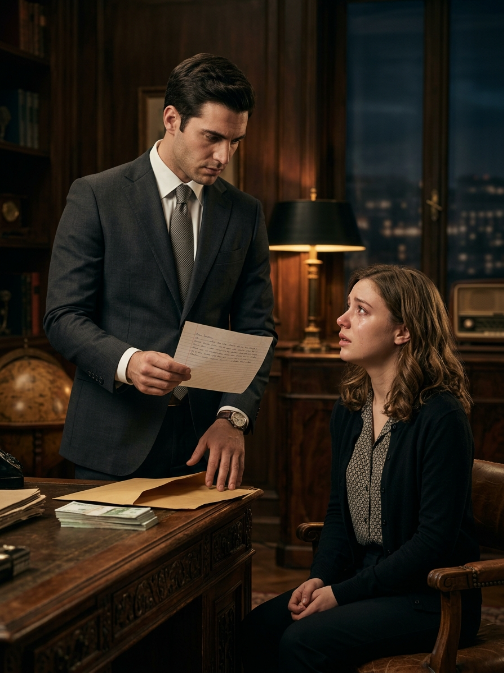
The man in the consultation room introduced himself as Vincent Moreau. He represented, he said, the Castellano family.
I knew the name the way most people in the city knew it — as a presence felt rather than seen, the kind of family that appeared in business records and charity photographs and, occasionally, in federal case summaries that never seemed to fully conclude. Old money with a specific kind of soil in its foundation.
“I don’t have any business with the Castellano family,” I said.
“No,” Vincent replied. “But they have an interest in yours.”
He opened his briefcase with the specific unhurriedness of a man who did not need to hurry.
“Your father requires surgery within seventy-two hours,” he said. “Without it, another cardiac event becomes likely.”
“I know what his prognosis is.”
“The Castellano family is prepared to cover the full cost of surgery, rehabilitation, and aftercare.”
I stared at him.
“In exchange for what?”
Vincent folded his hands.
“A wife,” he said.
The silence that followed had a specific quality that I have not encountered before or since — the silence of something that cannot possibly be real presenting itself as actual.
“The eldest son,” Vincent continued. “Luca Castellano. Twenty-nine years old. He was in an automobile accident six months ago. He has been in a coma since.”
I put the folder down on the table. Carefully.
“You want me to marry a man who is unconscious.”
“The family needs certain inheritance and business structures legally secured before a board challenge to succession. A marriage accomplishes this.”
“That’s insane.”
“It is practical.”
“It’s the same thing.”
“Miss Caruso—”
“Don’t.” I stood up. “Don’t say my father’s name again. Don’t use it as leverage. I’m a nurse. I’m not — I can’t do this.”
“The alternative,” Vincent said, “is leaving this building with a folder full of numbers you cannot pay.”
I was at the door.
I did not leave.
That was the moment I understood something terrible about myself: that I had been willing to walk out of that consultation room for as long as it took to touch the doorknob, and not a second longer.
I turned around.
I sat down.
And Vincent Moreau began to explain the terms.
The contract was thirty-eight pages. I read it three times over two sleepless days, searching for the trap that would arrive after the signature. The terms were as described: care for Luca Castellano, reside at the family estate, present as wife in necessary contexts, maintain discretion. If he woke, the marriage would continue for one year from recovery. If he died without recovering, there was a settlement and termination. Monthly compensation through the arrangement.
My father’s surgery was scheduled for the morning after the signing.
I signed.
The courthouse was in the city, a November morning with thin gray light. No guests who loved me. A ring Vincent produced from a briefcase. A judge who asked the required questions in the particular way of someone who had given up asking follow-up questions years ago.
I wore a sweater and dark trousers because no one had specified otherwise.
Luca Castellano was not present except in his legal name.
I sat in the back of a car afterward and watched the city pass the window and tried to understand what I had done.
—
The Castellano estate occupied a corner of the city’s oldest money, the kind of neighborhood where the buildings looked at you rather than the reverse. Iron gates. Stone walls. A gravel drive. A house that had been designed to say something specific about the family inside it, and said it loudly even in November gray.
The housekeeper, Celia, met me at the door. She had the composed expression of someone who had been told what to expect and had decided to withhold judgment.
“Mrs. Castellano,” she said.
I did not correct her.
She led me to a suite on the east wing, adjacent to a room I understood to be Luca’s. The suite was the kind of large that stopped being impressive and became merely a lot of space — cream walls, heavy curtains, a fireplace that would require effort to feel inhabited. A connecting door.
Celia opened it.
The room beyond was clinical in the way of hospital rooms transplanted into wealthy spaces — a chandelier above a medical bed, monitoring equipment arranged with care, IV stand, oxygen. Someone had clearly been attending to him with professional thoroughness.
He was younger than I expected.
Dark hair. Olive skin. The structure of his face in repose — the line of his jaw, the set of his brow — suggested someone who, awake, would probably occupy a room the way the house occupied the street.
His hands rested at his sides, palms slightly open.
A patient.
That was the register that made everything manageable. I knew how to be in a room with a patient. I knew what that relationship required of me and what it permitted.
I moved closer and checked his vitals the way I would have checked any patient’s — methodically, without ceremony. His color was good. His pressure was steady. No pressure sores. Whoever had managed his care had done the work correctly.
I sat in the chair beside his bed.
“I’m Simona,” I said. “I’m apparently your wife.”
I hadn’t intended to say it out loud. The words surprised me as much as anyone.
“I want to be honest with you about what I am and am not here to do,” I continued, as quietly as I would have spoken to any unconscious patient. “I’m not here because I chose you. I’m here because your family gave me a choice between this and watching my father die. That’s not romantic. It’s also not a lie.”
I looked at the monitors.
“I’ll take care of you because that’s what I do. I’m good at it. But I want you to know — if you can hear me at all — that I’m sorry for the part of this you didn’t consent to.”
For two and a half weeks, that was the shape of my life.
I administered medication at specific intervals, repositioned him to prevent pressure injuries, monitored his blood pressure and oxygen levels with the attention I would have given any patient in my care. I stretched his limbs each morning. At night, when the house was quiet, I read aloud from books I found in the room — a biography, a history of Renaissance architecture, a collection of short stories that seemed too domestic for a family like this one.
The Castellanos treated me with the specific variation of indifference that wealthy families directed at people they had contractually acquired. Aldo Castellano, Luca’s father, spoke to me rarely and directly when he did — questions about Luca’s condition, information about the estate routine. His sister Margherita watched me with eyes that calculated without appearing to. His cousin Stefan seemed to find the entire arrangement entertaining in a way that made me want to stay on the opposite side of whatever room he entered.
Stefan made me aware of the surveillance early on — not with a statement but with a comment about my morning walks in the garden that I had not mentioned to anyone in the house.
I began paying closer attention.
On the nineteenth day, I was reading aloud from the history book when his hand moved.
I stopped mid-sentence.
Waited.
Counted.
His fingers moved again.
“Luca,” I said. “If you’re in there — if you can hear me — can you squeeze my hand?”
I put my hand in his.
The pause was long enough that I had started to conclude I had imagined it.
Then his fingers tightened around mine.
I pressed the call button and stood up in a single motion, heart moving in a way that had nothing to do with professionalism.
His eyelids moved.
Then opened.
Dark eyes, disoriented and immediately alert, finding my face with the instinctive urgency of a person trying to locate the situation before they understood it.
I leaned closer.
“You’re safe. You’re at home. I’m Simona. Don’t try to speak yet.”
His eyes moved over my face with an intensity that even in the first confused seconds of consciousness felt different from the blank unfocused look of patients coming up from sedation.
He was awake.
And already trying to understand what had happened while he was gone.
Behind me, I heard running footsteps.
The house was coming.
I looked at the man in the bed — this stranger I had been speaking to for three weeks, this unconscious patient I had been honest with because it cost nothing and seemed right — and I understood, with a chill that had nothing to do with the room’s temperature, that the arrangement I had signed into was about to become considerably more complicated.
—
## PART 2
The room filled with people who had been waiting six months for this moment, and none of them looked as relieved as they should have.
Aldo stood near the door with his hands folded. The family doctor spoke rapidly. Vincent Moreau arrived within twenty minutes, briefcase and all, as if someone had pressed a button.
Luca watched all of it with the specific attention of a man whose body was still finding its way back and whose mind was already several steps ahead.
“Who is she?” he said, when the doctor’s initial examination was complete. His voice was rough from disuse but controlled.
The doctor said I was his caregiver.
Vincent said I was his wife.
Luca’s eyes found mine across the room with the flat, unbroken focus of someone who has just understood something and is not going to pretend otherwise.
“My wife,” he repeated.
“We should discuss this privately,” Aldo said.
“We should,” Luca agreed. He looked at the room. “That means only her.”
The room hesitated.
“Now,” Luca said.
Everyone left.
I remained by the window, somewhere between the door and his bed, at the intersection of wanting to give him space and understanding that leaving the room was not actually an option I had.
“Sit down,” he said.
I sat in the chair beside his bed.
We looked at each other for a moment. He was pale from months without sun, and the muscle loss was evident in the looseness of his hospital gown’s sleeves, but his eyes were sharp in a way that the rest of him was still reclaiming.
“Tell me,” he said.
I told him. Not the version that had been prepared for the family to deliver — my version, the actual one. The consultation room. The folder of estimates. My father’s surgery. The contract. The courthouse. The months of caring for him while he was unconscious.
He listened without interrupting.
When I finished, there was a silence.
“You sold yourself,” he said.
“I saved my father’s life.”
“By marrying a man who didn’t know it was happening.”
“Yes,” I said. “That part I don’t have a defense for. It was wrong. I knew it was wrong when I signed.”
His jaw moved. Not anger, exactly. Something that was still finding its final shape.
“My family used your father to trap you,” he said.
“Yes.”
“And you’re still here.”
“My father’s care is contractually tied to my compliance.”
“That’s not why you’re still here.”
I looked at him.
“No,” I said. “It’s not the only reason.”
Another silence.
“Ground rules,” he said finally.
Something in me unclenched.
“No theater. I will not pretend this is something it isn’t. You will not perform a role for my family’s benefit without my understanding of what you’re doing and why.” He shifted carefully against the pillows. “If anyone in this house threatens you, you tell me. If my family tries to use my recovery to give you instructions I didn’t authorize, you tell me that too.”
“You just woke up from a coma.”
“I’m aware.”
“What leverage do you actually have right now?”
“More than you might think,” he said. “And considerably more than I had six months ago, when someone tried to make sure I never woke up.”
The room went very still.
“What?” I said.
Luca looked toward the window.
“The official accident report says brake failure,” he said. “My car was serviced monthly. The brakes on that car had been replaced eight weeks earlier.” He looked at me. “Find a mechanic named Cristiano Belli. He works out of the garage on Ventimiglia Street. Tell him I sent you. Ask him what he told my father about the inspection he ran two weeks after my accident.”
“I don’t understand what you’re asking me to do.”
“I’m asking you to do something for me that I can’t do myself yet,” he said. “Because I’ve been unconscious for six months and my legs don’t work correctly and I need someone I can trust.”
“Why would you trust me?”
He looked at me directly.
“Because you’ve been talking to me honestly for three weeks while everyone else has been planning around my death,” he said. “That’s a better audition than most people I know.”
I had not expected that.
I had not expected any of this.
I stood.
“I’ll go tomorrow morning,” I said. “When Aldo thinks I’m visiting my father.”
Something in his expression settled.
“Thank you,” he said.
I started for the door.
“Simona.”
I stopped.
“What did you read to me?”
I turned.
“The renaissance architecture book,” I said. “You looked like someone who’d have opinions about it.”
The corner of his mouth moved.
“I do,” he said.
—
## PART 3
Cristiano Belli had the specific wariness of a man carrying information he had not asked for and couldn’t put down.
He was in the back of the garage when I arrived the next morning, working on an engine, and when I said Luca’s name he dropped his wrench.
“He’s alive?” he said.
“He woke up two days ago.”
Cristiano sat on a work stool and looked at the floor for a moment.
“I told his father,” he said. “The night they brought the car in for the official inspection. I told Aldo Castellano the brake lines had been cut. Clean cuts, both of them. Not mechanical failure. Not corrosion. Someone cut them.”
“What did Aldo say?”
“He told me the official report said brake failure and the matter was closed. He handed me an envelope I didn’t count and told me the family appreciated my discretion.”
“Did you keep the envelope?”
Cristiano looked at me.
“No,” he said. “But I kept a photograph of the brake lines. Before they destroyed the car.”
He went to his office at the back and returned with a phone.
I copied the photograph to my own phone with my hands steady only because steadiness was a professional skill I had spent years developing.
“Who would have had access to the car?” I asked.
Cristiano shrugged. “Anyone at the estate. Any of the regular maintenance staff. Or whoever hired one of them.”
I thanked him and drove back to the estate.
Luca was in the garden when I returned — upright, moving slowly between the stone paths with one hand occasionally touching the wall, the physical therapy of a man refusing to be kept in bed. I had not seen him outside yet. In the November light, looking at the bare rose trellises with the specific attention of someone reconnecting with a known landscape, he looked less like a patient and more like whatever he was before the accident had tried to erase him.
“Well?” he said.
I showed him the photograph.
His face went through something that was not quite any single emotion.
“He told my father,” Luca said.
“Two weeks after the accident.”
“And Marcus buried it.”
I looked at him. “Aldo.”
“I call him Marcus,” Luca said. “I’ve been calling him that since I was twenty-two, when I found out what he did to my mother’s family.” He turned away from the wall and looked at the house. “My cousin Stefan has wanted my position since he understood what it meant. Marcus has wanted the public face of the family name without the inconvenience of a son who disagreed with how he ran it.” He looked at the photograph again. “One of them arranged it. Both of them covered it up.”
“That’s not the same as proof.”
“No. Which means we need more.”
The *we* registered.
I noted it. Filed it.
“There’s a lawyer,” I said. “Vincent mentioned a man named Arturo Gentile. He structured several of the shell companies the family uses. If the payment to whoever cut the brake lines went through one of those structures—”
“It would,” Luca said. “They wouldn’t use anything traceable to either of their names directly.”
“Can you access those records?”
“Not yet. But I know someone who can.” He started back toward the house. “Give me two days.”
Two days became four.
Luca moved around the estate with increasing steadiness, physically rehabilitating at a pace that alarmed Dr. Ferrano and impressed no one who had started to understand how Luca Castellano operated. He had calls every morning that he conducted in the study with the door closed. He ate dinner at the family table with the composed expression of someone who was very good at not showing what they knew.
Stefan watched him.
Luca watched Stefan watching him.
I watched both of them and tried not to make it obvious that I was doing it.
At night, when the house was quiet, Luca came to sit in the chair in his room and work. I came in at medication time and often stayed, reading or reviewing the notes I had been keeping about the family’s structure, which had started as professional habit and had become something more specific.
“You take notes on everything,” he said one evening, looking at my notebook.
“I’m a nurse. Documentation is required.”
“Not this kind of documentation.”
I looked at what I had written.
“I’ve been trying to understand who in this house should worry me,” I said.
“And?”
“Your father. Your cousin. Two of the security staff who seem to report to someone other than you.” I paused. “Arturo Gentile’s name appears in the same week as the brake line photograph date in the finance records I found in the library. Someone left them in a book about the estate’s architectural history. I don’t think it was an accident.”
Luca looked at me for a long moment.
“Someone left them for you?” he said.
“Or for whoever was in this room and paying attention.”
“There are three people in this house who would have done that,” he said. “Two of them have been loyal to me for over a decade. The third is Celia.”
“The housekeeper.”
“She knew my mother,” he said. “She’s been here longer than my father.”
“Then whoever left them in that book has been waiting a long time.”
He took the notebook from my hands gently and looked at the dates I had circled.
“This is enough to start with,” he said. “I need one more week.”
“For what?”
“To position this correctly so that when everything surfaces, it surfaces in a way that can’t be buried again.”
I understood what he meant.
He was not planning to confront his father in the family dining room. He was planning to ensure that confrontation was the last conversation Marcus Castellano had before federal agents arrived to continue it.
“This will destroy the family,” I said.
“The family was already destroyed,” he said. “I’m just filing the paperwork.”
—
Stefan’s move came before Luca was ready.
I was in the east corridor returning a book to the library when he appeared from the stairwell at the far end of the hall. There was nothing casual in it. He had been waiting.
“The devoted nurse wife,” he said.
I kept walking.
He fell into step.
“You’re very thorough,” Stefan said. “Very attentive. Cristiano Belli. The finance records. Arturo Gentile’s office, which you visited on the pretense of visiting your father’s rehab facility.” He smiled. “You’re conducting an investigation.”
“I’m taking care of my husband.”
“Your contract husband.” He stepped closer, blocking the corridor. “You understand that if he finishes what he’s building — if he presents whatever he’s been assembling in that study — Marcus loses everything. And when Marcus loses everything, your father’s care arrangement becomes a liability that disappears with the rest of it.”
I looked at him.
“My father’s care is secured through a trust independent of the family’s operating accounts,” I said.
Stefan’s smile thinned.
“Is it?”
“Luca made sure of it two days after he woke up,” I said. “Which you would know if you’d been monitoring his calls more carefully.”
Stefan’s hand moved toward my arm.
Luca’s voice came from the doorway at the end of the hall.
“Don’t.”
He was in the doorway of the study, one hand on the frame, the other at his side. Still not fully recovered. Still moving with the careful economy of a man whose body was working harder than it looked to maintain what appeared effortless.
Stefan straightened.
“You can barely stand,” he said.
“And you’ve been afraid of me since before the accident,” Luca said. “Enough that you needed to try to kill me rather than compete with me. What does that say about the comparison?”
Stefan moved toward him.
Two of Luca’s security staff — the ones who had not been on the list of those reporting elsewhere — appeared from either side of the corridor.
Stefan stopped.
Marcus’s voice came from the stairs: “What is going on?”
Luca looked at his father.
“Come to the study,” he said. “All of us.”
—
It was not the family meeting I had imagined.
There was no dramatic confrontation over a dinner table, no raised voices, no moment where someone confessed.
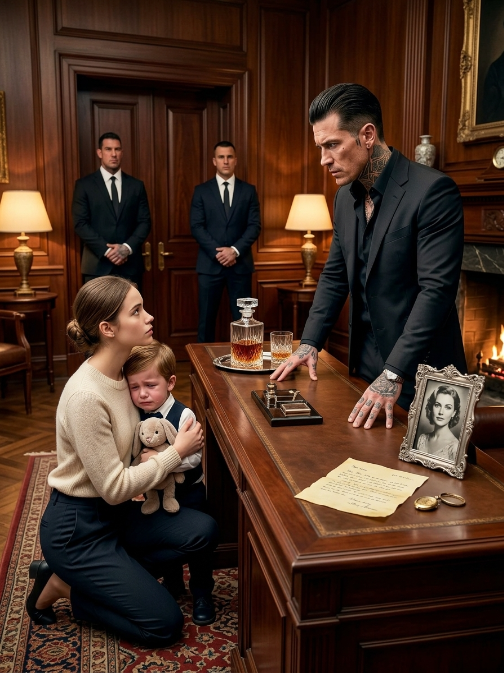
There was a study with documents spread across the desk. There was Luca reading names and dates and account numbers in the same level voice he used for everything, the voice that made the room colder as it continued. There was Marcus’s face, which cycled through denial and calculation and finally arrived at the specific stillness of a man who has run the numbers and understood that the numbers don’t come out in his favor.
Stefan said: “This proves nothing.”
Luca said: “It proves enough.”
He placed a phone at the center of the desk.
“I’ve been in contact with an agent at the financial crimes division since my third day back,” he said. “Everything in this room has already been filed.”
Stefan lunged for the door.
The security staff stopped him.
Marcus sat very still.
“You were my son,” he said.
“I was,” Luca said. “You decided I was less valuable than the things I was standing in the way of.”
“You wanted to dismantle forty years of—”
“I wanted to make sure the family could survive for forty more. You thought I was going to take it apart. What you’ve done will actually take it apart.” Luca looked at him. “I spent six months unconscious while you cleaned up after the people who tried to kill me. You could have done anything with that time. You chose to cover it up.”
Marcus said nothing.
“That’s the part I can’t repair,” Luca said. “Not that you didn’t come forward. Not that you protected Stefan. That you spent six months watching someone take care of me — someone you dragged into this against her will — and you never once made it right.”
I stood near the wall, my arms folded, watching.
Luca glanced at me once.
I nodded.
He called the number that was already waiting to be called.
—
The next three days moved with the specific speed of things that have been prepared in advance and are now executing.
Luca and I left the estate an hour after the federal investigators arrived. He directed us to an apartment in the city that belonged to a lawyer he trusted — not a Castellano family lawyer, his own lawyer, a distinction he had apparently been carefully maintaining for years. The apartment was on the fourth floor of a building that had nothing remarkable about it except that it had a deadbolt that required a key on both sides.
We sat at a small kitchen table with coffee and Luca’s phone and the specific exhaustion of people who have been running on adrenaline and have just run out of road.
“Your father,” I said.
“He’s in the trust account. Nothing that happens to the family’s operating structure reaches that account.”
“You arranged that without telling me.”
“I arranged it because it needed to be arranged. You were managing enough.”
I looked at him.
“I don’t want things done for me without telling me,” I said.
He set his cup down.
“That’s fair,” he said. “I made an assumption. I shouldn’t have.”
“Tell me next time.”
“Yes.”
A silence.
“You’re not angry,” he said.
“I’m tired,” I said. “I’ve been managing fear for long enough that I don’t have a lot of anger left over.”
He looked at his hands.
“I’m angry,” he said. “On your behalf. You were handed a trap and told it was an opportunity, and then everyone in that house treated you like you should be grateful for the trap.”
“Your father.”
“And mine,” he said. “My father knew what he was arranging. He knew who you were and what it would cost you. He didn’t care because the problem was convenient.”
“The problem being you.”
“The problem being that I was going to change the structure of something he’d spent his life building.”
I turned my cup in my hands.
“Are you going to change it now?” I said.
“What’s left of it,” he said. “Yes. What can be made legitimate will be. What can’t will be wound down.” He looked at me. “That’s not a quick process.”
“I know.”
“It will probably take years.”
“I know,” I said again.
He was quiet for a moment.
“The contract year,” he said. “You’ve been in this arrangement for months. After I was awake, the clock started on the twelve months. You have until—”
“I know the math,” I said.
“I want you to know that when the year ends, you are not obligated to stay.”
I looked at him.
He looked back.
There was a quality to the way Luca looked at me that I had been noticing since the first time he opened his eyes in his hospital room and found my face — a fullness of attention, an absence of performance. He was not showing me something. He was simply there, fully, which was rarer than it should have been.
“I haven’t been staying because of the contract,” I said.
“No?”
“Not for a while.”
He set his cup down.
“Then what have you been staying for?”
I thought about the answer honestly.
“Because you woke up into a life that had been arranged without you and your first response was ground rules,” I said. “Not anger at me, which would have been justified. Not using your position to control the situation, which you could have. You said: *these are the terms under which I can be decent.* And then you were.” I looked at the table. “I haven’t had a lot of decent in the last year.”
A long silence.
“I tried to kill you,” Stefan had said in the corridor. But he hadn’t — he had tried to kill a man who was about to change the structure of a family built on convenient cruelty, and what he had actually done was give that man six months of unconsciousness during which someone had spoken to him honestly because it seemed like the right thing to do.
“The things I said to you,” I said. “While you were unconscious. I didn’t know you could hear me.”
“I didn’t either,” he said. “But the voice that came through—”
“I called you stubborn.”
“You said my family was terrifying.”
“You said the same.”
The corner of his mouth moved.
“I may have been trying to prepare you for something,” he said.
“Did it work?”
“You’re still here,” he said. “So either it worked or you’re extremely stubborn.”
“Both,” I said. “Probably both.”
—
He filed the divorce papers four months later.
He placed them on the kitchen table of the apartment we had been living in since the estate, beside my coffee, on a Tuesday morning when I came in from the early shift.
I looked at them.
“The twelve months are almost up,” he said. “Your father’s care is secured independently. The family situation is through the legal process and not coming back. You are not in danger.” He sat across from me. “I need you to have the actual choice.”
I turned the folder over in my hands.
“Do you want a divorce?” I said.
“No.”
“Then why are these on the table?”
“Because I want what comes next to be chosen,” he said. “Not endured. Not maintained out of obligation or gratitude or because you didn’t know there was another option.” He held my gaze. “I want you to know there is another option.”
I set the folder down.
“You endured six months of unconsciousness while your family used you to trap a stranger,” I said. “I endured three weeks of speaking to a man I didn’t know because it felt like the honest thing to do. And somewhere in between all of that — between the contract and the brake lines and the federal investigators and the bad coffee in this apartment — something else happened.”
“Yes,” he said.
“I chose you in Cristiano’s garage,” I said. “When I understood what you were asking me to risk and I did it anyway. I chose you when you were planning in the study and you made space for me in the planning. I chose you every time I could have filed these papers myself and didn’t.”
He looked at me.
“The marriage they arranged,” I said, “I don’t want that. I want a different one.”
“Yes,” he said again, which was barely above a breath.
“Ask me one day,” I said. “Properly. When everything is further behind us.”
“One day?”
“It doesn’t have to be far away.”
He pushed the folder to the edge of the table.
Neither of us filed.
—
Six months later, in the garden of an apartment we had chosen together — small, high-ceilinged, with a kitchen that got morning light — he asked me.
No briefcase. No lawyers. No contracts.
Just Luca, slightly nervous in a way that I had come to find specifically him — controlled on the outside, visible only in the careful way he chose his words.
“Simona,” he said. “Will you marry me this time because you want to?”
I looked at this man who had been my patient and my unexpected partner, who had been arranged for me by people who thought love was a mechanism and had managed to become something else entirely in spite of them.
“Yes,” I said.
He put the ring on my finger.
I turned his hand over and held it.
—
The stories told about us afterward were mostly wrong.
They said the Castellano family fell because of money and inheritance.
They said a nurse married a crime heir for the surgery fund.
They said the coma groom woke to find a stranger in his house.
All of that was true.
But none of it was the whole truth.
The whole truth was smaller and quieter and did not make good headlines.
A woman sat beside an unconscious man she did not know and told him the truth because it cost her nothing and seemed like the right thing to do. A man woke up to find someone had been treating him like a person while everyone else had been treating him like a problem to be managed. Two people made from very different materials discovered that honesty, practiced consistently enough, becomes its own kind of foundation.
The vows they spoke the second time were theirs.
Not arranged.
Not contracted.
Chosen.
And the thing about a choice made freely, in full knowledge of the cost — is that it holds.
**THE END.**